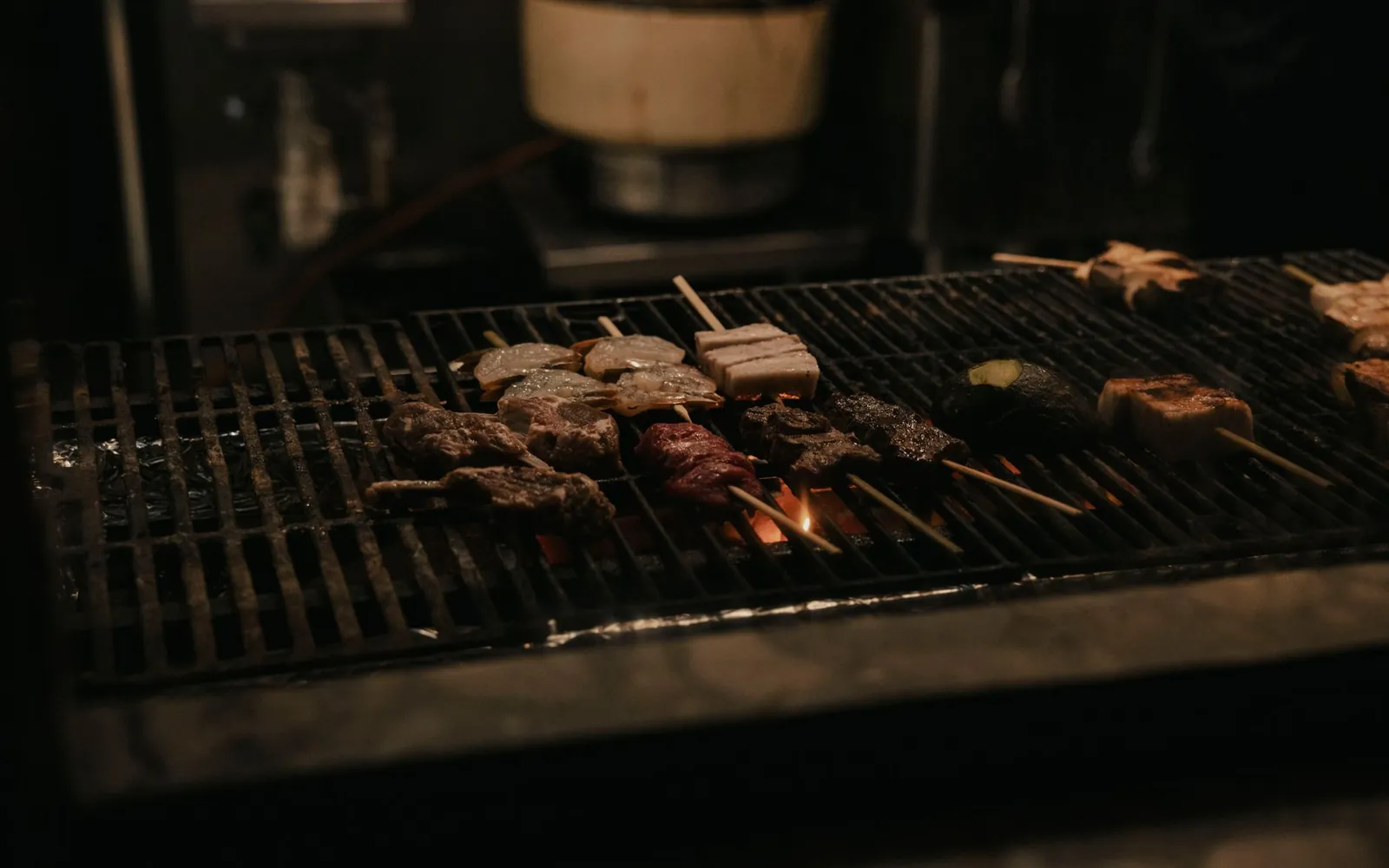
Robata is short for robatayaki, which means fireside cooking. It began with fishermen in northern Japan grilling their catch over a box of coals, and it is still a simple idea: good ingredients, close to the fire.
Why charcoal
Charcoal burns hot and dry. Food browns quickly without steaming, and when fat or tare drips onto the coals the smoke rises back into whatever is above it. A gas grill cannot do that.
Salt or tare
Most skewers can be finished two ways. Shio is salt only, which suits prawns and good chicken. Tare is a sweet soy glaze brushed on in layers, which suits richer cuts and aubergine.
The four stages
Every skewer goes through the same steps: raw and cold from the fridge, a hard sear near the hottest coals, a slower glaze further out, and a short rest before it is served.
How to order
Start with the skewer set if it is your first time. Add miso aubergine if anyone at the table is vegetarian, and a bowl of garlic fried rice to share.