
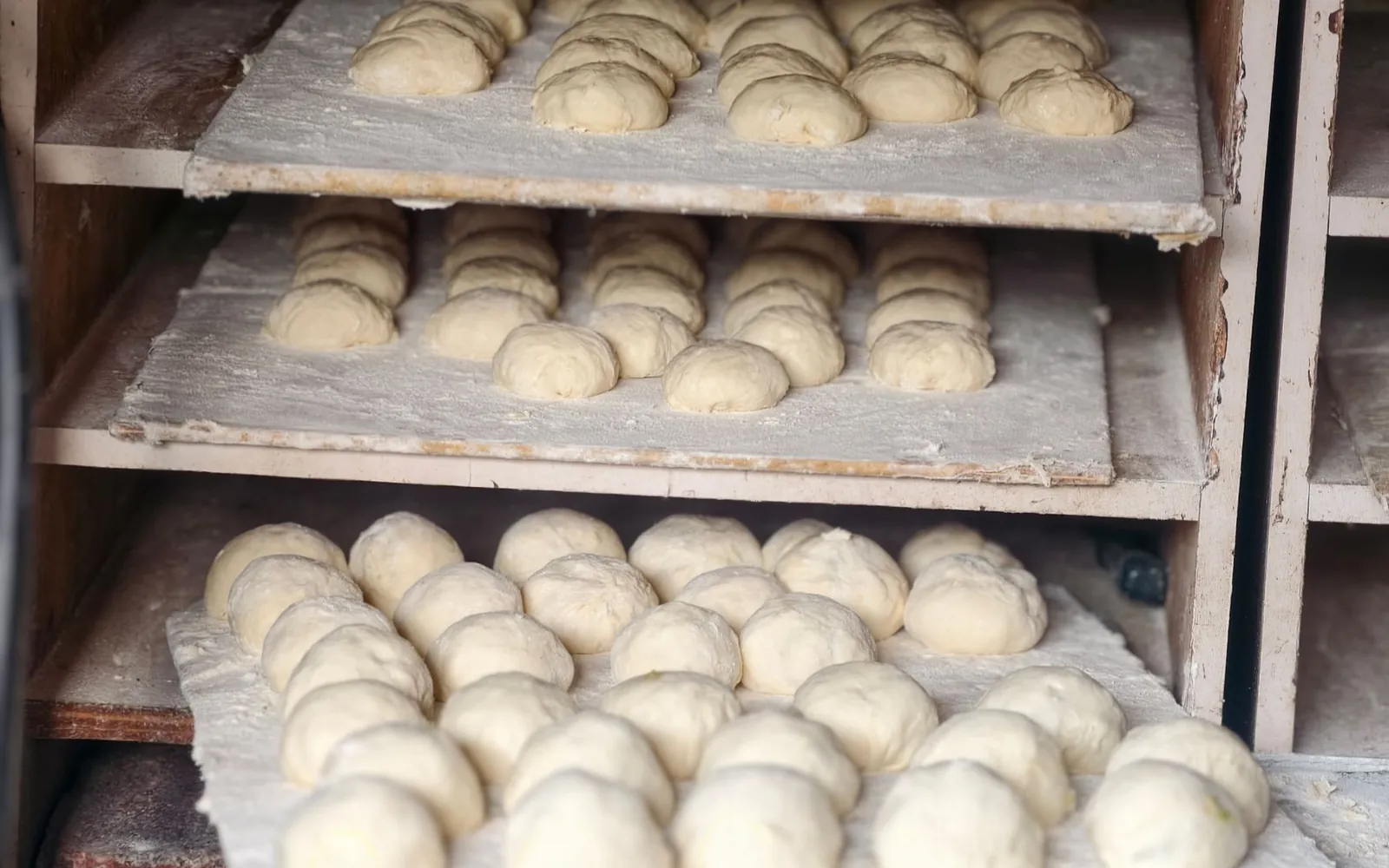
Our dough is flour, water, salt and yeast. The fifth ingredient is time. Every ball of dough we stretch was mixed two days earlier.
We use very little yeast and keep the dough cold. Fermentation still happens, only slowly. Over 48 hours the yeast and the natural enzymes in the flour break down some of the starch and protein. The dough develops flavour, and many people find a long-fermented crust sits lighter than a quick one.
The flour matters as much as the time. We use a finely milled wheat flour with enough protein to hold its shape through two days of resting and still stretch thin without tearing. The wholewheat crust uses a blend, because wholewheat on its own makes a dense base.
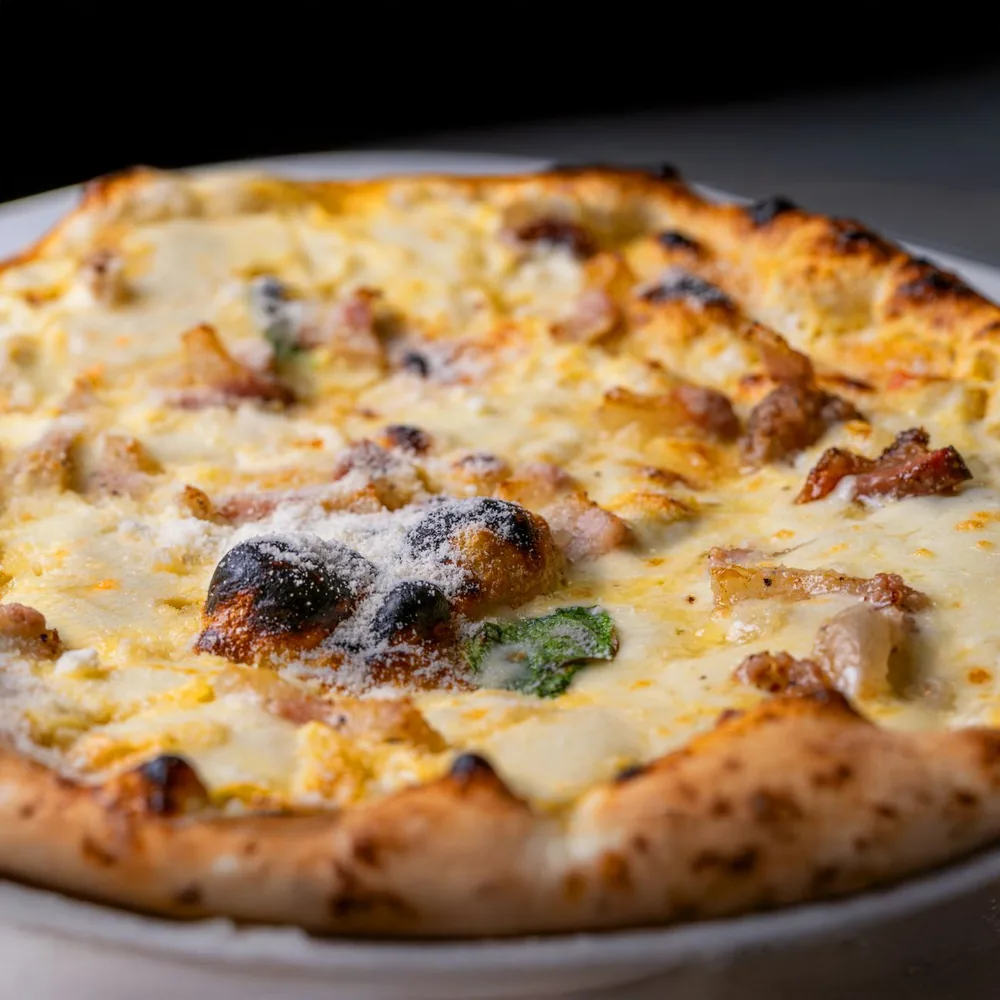
The dough is wetter than most home recipes. In a 450°C oven that water turns to steam within seconds and inflates the rim. The dark blisters on the edge, often called leopard spots, are where thin bubbles of dough caught the heat first.
It also means we cannot make more dough in a hurry. If we sell more pizzas than we planned for two days ago, we run out. We would rather say so than serve dough that is not ready.