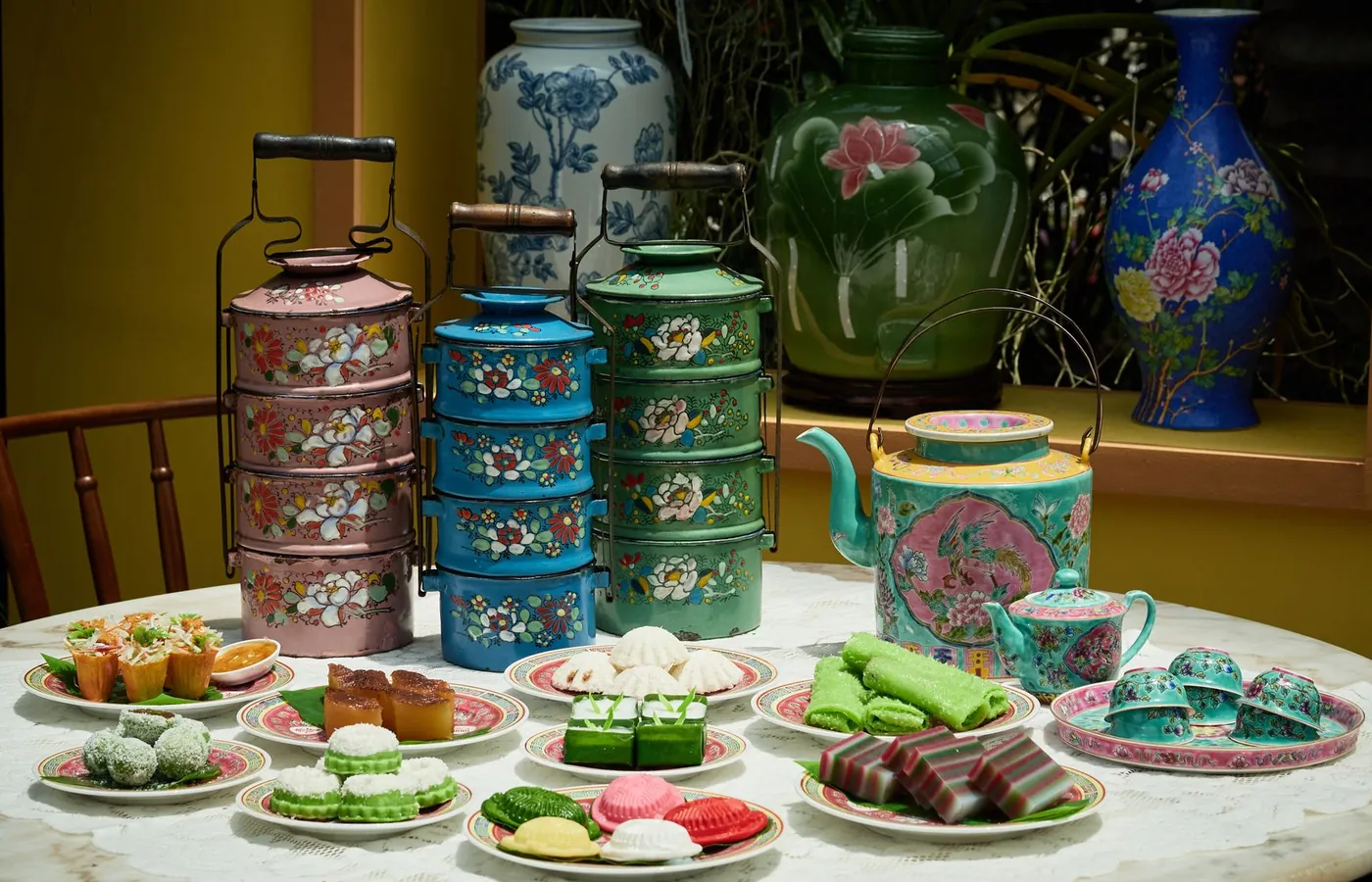
A tiffin is cooked in the morning and eaten at one in the afternoon, often after a ride across the city. Food that is lovely on a plate at the table can be a mess by then. Over the years we have settled on a few rules.
Wet and dry never share a box. Dal and gravy go into containers with tight lids, and dry sabzi, rotis and rice each get their own. A roti that touches gravy for forty minutes is not a roti any more.
Rotis are stacked, wrapped in a cloth-lined foil and packed last, straight off the fire. The stack keeps itself warm and the lining takes up the steam, so they stay soft without going damp.
We cook tiffin gravies a little thicker than restaurant ones. A thick gravy does not slosh, holds its heat longer and is easier to eat with a roti at a desk. Fried things are left out of the daily menu because they do not survive the lid.
Salad and pickle go in a separate small cup, and curd is packed cold in its own tub. Hot and cold boxes sit on different levels of the carrier.
If you are eating later than planned, open the lids for a minute to let the steam out and then close them again. Reheat the dal and sabzi, not the rotis, and the meal will be close to how it left our kitchen.