Leather labels can mislead. A plain guide to what you are paying for.
Most people buying a leather bag meet three or four terms on a label and no explanation. The differences are real and they decide how a bag will age.
Full grain
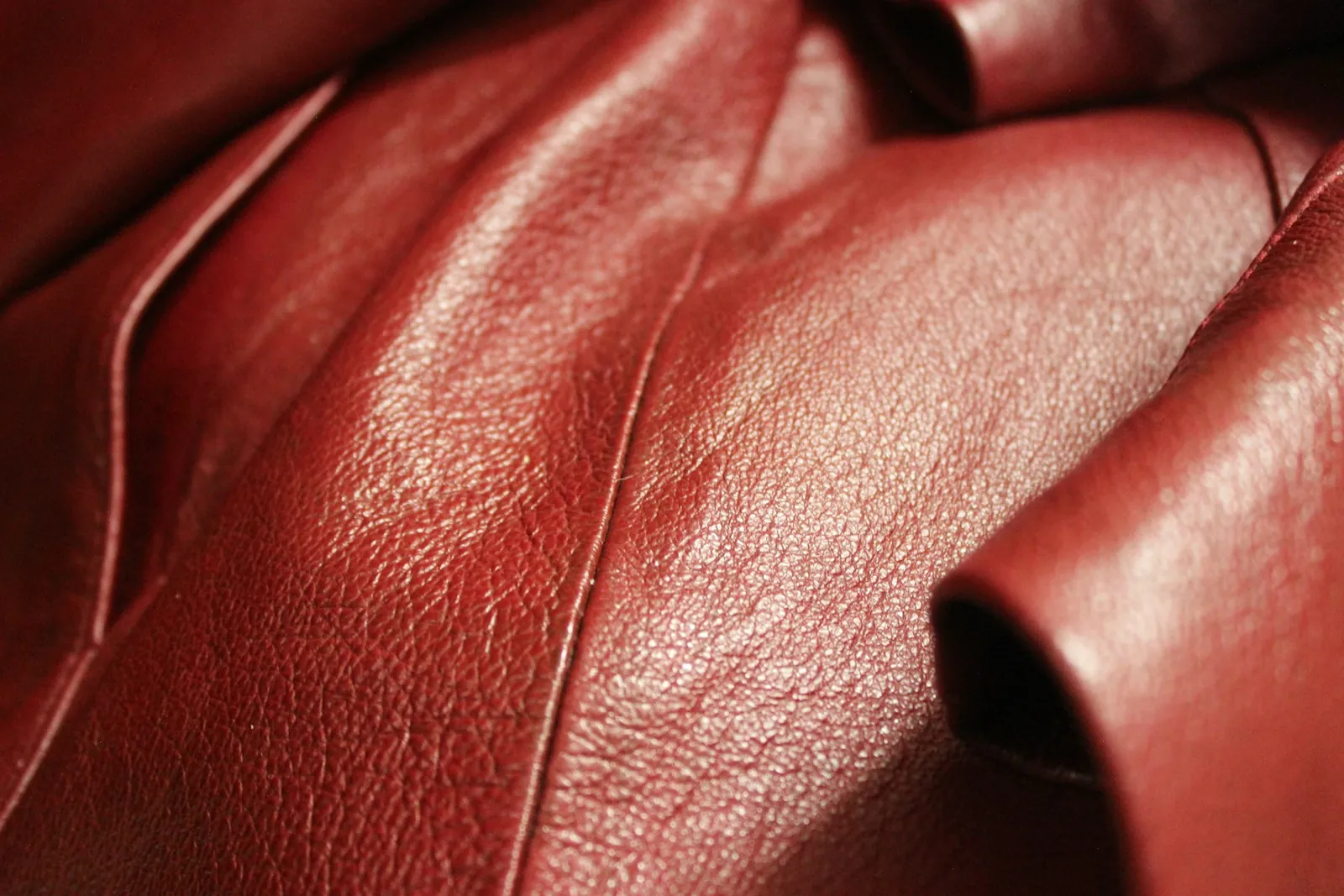
A hide has layers. The outermost layer, just under the hair, has the tightest and strongest fibres. Full-grain leather keeps this layer whole. Nothing is sanded away, so you can see pores, growth lines and the occasional healed scar.
It is the strongest leather and the only kind that develops a true patina. It is also the most costly, because only clean hides can be used. Every Karvelle bag is full grain.
Top grain
Top-grain leather has had the surface lightly sanded to remove marks, then finished with a coating and often an embossed pattern. It looks uniform and resists stains. It is a sound material, but the sanding removes some strength and the coating stops it from ageing in the same way.
Genuine leather
This sounds like a promise and is in fact a grade. It usually describes the lower layers of the hide, split away from the top and given an artificial surface. It is real leather, and it is the weakest kind.
Bonded leather
Scraps and dust, ground up and glued onto a backing. It peels within a year or two. We would not call it leather at all.
Vegetable tanned or chrome tanned
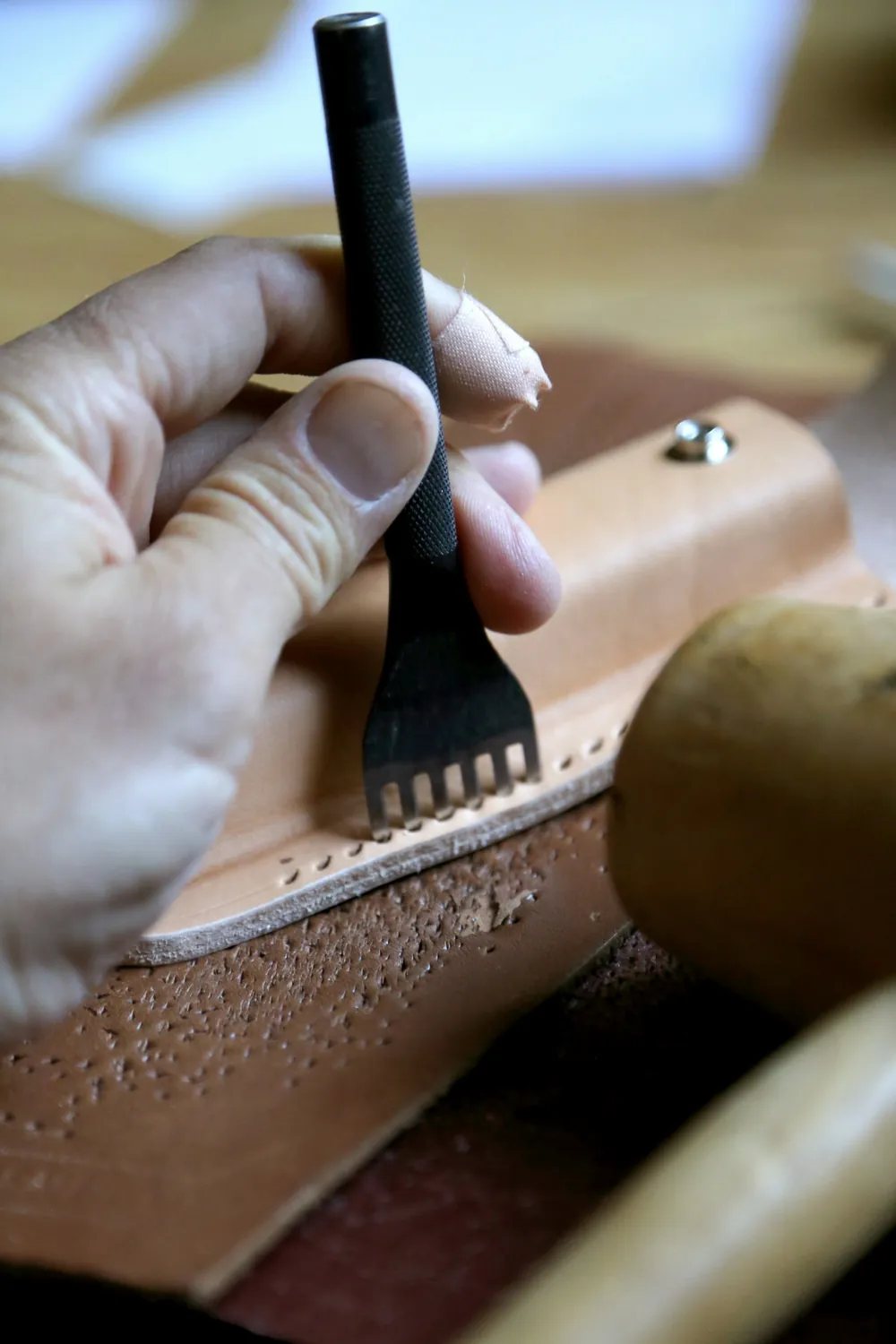
Tanning turns raw hide into leather. Chrome tanning takes a day and gives soft, colourfast leather. Vegetable tanning uses bark and takes weeks. The result is firmer, smells of wood, and darkens beautifully with light and handling. We use vegetable-tanned leather for most structured pieces and a small amount of chrome-tanned leather where softness matters.
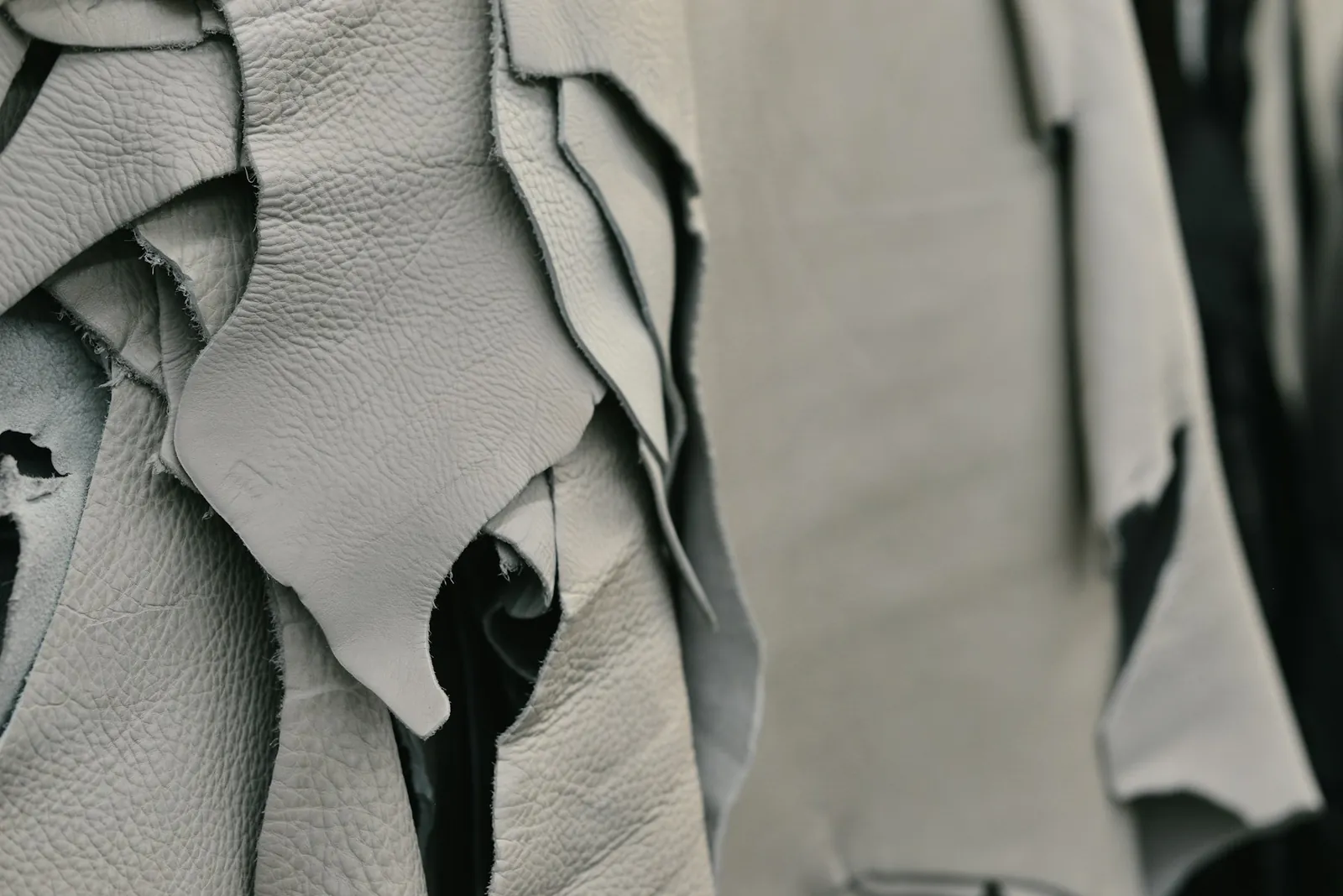
How to check
Look at a cut edge. Full-grain leather shows dense fibres all the way through. Press a fingernail into the surface. It should mark, then slowly recover. And smell it. Good leather smells of leather, not of paint.