What happens between ten in the morning and six in the evening at Studio 4, Narain Singh Circle.
Our studio is one long room on the first floor, with north light and eleven benches. Visitors often expect noise. What they find is quiet, a radio turned low and the tap of a mallet.
Ten o'clock
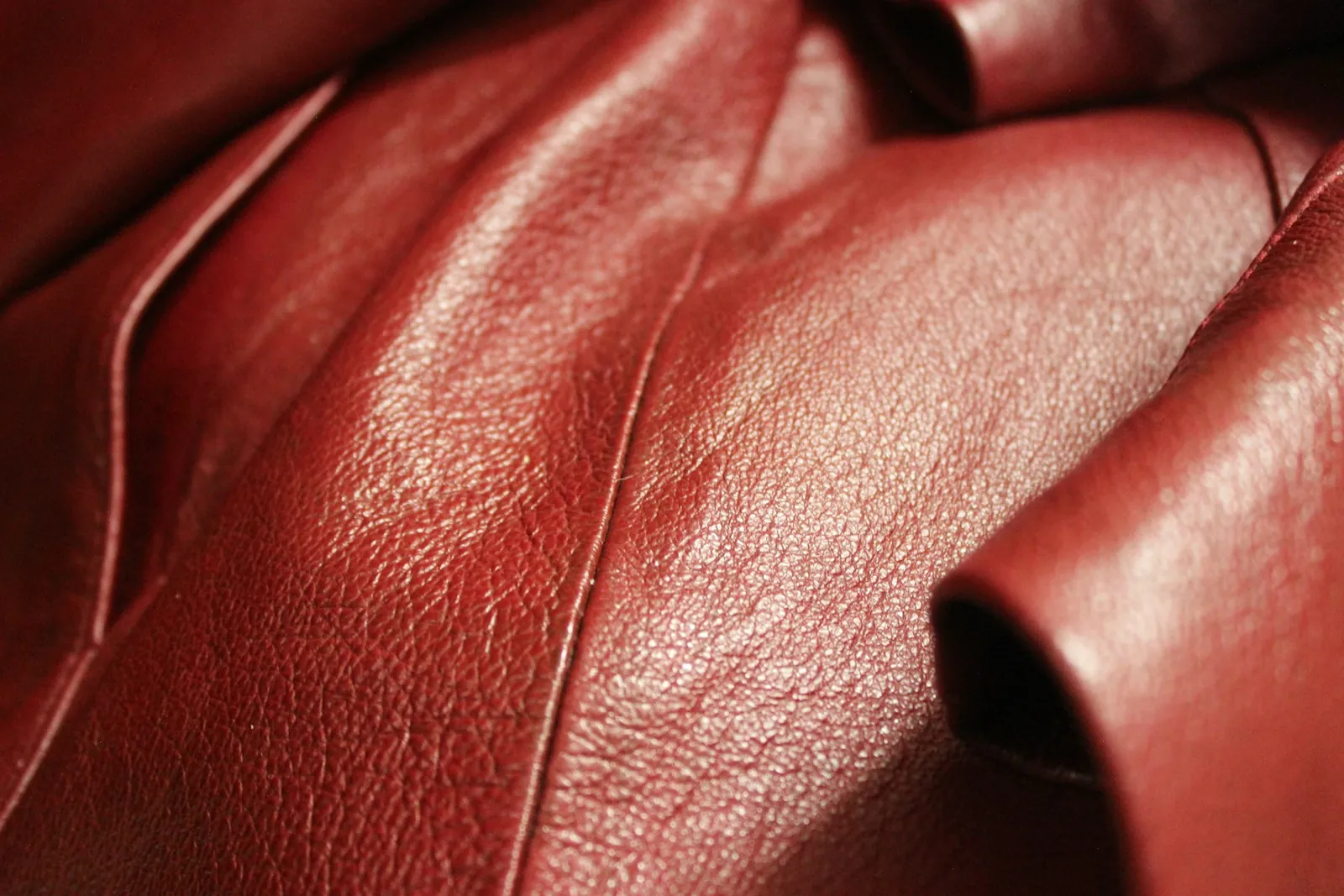
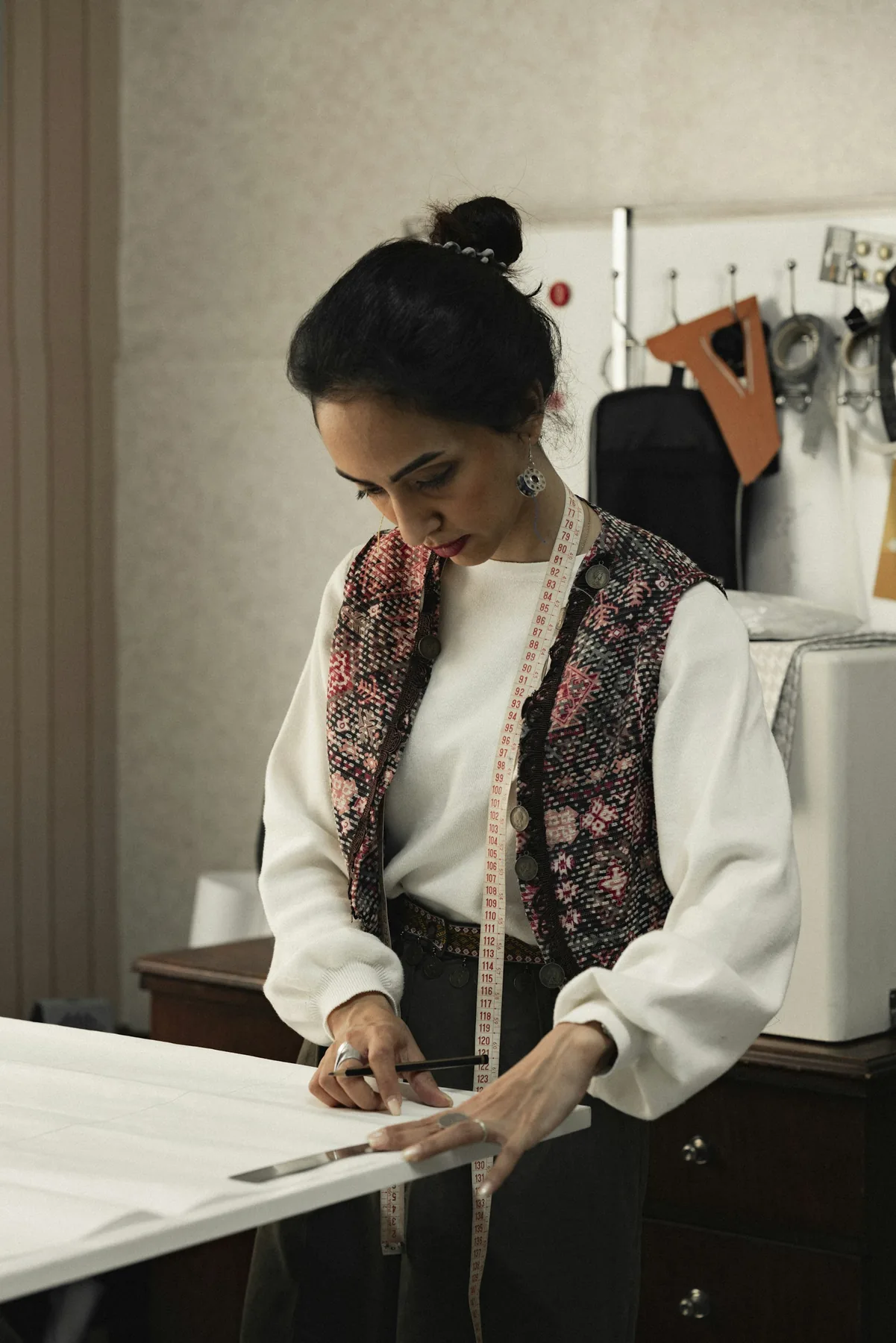
The day starts with leather. New hides are unrolled on the cutting table and checked under the window for scars, insect bites and loose grain. The cutter marks the best areas with a silver pen. Handles and straps come from the back, where the hide is strongest. Panels come from the sides.
Eleven
Each maker collects the cut pieces for the bag they are working on. A bag stays with one person from this point until it is finished. Their initials go on the job card.
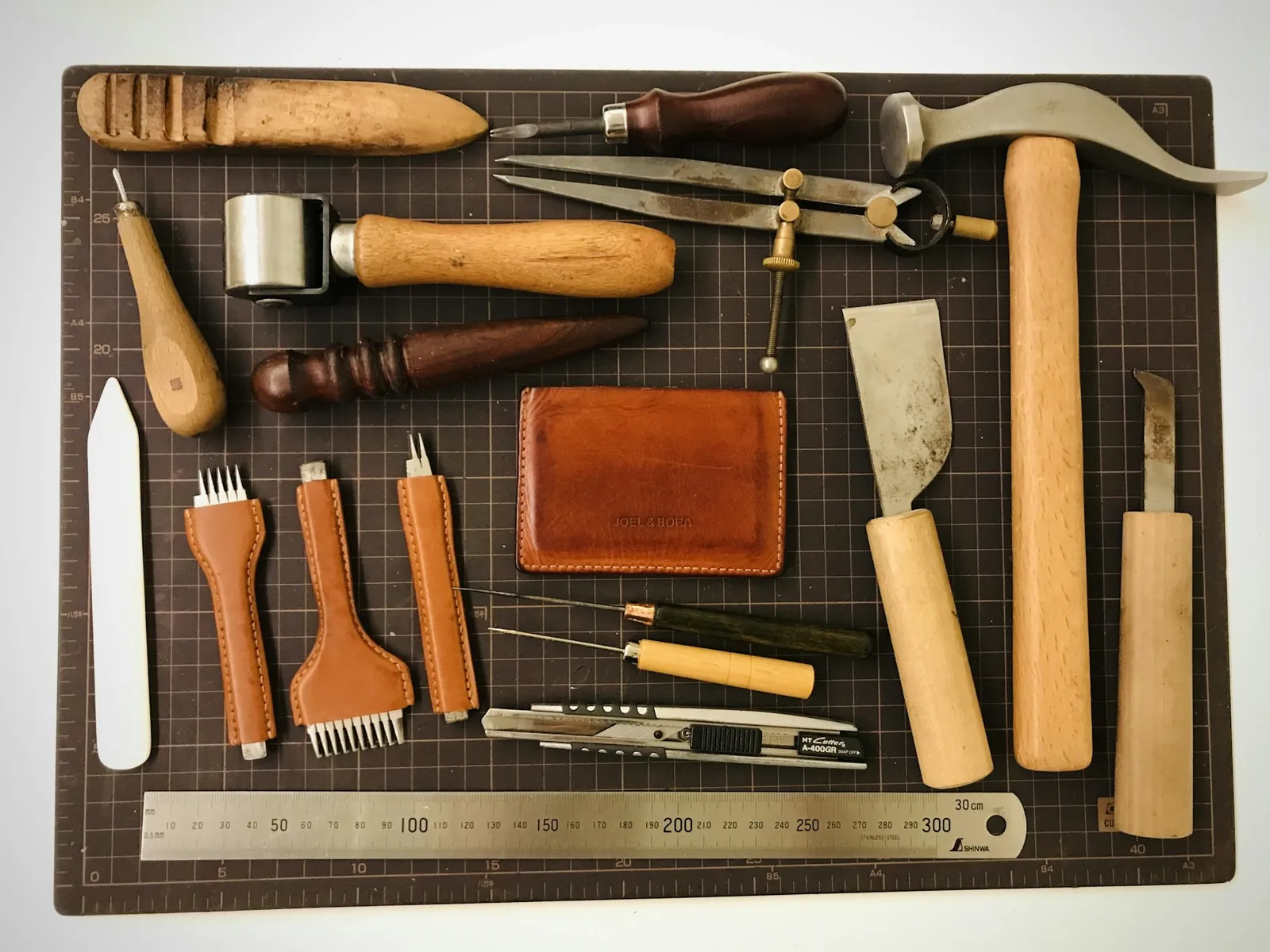
Edges are thinned with a skiving knife so that seams will lie flat. This is the step that takes longest to learn. Too little and the seam is bulky. Too much and it is weak.
One o'clock
Lunch is eaten together at the cutting table, cleared for the purpose. Someone always brings pickle.
Two
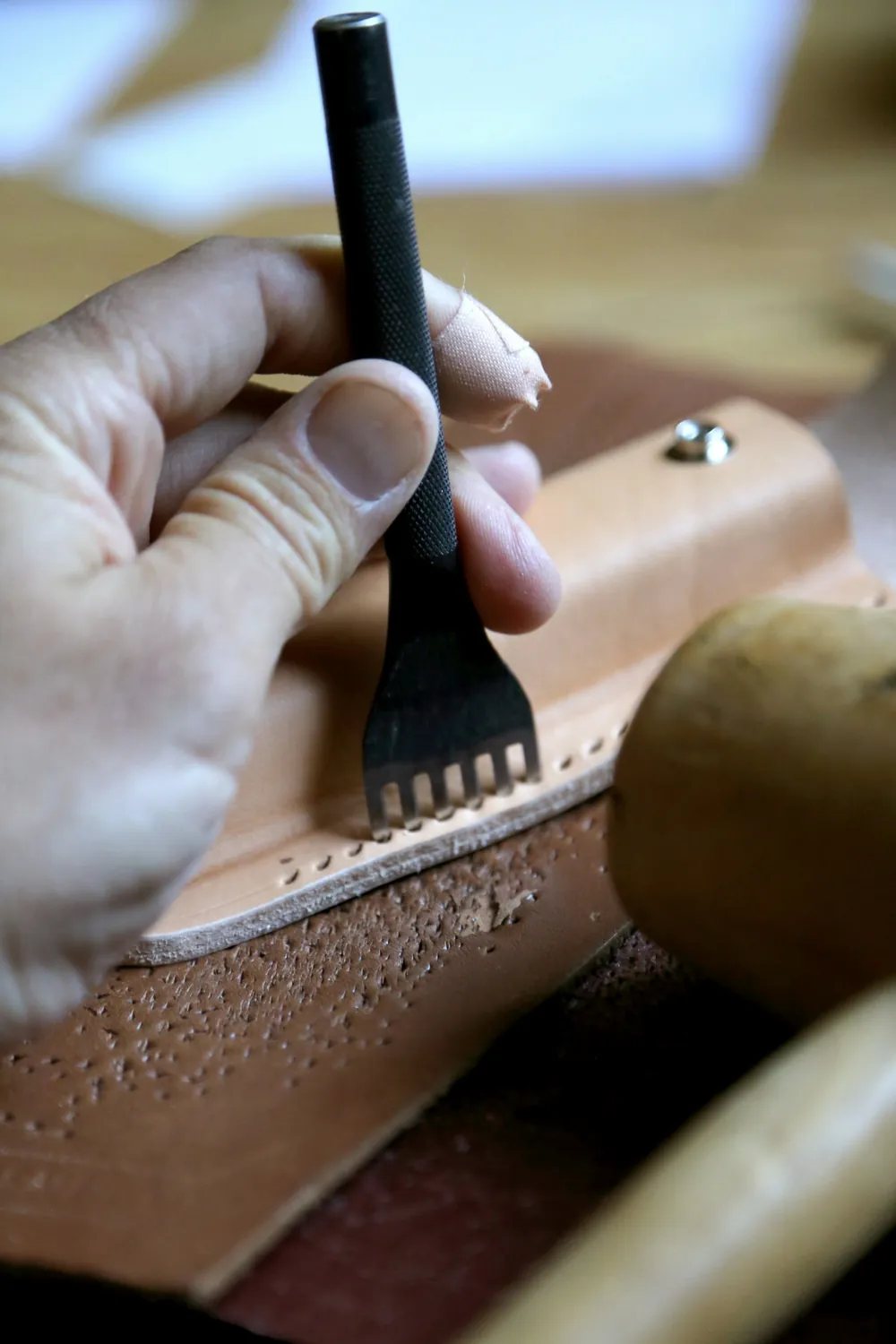
The afternoon is for stitching. Holes are punched, thread is waxed, and the clamps come out. A maker will stitch for three hours with few breaks. It is steady, absorbing work.
Five
Finished seams are tapped flat with a smooth hammer. Edges are sanded, painted and left to dry on racks overnight. Hardware is set last, so it is not scratched during making.
Six
Before a bag leaves, a second maker checks it against a list of forty points: stitch count, edge finish, zip action, strap length. Then it is numbered, wrapped in cotton and boxed with a card signed by the person who made it.
Come and see
The studio is open to visitors Monday to Saturday, ten to six. You are welcome to watch, ask questions and handle the leather. Tea is offered and seldom refused.