















































The honest answer is that both have a place. Here is how to decide what goes in the bowl.
It is the question we are asked most often, and the answer is rarely one or the other.
The case for dry food
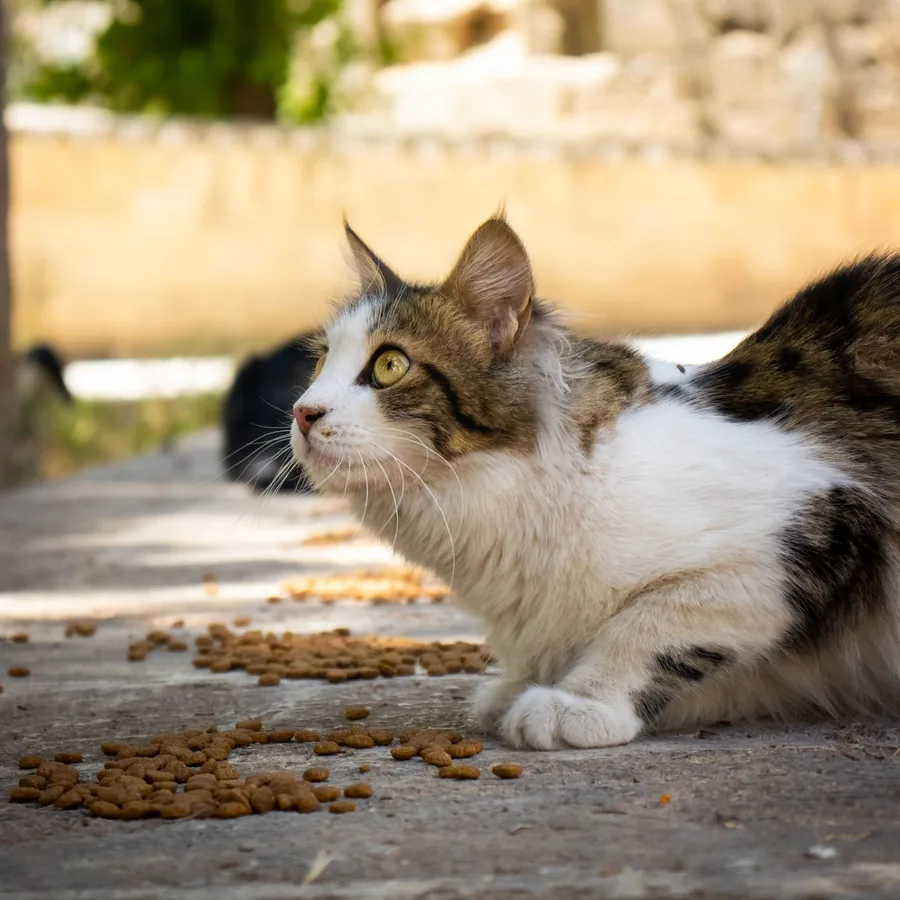
Dry food is calorie dense, easy to store and can be left out for grazers without spoiling. The crunch offers some mechanical cleaning for teeth, and it costs less per meal.
The case for wet food
Wet food is around 80% water. Cats evolved from desert animals and have a low thirst drive, so many do not drink enough on a dry-only diet. Extra moisture supports the kidneys and urinary tract. Wet food is also lower in calories by volume, which helps cats that need to lose weight.
Why we like mixed feeding
A wet meal in the morning or evening with measured dry food in between gives you the best of both: hydration, variety and convenience. For a 4 kg adult, one 85 g pouch plus about 35 g of dry food a day is a good starting point.
When to lean one way
Cats with a history of urinary problems or kidney disease usually do better with more wet food. Cats with dental pain may find mousse or pate easier. Ask your vet if you are unsure.
Whatever you choose
Look for the words complete and balanced on the pack. Treats, toppers and broths are complementary: lovely extras, but not a full diet.