



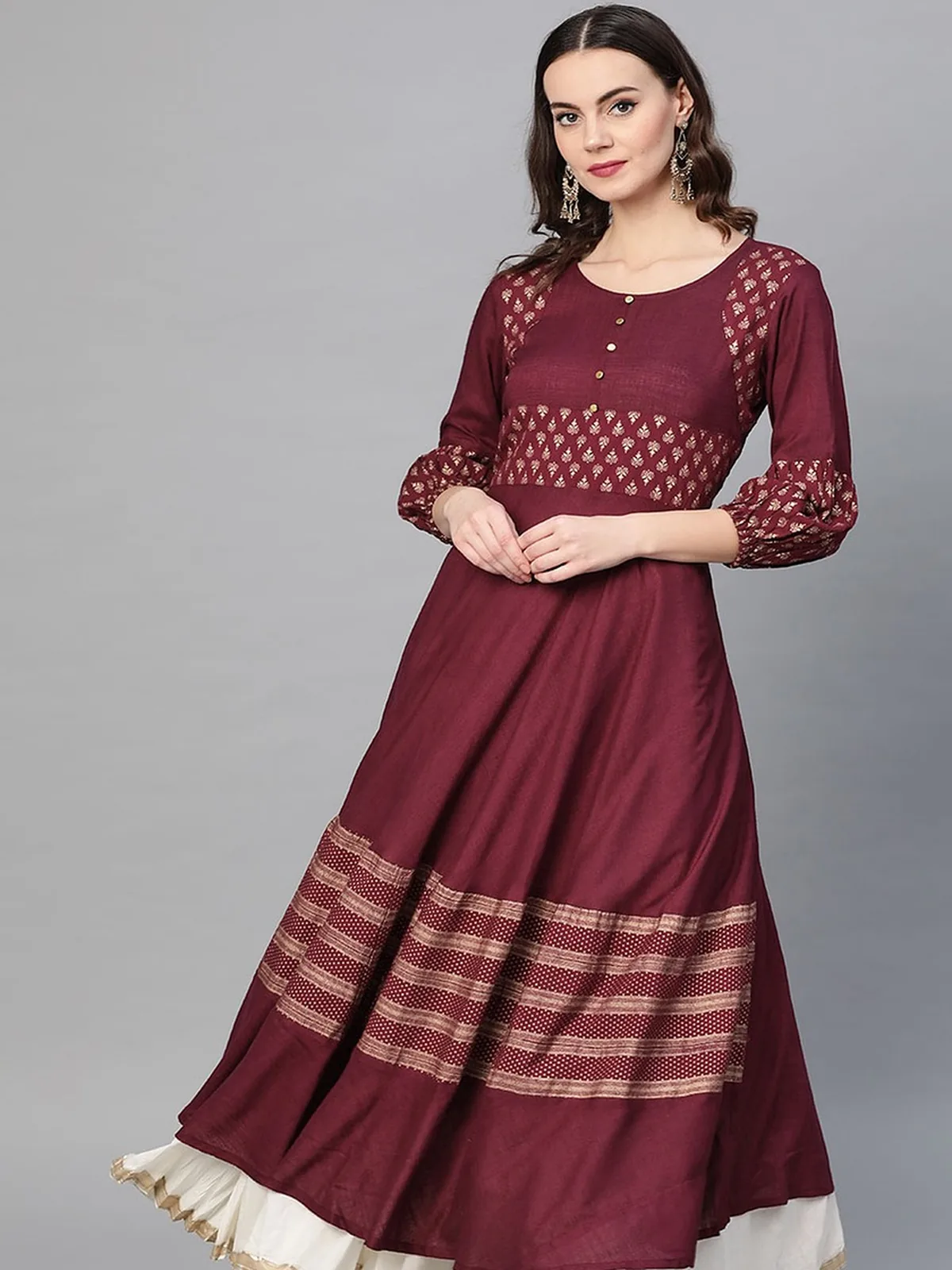
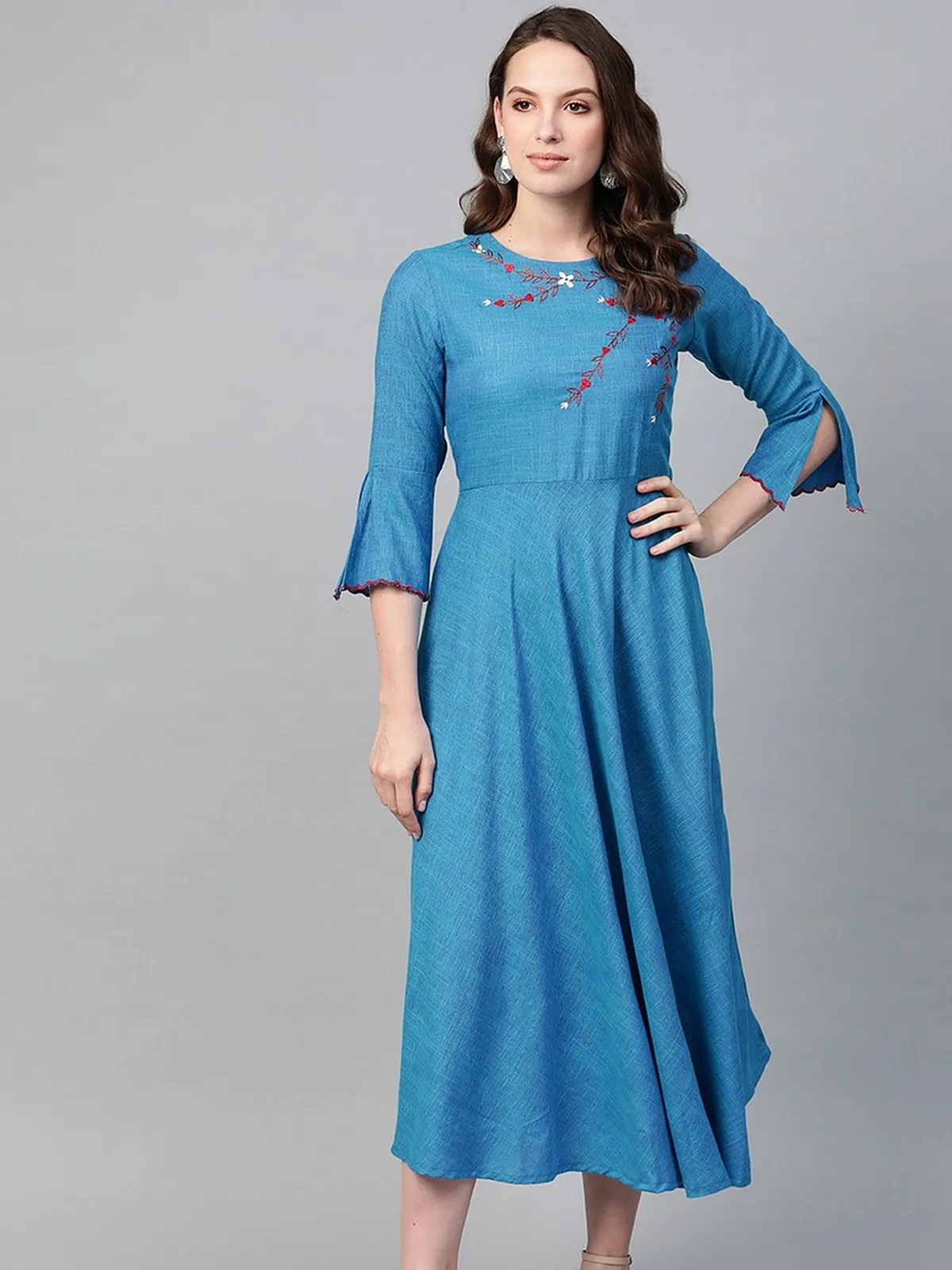
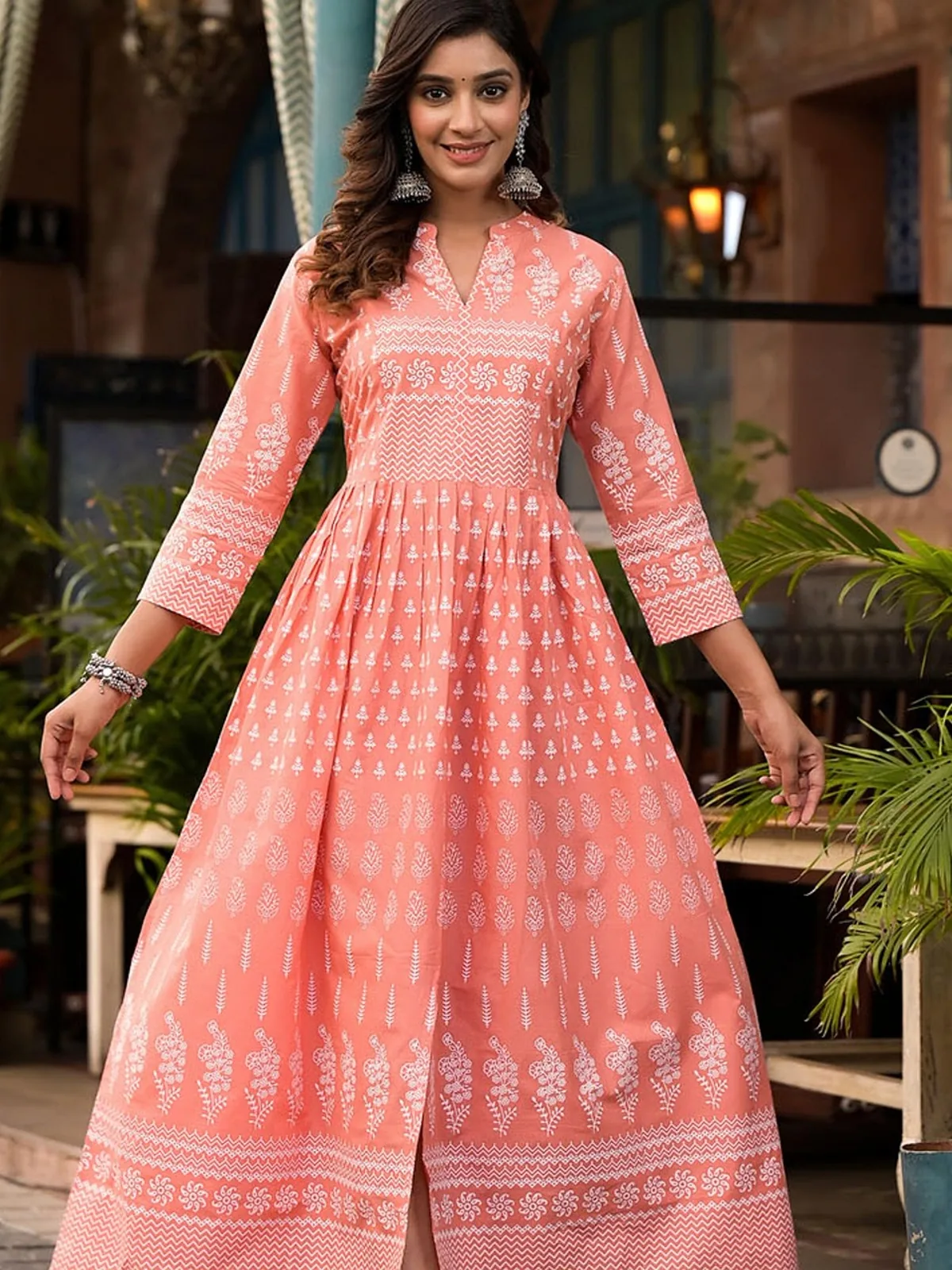
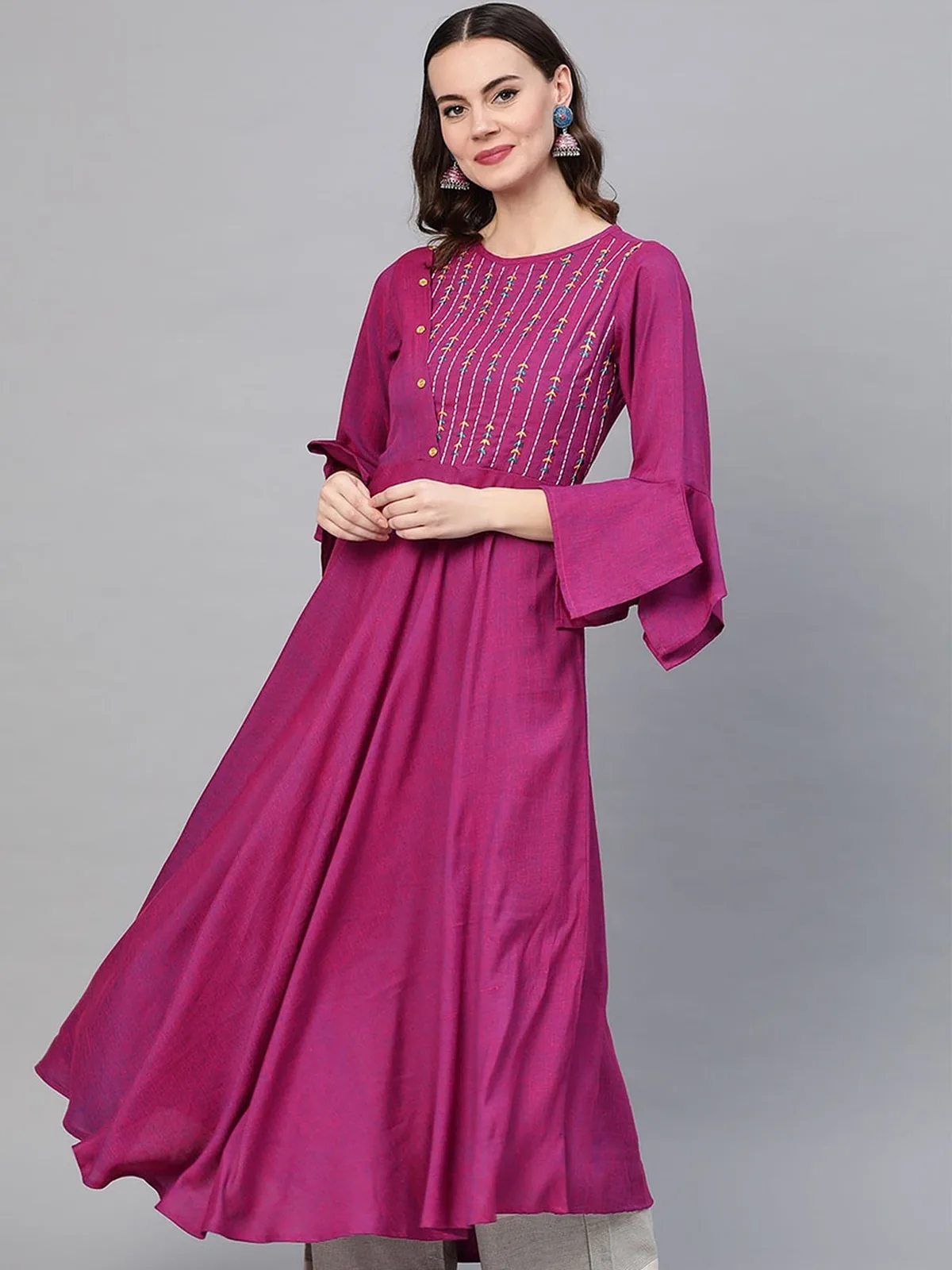
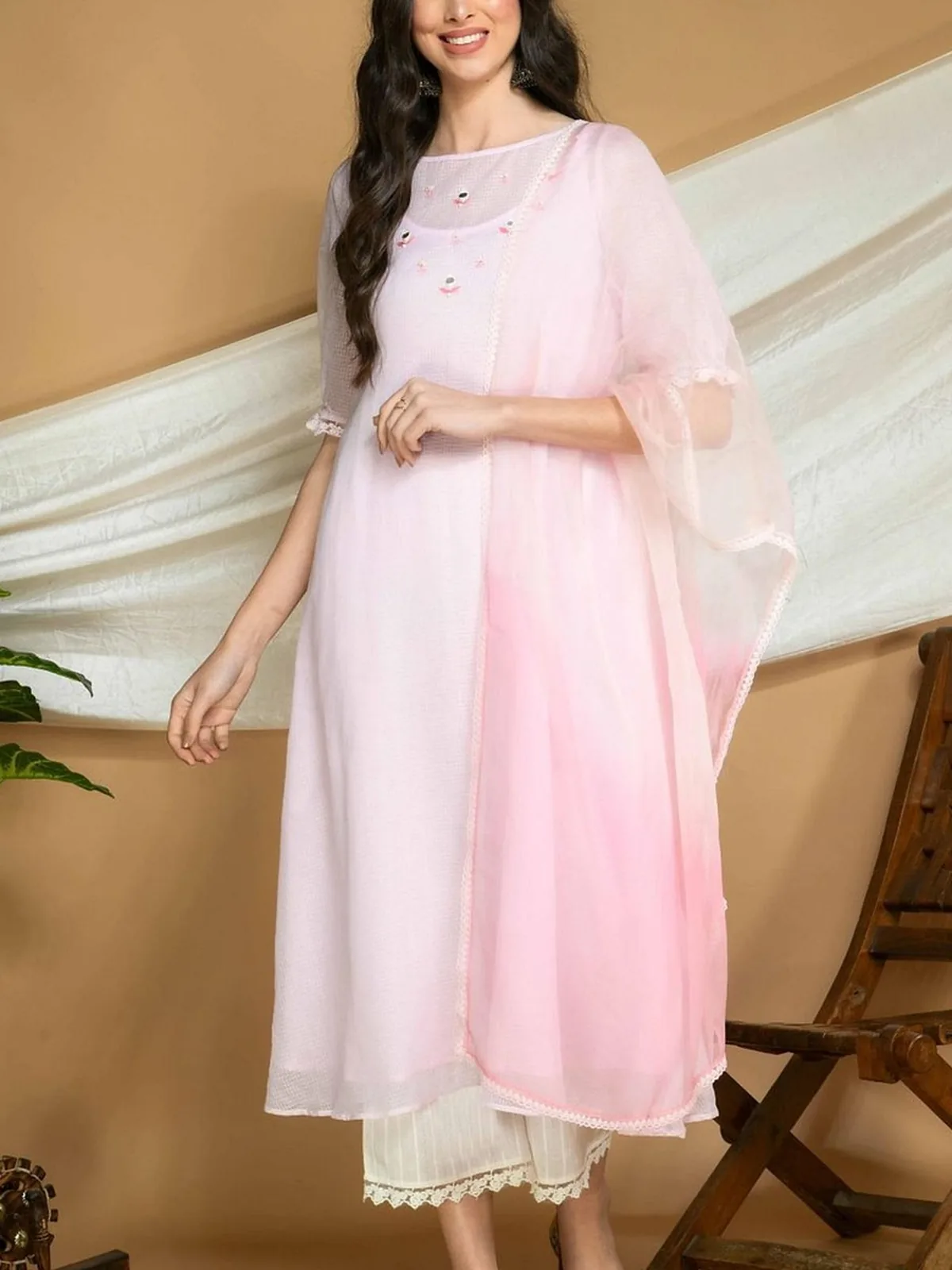

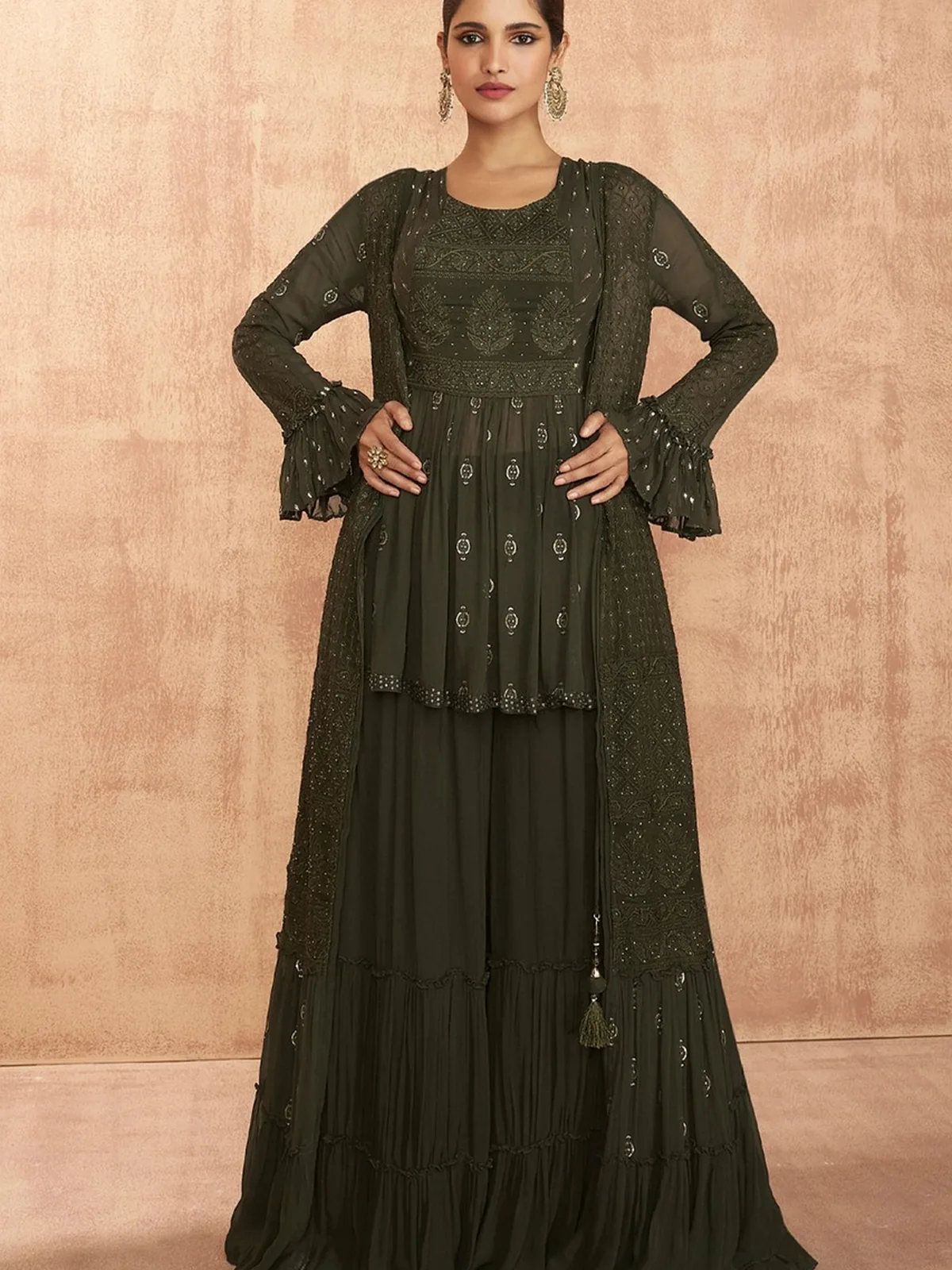
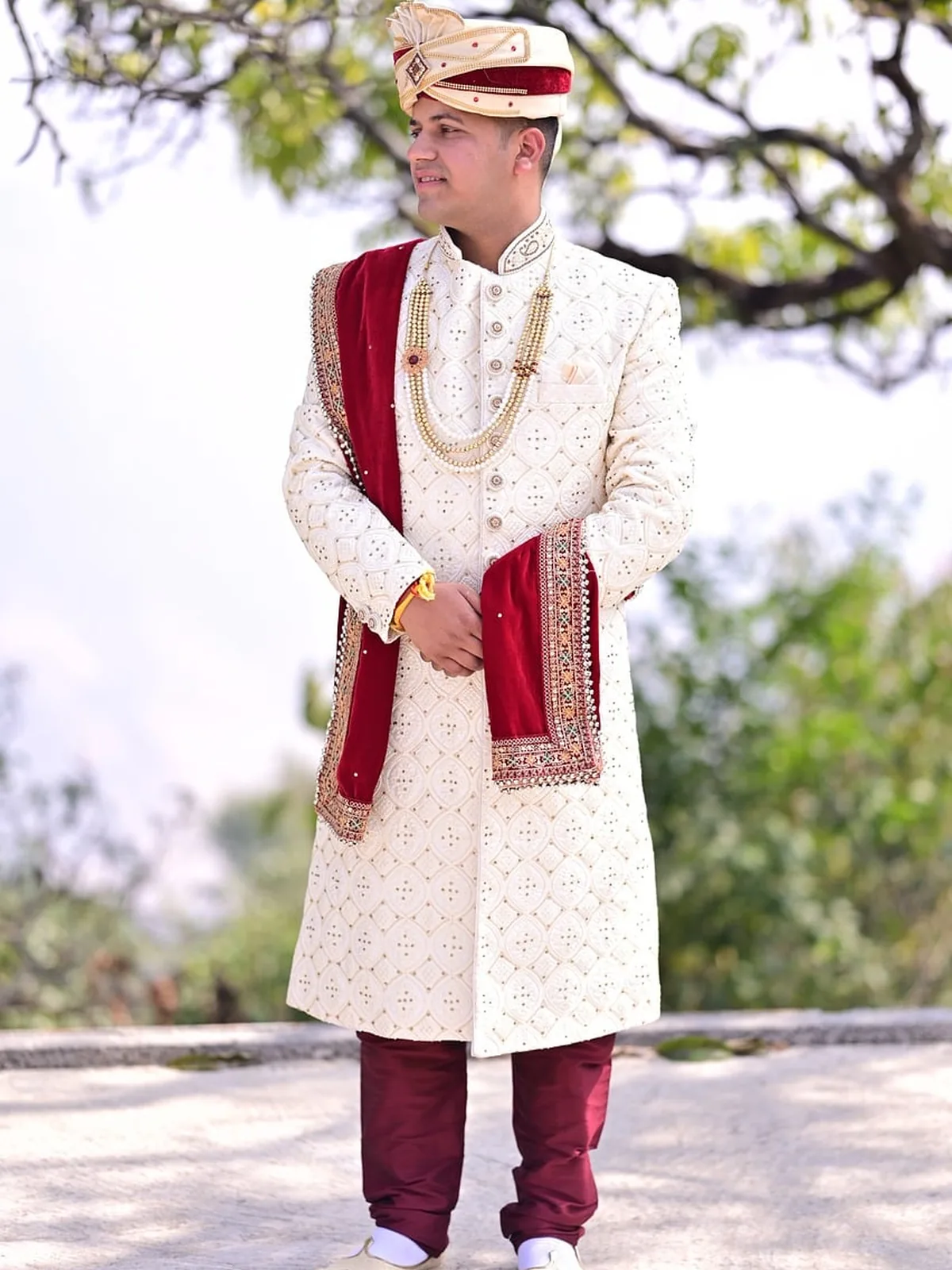


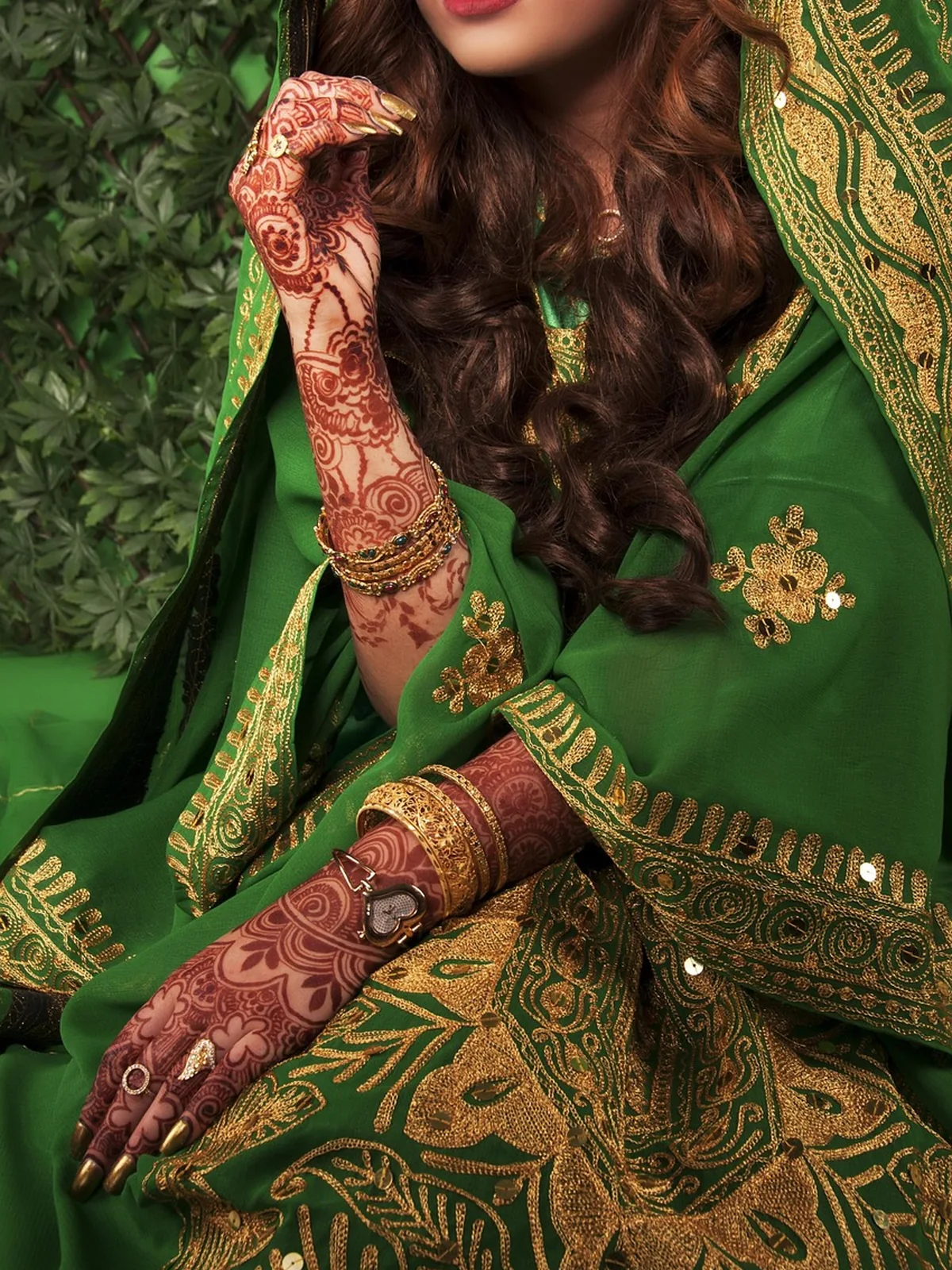

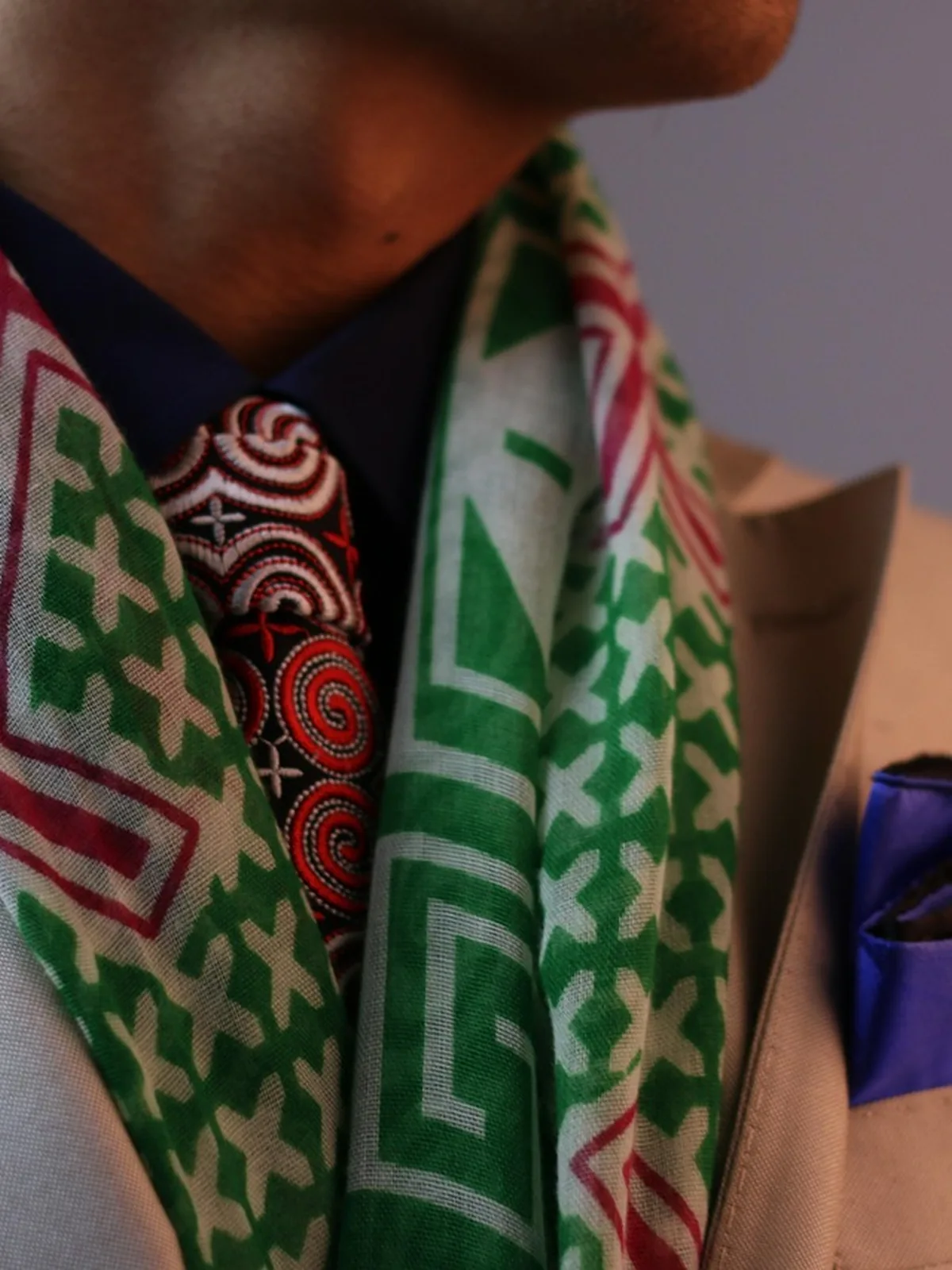
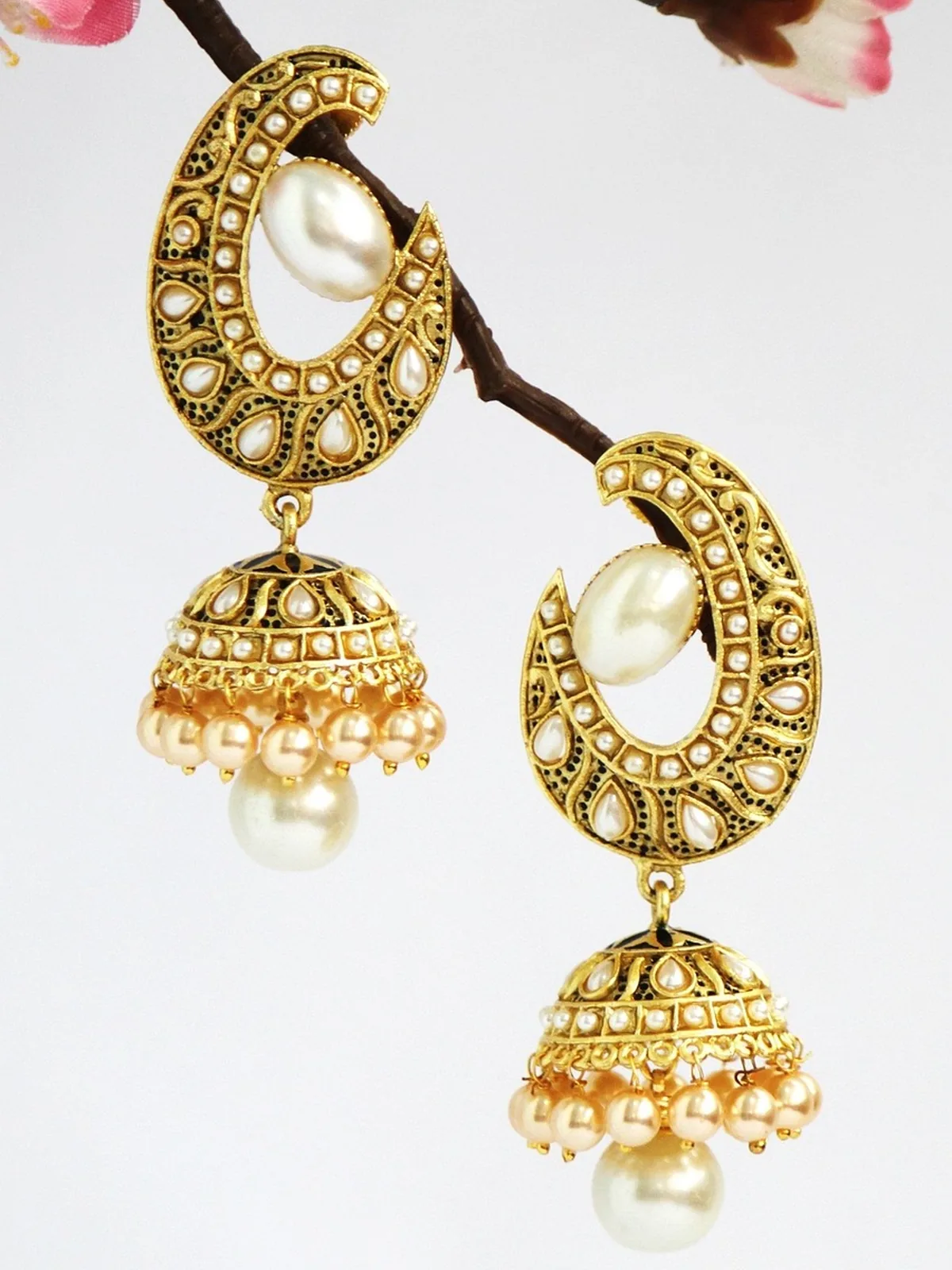

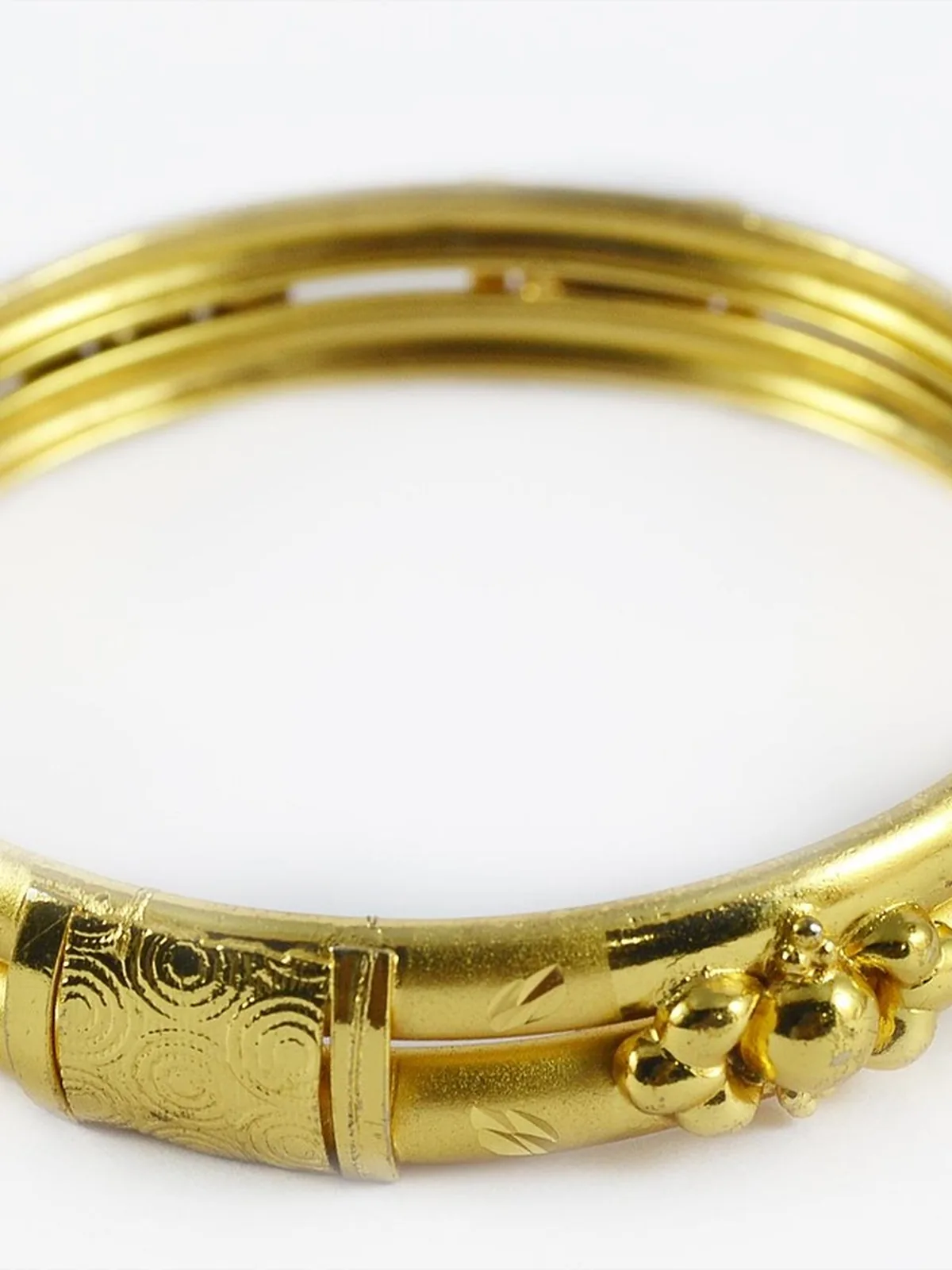

Zardozi means gold work. Historically it used real gold and silver wire; today the wire is copper or polyester with a metallic coating, which is why a zardozi lehenga no longer costs as much as a house.
The cloth is stretched tight on a wooden frame called an adda. Karigars sit along both sides and work with a hooked needle called an aari, couching down coiled wire (dabka), flat wire (badla), sequins and beads along a traced pattern.
Three ways to tell hand work from machine work. First, turn the cloth over: hand work shows small, slightly uneven knots, where machine work shows a neat continuous thread. Second, look at the motifs: hand-laid ones have height, because the wire is coiled. Third, feel the weight. Real zardozi is heavy.
Care is simple but strict. Dry clean only, store flat, keep away from perfume, and wrap in muslin, never plastic, so the metal does not tarnish.