
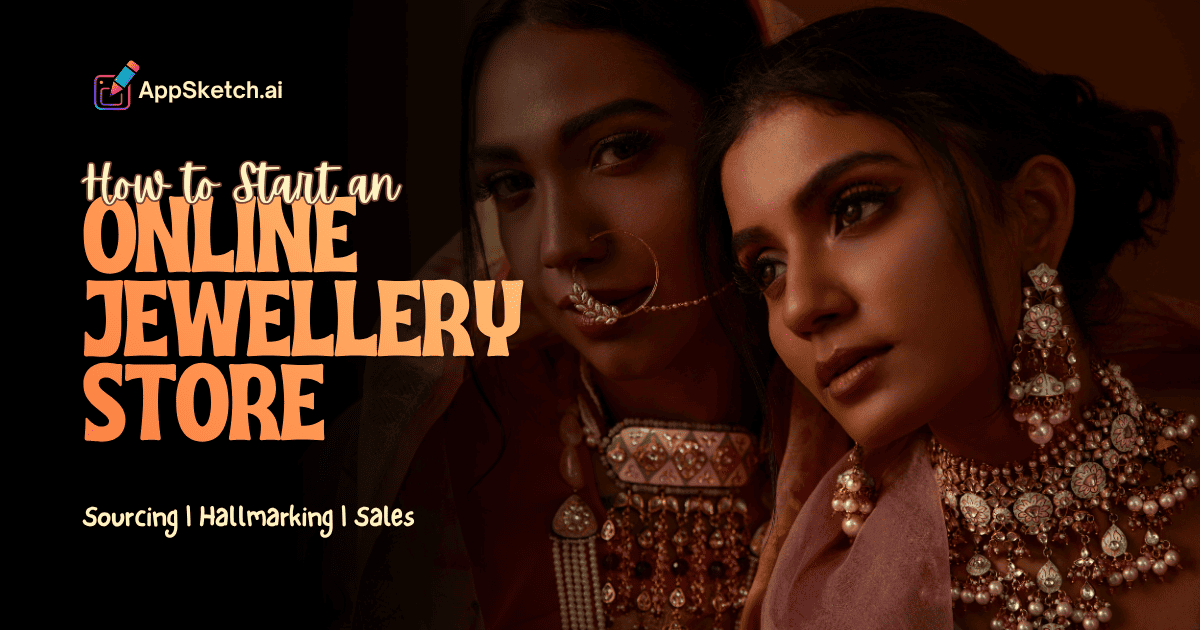
The global jewellery market is projected to reach $330 billion by 2026, and ecommerce now accounts for 20% of all jewellery sales worldwide, a figure that has grown consistently every year since 2020. Starting an online jewellery store has never been more viable. But it has also never been more misunderstood.
Most guides on this topic treat jewellery like any other ecommerce product. It is not. Jewellery is emotionally charged, visually complex, legally regulated in many markets, and technically demanding to photograph well. Customers buying jewellery online cannot touch it, feel its weight, or see how it catches light in person. Every purchasing decision is built entirely on trust in your photography, your descriptions, your certifications, and your brand story.
1. The Online Jewellery Market in 2026: Why Now?
The numbers make a compelling case for starting an online jewellery store in 2026.
The jewellery industry was projected to generate $298.4 billion in 2023 revenue, with global figures on track to reach $330 billion by 2026. China and India are the largest consumers of jewellery globally, followed by the United States, making South Asian and global markets a strong opportunity for new online jewellery businesses.
Three forces are reshaping the market in favour of independent online jewellery stores:
Personalisation is the fastest growing segment. 70% of consumers prefer to customise their jewellery online rather than in-store. Made-to-order rings, engraved pendants, birthstone pieces, and initial necklaces are all categories where small, independent online jewellery stores can offer what large retailers cannot which are individual attention and genuine customisation.
Sustainable and ethical jewellery is surging. Increasing consumer demand for sustainable, traceable jewellery and repair/recycling options is creating a new category of conscious jewellery buyers. Brands that can demonstrate ethical sourcing like conflict-free diamonds, recycled gold, fair-trade gemstones have a competitive advantage that marketplaces cannot replicate.
Social commerce is driving jewellery discovery. Jewellery is one of the most visually driven product categories on Instagram, TikTok, and Pinterest. A single well-executed product shot or styling reel can generate significant organic traffic for a new online jewellery store without a single rupee in ad spend.
Fashion jewellery is the most accessible entry point. It is bought at more affordable price points online. Fine jewellery (gold, diamonds, precious gemstones) carries higher margins (60–80%) but requires stronger trust infrastructure, including certifications and hallmarking. Knowing which tier you are entering shapes everything about how you build your online jewellery store.
2. What Makes Selling Jewellery Online Different From Everything Else
This section does not appear in most guides on starting an online jewellery store, but it is the most important foundation for making good decisions throughout the rest of the process.
Trust is the Product
When someone buys a dress online and it does not fit, they return it. When someone buys a piece of jewellery online and discovers it is not what it appeared to be like the gold is plated, the gemstone is synthetic, the sizing is wrong, the emotional and financial consequence is far more significant. Jewellery purchases are often milestone purchases: engagements, anniversaries, gifts for loved ones. The trust expectation is far higher than in most ecommerce categories.
This means that building an online jewellery store is not primarily a product challenge or a traffic challenge. It is a trust-building challenge. Every element of your online jewellery store; your photography, your material descriptions, your certifications, your packaging, your return policy either builds or erodes that trust.
Jewellery Photography is Its Own Discipline
Most product photography principles do not apply cleanly to jewellery. Jewellery is tiny, highly reflective, and three-dimensional in ways that flat product photography cannot capture. Polished gold and gemstones create unpredictable reflections. Small scale makes focus challenging. A ring that looks stunning in person can look flat and unremarkable in a poorly taken photograph and a poorly taken photograph across your jewellery website and app communicates low quality regardless of how beautiful the piece actually is.
Every guide tells you “invest in good photography.” This guide will tell you specifically how jewellery photography is different and what to do about it.
Legal Compliance Varies By Metal Type and Market
Selling precious metal jewellery is legally regulated in many markets. In the UK, for example, it is a legal requirement to hallmark gold, silver, platinum, and palladium items above specified weights before selling them. In India, BIS hallmarking for gold jewellery has been mandatory since 2021 for most jewellers. These compliance requirements are not mentioned in most beginner guides on starting an online jewellery store and discovering them after launch is expensive and disruptive.
Tarnishing is a Post-Purchase Problem That Affects Your Brand
Silver jewellery tarnishes. Gold-plated jewellery can lose its plating over time. Fashion jewellery made from base metals can discolour with wear and exposure to moisture. When customers do not know this and it happens, they feel deceived, even if the tarnishing is natural and expected. How you communicate the material properties of your jewellery before purchase directly impacts your return rate, your review scores, and your repeat purchase rate.
3. Step 1: Define Your Jewellery Niche
The jewellery market is one of the most competitive in ecommerce. Generic jewellery stores that try to sell rings, necklaces, earrings, bracelets, and bangles to everyone are competing directly with Amazon, Flipkart, Etsy, and thousands of established brands. The only way to build a sustainable online jewellery store is to own a specific niche.
How to Find Your Jewellery Niche
Think of your niche as the intersection of three things: a specific customer, a specific occasion or identity, and a specific material or style. The more precisely you can define all three, the easier every other decision becomes.
Use these tools to validate demand before committing:
- Google Trends – Track search interest in your niche over 12 months. Look for consistent or growing interest, not spikes driven by seasonal events alone
- Etsy and Amazon reviews – Read 1–3 star reviews on competitor jewellery listings. What is missing? What disappointed buyers? These gaps are your product opportunities
- Reddit communities – r/jewellery, r/Silversmithing, r/weddingplanning, r/EngagementRings, and r/BuyItForLife all contain unfiltered customer opinions about what they cannot find
- Instagram and Pinterest hashtags – See what jewellery styles are generating organic engagement. If a style has thousands of saves but limited supply, that is a niche worth entering
Jewellery Niches Trending in 2026
- Bridal and engagement jewellery – high average order value (AOV), emotionally driven purchases, strong repeat gifting behaviour
- Sustainable and ethical fine jewellery – recycled gold, lab-grown diamonds, fair-trade gemstones, growing fast with younger buyers
- Personalised and custom jewellery – name necklaces, birthstone rings, engraved pieces, coordinate jewellery.
- Handmade artisan jewellery – wire-wrapped gemstones, resin jewellery, clay pieces, strong on Etsy but increasingly moving to independent stores
- Cultural and heritage jewellery – temple jewellery, Kundan, Meenakari, tribal silver, deeply underserved in ecommerce
- Minimalist everyday jewellery – dainty gold chains, stacking rings, simple studs. High repeat purchase rate
- Healing crystal and spiritual jewellery – fast growing, passionate community, premium pricing tolerance
- Men’s jewellery – one of the most underserved segments in online jewellery, growing steadily
4. Step 2: Understand Jewellery Types and Pricing Tiers
This is one of the most important decisions when starting an online jewellery store, and one that most guides rush past. The type of jewellery you sell determines your startup cost, your legal obligations, your photography requirements, and the level of trust infrastructure you need to build.
Also Read :
→ How to Start an Online Store
→ How to Start an Online Skincare Store
→ How to Start an Online Grocery Store
→ How to Start an Online Shoe Store
→ How to Start an Online Jewellery Store
→ How to Start an Online Thrift & Resale Store
Fine Jewellery
Made from precious metals (gold, silver, platinum) and genuine gemstones (diamonds, rubies, sapphires, emeralds). High intrinsic value, requires hallmarking and gemstone certification, carries the highest margins (60–80%) but also the highest inventory investment and trust burden.
Best for: Founders with jewellery industry knowledge, access to certified suppliers, and the budget to invest in proper certification and photography infrastructure.
Bridge Jewellery
Sits between fine and fashion, typically sterling silver, gold-filled, or gold vermeil with semi-precious gemstones. More accessible price points than fine jewellery but with genuine material value. Growing segment as consumers move away from fast fashion jewellery.
Best for: The sweet spot for most new online jewellery stores. Genuine materials justify higher pricing, lower compliance burden than fine jewellery, and customers are increasingly willing to pay more for quality.
Fashion Jewellery (Costume Jewellery)
Made from base metals, plated finishes, glass, acrylic, and synthetic stones. Trend-driven, low cost per unit, high volume. Margins can be 50–60% but competition is intense and price sensitivity is high.
Best for: Entrepreneurs who want to start a jewellery business with minimal capital, test demand quickly, or focus on seasonal and trend-driven collections.
Handmade Jewellery
Made by the seller themselves. Wire wrapping, resin casting, bead work, silversmithing, clay jewellery. Each piece is unique and can command premium pricing based on craftsmanship and story. The making process itself becomes a marketing asset.
Best for: Makers and artisans who want to monetise their craft. The lowest capital requirement and the strongest brand differentiation story.
5. Step 3: Choose Your Business Model
Your business model for your online jewellery store determines how you source, fulfil, and differentiate your products. The right choice depends entirely on which jewellery tier you are entering.
Make It Yourself (Handmade)
Ideal for: Artisans, makers, and designers with silversmithing, resin, beading, or clay skills.
Trade-off: Time-intensive and hard to scale. As orders grow, fulfilment becomes a bottleneck unless you hire additional makers or move to manufacturing partners.
Dropshipping
Ideal for: Testing a jewellery niche before investing in stock. Low capital requirement.
Trade-off: In jewellery, the risk of dropshipping is higher than in most categories. You have no control over packaging, and cheap jewellery suppliers often have inconsistent quality and sizing. Customer trust is hard to build when you cannot vouch for the product from personal experience.
Wholesale (Buy and Resell)
Ideal for: Entrepreneurs who want a curated online jewellery store with consistent inventory and genuine product knowledge.
Trade-off: Upfront inventory investment, storage, and the need to understand material quality and hallmarking requirements before purchasing.
Private Label
Ideal for: Founders building a distinct jewellery brand with long-term identity and margin goals.
Trade-off: Minimum order quantities, quality control responsibility, and the need to ensure compliance with hallmarking regulations in your target markets.
Custom / Made-to-Order
Ideal for: Established online jewellery stores scaling up or jewellers with manufacturer relationships who can handle bespoke requests.
Trade-off: Higher operational complexity. Each custom order requires individual sourcing, production, and quality checks.
6. Step 4: Source Your Jewellery
For Handmade Jewellery
Source your raw materials, metals, gemstones, wire, findings, clasps from specialist suppliers. In India, Jaipur (gemstones), Mumbai (gold and diamond wholesale), and Delhi (silver and fashion jewellery) are the primary sourcing hubs. Internationally, Kernowcraft (UK) and Rio Grande (US) are widely used by independent jewellers.
Build relationships with multiple material suppliers. Dependency on a single source creates vulnerability. If a supplier runs out of a key gemstone or metal, your entire production can stall.
For Wholesale Jewellery
Trade shows are the most reliable way to assess quality in person. The International Jewellery Show (IJL, London), Jewellery & Gem World (Hong Kong), and Jewels India (Mumbai) are the key events for wholesale discovery. For India-based online jewellery stores, the Surat, Jaipur, and Rajkot jewellery markets offer strong wholesale options across fashion, silver, and traditional jewellery categories.
For Dropshipping
Fashion jewellery dropshipping platforms include AliExpress, Spocket, and Modalyst. The critical rule: order samples from every supplier before listing any piece in your online jewellery store. The gap between product photos and actual quality is wider in jewellery than in almost any other category. Assess weight, plating quality, clasp strength, and whether the sizing matches what is listed.
The Hallmarking Consideration in Sourcing
When sourcing precious metal jewellery for resale, confirm whether pieces come pre-hallmarked by the supplier or whether you need to arrange hallmarking yourself before selling. In markets where hallmarking is legally required like in India for gold above a certain weight, UK for most precious metal articles, selling non-hallmarked pieces can result in penalties and significant reputational damage to your online jewellery store.
7. Step 5: Hallmarking, Certification and Legal Compliance
This is the section most beginner guides completely omit. It is also one of the most consequential for any online jewellery store selling precious metal pieces.
What is Hallmarking?
Hallmarking is the official certification of a precious metal item’s purity, applied by an independent Assay Office. It is the jewellery world’s built-in guarantee of authenticity and quality. Hallmarks are tiny stamped symbols on a piece of jewellery that confirm: the metal type and purity (e.g., 925 for sterling silver, 18k or 750 for 18-carat gold), the maker’s mark, and in some markets, the year of manufacture and the Assay Office that tested it.
It isn’t possible to detect an article’s precious metal content by sight or touch. Hallmarking is the only reliable verification method for buyers.
Hallmarking Requirements by Market
India: BIS (Bureau of Indian Standards) hallmarking for gold jewellery became mandatory in India in 2021 for jewellers registered with BIS. Gold jewellery sold through an online jewellery store must carry the BIS Hallmark, HUID (Hallmark Unique ID), and the jeweller’s BIS registration mark. Selling unhallmarked gold jewellery online in India is a legal offence.
UK: It is a legal requirement to hallmark gold, silver, palladium, and platinum articles above specified weights (silver over 7.78g, gold and palladium over 1g, platinum over 0.5g). Hallmarking is performed by one of four Assay Offices: London, Birmingham, Edinburgh, or Sheffield. Selling precious metal jewellery without a UK hallmark is illegal.
International: Most markets have their own precious metal regulations. If you are selling internationally through your online jewellery store, research the hallmarking and import requirements for each market before listing.
Gemstone Certification
For online jewellery stores selling fine jewellery with diamonds or significant gemstones, independent gemstone certification is a critical trust signal. Certificates from GIA (Gemological Institute of America), IGI (International Gemological Institute), or HRD confirm the stone’s cut, colour, clarity, and carat weight. Publishing these certificates on your product pages significantly increases purchase confidence for high-value pieces.
Metal Disclosure and Advertising Claims
Accuracy in material descriptions matters legally, not just ethically. Do not describe gold-plated pieces as “gold jewellery.” Do not describe glass stones as gems. In most markets, misleading material claims in jewellery advertising are subject to consumer protection legislation. Always specify clearly: solid gold vs gold-filled vs gold-plated vs gold vermeil.
8. Step 6: Master Jewellery Photography
Jewellery photography is harder than photographing almost any other product, and it is the single most important factor in whether a visitor to your online jewellery store becomes a buyer.
Why Jewellery Photography is Uniquely Challenging
Jewellery is small, reflective, and three-dimensional in ways that are difficult to capture in two dimensions. The specific photographic challenges for jewellery are:
Reflections on polished surfaces. Polished metals bounce back everything in the room, your camera, your hands, the ceiling. Managing these reflections requires diffused lighting (softboxes, light tents, shoot-through umbrellas) rather than direct flash or bright overhead light. A polarising filter on the lens is invaluable for reducing surface glare on polished pieces.
Accurate colour representation. Gemstones are particularly sensitive to colour temperature in photography. A vibrant ruby can appear dull on screen. Incorrect white balance or mixed light sources create colour casts that make gemstones look entirely different from how they appear in real life.
Scale and dimension. Most jewellery photography does not adequately convey scale. A ring band looks different on a size 5 versus a size 10 finger. Including scale references. A hand model, a prop, a coin, helps customers understand the actual size of a piece before purchasing.
Macro focus. Most jewellery needs to be photographed at close range to show detail. Smartphone cameras can struggle to focus accurately at this range. A dedicated macro lens or close-up attachment makes a significant difference in the sharpness of detail shots.
The Photography Setup Every Online Jewellery Store Needs
At minimum, each product in your online jewellery store should have:
- A clean white background shot – showing the piece clearly without distraction
- Multiple angles – front, side, clasp detail, back, and any engravings or hallmarks
- A scale shot – worn on a hand or neck by a model, or next to a reference object
- A lifestyle shot – the piece worn in a real context (an outfit, a setting, a moment)
- A close-up detail shot – showing the stone, the setting, the hallmark, or the craftsmanship
Do Not Skip Hallmark Photography
For fine and precious metal jewellery, photograph the hallmark clearly and include it on the product page. Customers cannot verify authenticity without this. Hallmark photography builds trust immediately for anyone who knows what hallmarks mean and signals quality and legitimacy to everyone else.
9. Step 7: Build Your Jewellery Brand Identity
Name Your Brand for Your Niche and Story
Your jewellery brand name should hint at your niche and brand story without boxing you in as you grow. A name like “Mati” (meaning earth in several South Asian languages) signals natural, grounded jewellery. “Anvi” signals something contemporary and minimal. Check domain availability, trademark databases, and social media handle availability simultaneously, all three need to be available before you commit.
Visual Identity for a Jewellery Brand
Your visual identity needs to communicate the quality tier and aesthetic of your jewellery. Fine jewellery brands typically use minimal design, white space, serif or delicate sans-serif typography, muted or monochrome colour palettes. Fashion jewellery brands have more latitude to be bold, colourful, and trend-forward. Your photography aesthetic, font choices, and packaging all need to feel consistent with the price point and quality promise of your jewellery.
Brand Story and Material Transparency
In jewellery, brand story matters enormously. Why did you start this jewellery business? Where do your materials come from? Are your gemstones ethically sourced? Is your gold recycled? Is your jewellery made by artisans in a specific region?
These are not marketing embellishments. They are genuine trust signals especially for buyers in the mid-to-premium segment who have become increasingly sceptical of brands that make vague quality claims without evidence. Transparent material disclosures and sourcing stories differentiate your online jewellery store in ways that a competitor with similar pieces but no story cannot replicate.
10. Step 8: Build Your Jewellery Digital Storefront
Your jewellery digital storefront, your website, mobile app, and every customer touchpoint is the digital equivalent of a luxury boutique. It needs to communicate quality, build trust, and make the buying experience feel as close to handling the piece in person as possible. Here is what every online jewellery store must have.
Product Pages Built for Jewellery
Every product page across your jewellery website and app needs:
- Multiple high-quality images. Including white background, lifestyle, scale, and detail shots. The product image is doing the work of the physical piece so it needs to be comprehensive.
- Complete material disclosure. Metal type and purity (solid gold, gold-filled, gold-plated, sterling silver, gold vermeil), plating details if applicable, gemstone type and whether it is natural, lab-grown, or synthetic.
- Ring size and chain length guides. Include a complete ring size conversion guide (UK, US, EU, India, and circumference in mm) on every ring product page.
- Care instructions. Every jewellery product page should include brief care instructions. How to clean the piece, how to store it, what to avoid (chlorine, perfume, moisture).
- Certification details. For fine jewellery, publish hallmark information and link to or upload gemstone certificates directly on the product page.
- Customer reviews with specific detail. Encourage reviewers to mention quality, sizing, how the piece looked in person versus photos, and the packaging experience.
Trust Signals Specific to Jewellery
New visitors to an online jewellery store face specific anxieties that clothing or shoe stores do not. Address all of these directly on your website and app:
- A visible and generous returns policy (30 days minimum)
- Clear material and certification information on every product page
- Hallmark and gemstone certificate images
- Real customer reviews (not just star ratings, full text reviews)
- A clear “About” page with your brand story, your sourcing approach, and how pieces are made
- A physical address or contact number. This matters more for jewellery than for most product categories because of the higher financial stakes
Mobile-First, App-First Jewellery Shopping
Jewellery browsing is heavily mobile, particularly on Instagram and Pinterest, where most jewellery discovery happens. Your jewellery website and app must load quickly on mobile, display product images beautifully on small screens, and navigate intuitively. A dedicated mobile app takes this further. Push notifications for new collections, wishlist alerts, and one-tap reorder for gifting customers. Zoom functionality on product images is particularly important for jewellery ascustomers want to inspect detail before buying.
11. How to Start an Online Jewellery Store on Appsketch
Building a professional online jewellery store in 2026 means more than having a website. It means building a complete digital presence. Appsketch builds your entire jewellery platform from website, to mobile app and a full backend custom designed, fully integrated, and ready to sell from day one.
Book a Free Demo and Get Your Jewellery Platform Built for You
With Appsketch, you book a free demo and their team builds your entire online jewellery app development done from scratch, tailored to your brand aesthetic, your jewellery niche, and your specific business goals. No templates, no generic layouts. A fully custom jewellery website and app built specifically for you.
What Appsketch Builds for Your Online Jewellery Store
Custom Jewellery Website and Mobile App
A fully custom-designed jewellery website and native mobile app, built around your brand’s aesthetic, quality tier, and customer experience. Your website handles discovery and purchase across desktop and mobile browser. Your app deepens loyalty through push notifications for new collections, abandoned cart reminders, and one-tap reorder for gifting customers. Both are designed to build trust and convert jewellery browsers into buyers.
Free Migration
Already selling on Shopify, Etsy, or another platform? Appsketch migrates your entire jewellery store, all product listings, data, content, and pages, completely free, with zero technical work required from you.
Complete Backend : CMS and CRM
Manage your entire jewellery store from one dashboard. Add and update product listings, upload certification documents, manage customer data, track orders, and run your operations without touching a single line of code.
Payment Gateway Setup
Accept payments from day one. UPI, cards, digital wallets, and PayPal are all configured and ready. Buy Now Pay Later options are particularly effective for higher-value jewellery pieces that customers want to own but prefer to pay for in instalments.
Built-in Marketing Tools
Your online jewellery store comes with SEO optimisation, email automation, AI-generated ad campaigns, social media scheduling, blog creation, and a full analytics dashboard, all in one subscription. No third-party tools required.
Custom Framework and Architecture
Everything Appsketch builds for your jewellery brand is on a custom, scalable framework, whether you are launching a handmade artisan store or a fine jewellery brand with certification requirements. The architecture scales with your brand as your product range and order volume grow.
12. Step 9: Packaging – The Unboxing is Part of the Product
This is one of the most underestimated elements of starting an online jewellery store and one of the most powerful levers for customer loyalty, gifting repeat purchases, and organic social media content.
Jewellery is bought for meaningful moments — birthdays, anniversaries, proposals, self-gifts for milestones. Packaging is not just functional protection. It is the physical manifestation of the moment.
What Great Jewellery Packaging Includes
- A jewellery box or pouch that is sturdy enough to double as storage : many customers keep their jewellery in the original packaging long after purchase
- Anti-tarnish tissue paper or strips : silver jewellery tarnishes when exposed to sulphur compounds in the air; anti-tarnish packaging slows this significantly
- A care card : simple instructions for how to clean and store the piece, and what to avoid (chlorine, perfume, direct sunlight, moisture)
- A brand story card : a brief, beautifully written note that tells the story of the piece, your brand, and why it matters
- A certificate of authenticity : for fine or bridge jewellery, this is a standard expectation for buyers at higher price points
Budget for packaging from the very beginning. It is not a luxury cost but a conversion and retention investment.
13. Step 10: Price Your Jewellery Correctly
The True Cost of a Jewellery Piece
Before setting any price, you need a clear picture of your full cost per unit:
- Material cost – metal, gemstone, findings, wire, and any consumables
- Labour cost – the time to make the piece (for handmade jewellery, most makers chronically undervalue their time)
- Hallmarking cost – if applicable, the cost to have pieces assayed and hallmarked
- Packaging cost – box, pouch, tissue, care card, certificate
- Photography cost – amortised across the number of pieces photographed in a session
- Platform and payment fees – your Appsketch subscription and payment processing fees per transaction
- Shipping and insurance cost – jewellery is a high-value, compact item; shipping insurance is essential
Jewellery Pricing Psychology
One of the lesser-known insights from jewellery ecommerce is that underpricing fine or bridge jewellery actually reduces conversion rates rather than increasing them. Jewellery buyers use price as a proxy for quality and authenticity.
Jewellery Business Gross margin target guide:
- Fashion jewellery: 50–60%
- Bridge jewellery: 50–70%
- Fine jewellery: 60–80%
- Handmade jewellery: 60–80%+ depending on positioning
Seasonal Pricing and Gifting Windows
Jewellery is one of the most gifting-driven product categories. December (Christmas and holiday gifting), February (Valentine’s Day), May (Mother’s Day), and the wedding season (October–December in India) all represent significant sales peaks. Plan promotions, limited editions, and gift packaging around these windows.
14. Step 11: Launch Your Online Jewellery Store
Start With a Focused, Curated Collection
Launch your online jewellery store with 10–20 pieces maximum that clearly represent your niche, your brand aesthetic, and the price tier you are entering. A tightly curated launch collection communicates intentionality. It signals that everything in your store was selected for a reason, which is a trust signal in itself.
Do not try to offer rings, necklaces, earrings, bracelets, and anklets in every material and style at launch. Pick the category that best represents your brand and master it before expanding.
Build an Audience Before You Open
Create a coming-soon page and collect email addresses with an early-access incentive like a launch discount, a first-look at the collection, or a gift with first purchase. On Instagram and Pinterest, start building an audience with your photography and brand story at least four to six weeks before your online jewellery store goes live.
Send Pieces to Micro-Influencers and Stylists
Identify five to ten content creators in your jewellery niche whose aesthetic matches your brand and whose audience matches your target customer. Send them pieces with your best packaging for honest coverage. Jewellery performs exceptionally well in “what I’m wearing” and “jewellery haul” content formats on TikTok and Instagram.
Get Detailed Reviews From Your First Customers
Ask every first customer specifically: how did the piece look compared to the photos? Did the sizing work? How was the packaging? What occasion did they buy it for? These responses give you the detailed review content that converts hesitant buyers.
15. Step 12: Market Your Online Jewellery Store
Instagram and Pinterest: Your Primary Visual Channels
Jewellery is one of the strongest-performing product categories on both Instagram and Pinterest. Consistent, high-quality product photography combined with styling content like jewellery paired with outfits, jewellery in mood-board settings, behind-the-scenes of the making process builds both following and purchase intent. On Pinterest, jewellery boards with clear product links drive consistent long-term referral traffic to your online jewellery store months after the original pin.
SEO: The Long-Term Traffic Engine
Optimise every product page across your jewellery website and app for specific, long-tail search terms, not just “silver ring” but “sterling silver stacking ring for women” or “minimalist gold hoop earrings India.” Write blog content that answers the questions your target customer is searching for: “how to choose an engagement ring,” “what is gold vermeil vs gold-filled,” “how to care for sterling silver jewellery,” “birthstone jewellery by month.”
Email Marketing
Email is the most profitable marketing channel for online jewellery stores over a 12-month horizon. Build your email list from day one with an opt-in incentive. Set up automated sequences: a welcome series that tells your brand story and educates subscribers about your materials, a new collection announcement, an abandoned cart reminder, a post-purchase care guide email, and a gifting season campaign timed to Valentine’s Day, Mother’s Day, and the holiday season.
Gifting Season Strategy
Plan dedicated gifting campaigns for the four major jewellery gifting windows: December, February, May, and the wedding season. Create gift-specific landing pages, gift packaging options at checkout, and email campaigns that speak to the gift-buyer specifically, not just the jewellery enthusiast.
User-Generated Content (UGC)
Encourage every customer to share photos wearing your jewellery with a branded hashtag. Repost this content on your Instagram, website, and app product pages. UGC is the most powerful conversion tool in online jewellery because it shows real people wearing real pieces, addressing the core trust challenge of buying jewellery without touching it first.
16. How Much Does it Cost to Start an Online Jewellery Store?
General Startup Costs
| Setup Type | Estimated Cost |
| Lean launch (fashion jewellery, dropshipping or small wholesale) | $400 – $1,000 |
| Mid-level (bridge jewellery, own collection, professional photography) | $2,500 – $7,000 |
| Full brand launch (fine jewellery, certifications, custom packaging, paid ads) | $10,000 – $30,000+ |
Launching Your Online Jewellery Store on Appsketch
| What Appsketch Builds | Details |
|---|---|
| Custom jewellery ecommerce website | Location-aware, fully branded, mobile-first |
| Customer mobile app (iOS + Android) | Native apps with custom UI |
| Admin panel and operations dashboard | Full visibility and control of your jewellery operation |
| Vendor dashboard (multivendor) | Independent vendor management for marketplace models |
| Real-time inventory management system | tracking, auto-deduction, reorder alerts |
| AI integration layer | AI try-on feature, etc. built as per requirement |
| Custom framework and architecture | Built for your specific model, scalable from day one |
| Appsketch subscription (starting from) | ₹10,000/month |
Other Costs Specific to Jewellery
- Initial inventory: ₹50,000–₹10,00,000+ depending on jewellery tier and quantity
- Jewellery photography (professional): ₹20,000–₹2,00,000 for a full shoot (jewellery requires specialist macro photography, budget more than for clothing or shoes)
- Hallmarking fees (if applicable): varies by market and volume. In the UK, typically £5–£15 per piece at the Assay Office
- Gemstone certification: ₹350–₹10,000 per stone for GIA or IGI certificates
- Anti-tarnish packaging per piece: ₹100–₹5000+ depending on specification
- Jewellery insurance (stock and transit): Essential for higher-value inventory — budget 1–2% of total inventory value annually
- Marketing budget: ₹30,000–₹1,50,000/month initially
17. Mistakes That Kill New Online Jewellery Stores
Misleading material descriptions. Describing gold-plated pieces as “gold jewellery” or synthetic stones as gemstones. Even unintentional inaccuracy in material claims destroys trust permanently when customers receive the piece. Write every material description with absolute accuracy.
Ignoring hallmarking requirements. Discovering that you need BIS registration or UK Assay Office hallmarking after you have already sold pieces is expensive and potentially illegal. Research your legal obligations before listing a single precious metal piece.
Skipping professional photography. More than in any other product category, jewellery photography is make-or-break for conversion. Poor jewellery photography communicates poor quality even when the piece itself is beautiful. Do not launch your online jewellery store with substandard photos.
No tarnish communication. Selling silver jewellery without explaining that silver tarnishes and how to prevent and reverse it leads to a predictable flood of “it turned black” complaints within two to three months of purchase.
Underpricing. A recurring theme in jewellery forums is that new sellers underprice their work either out of lack of confidence or a mistaken belief that lower prices drive more sales. In jewellery, underpricing erodes trust.
No ring size guide. Ring sizing is a conversion barrier unique to jewellery. Without a comprehensive ring size guide on every ring product page, customers will not buy. Not because they do not want the piece, but because they are not confident they will order the right size.
Inadequate packaging. Jewellery arriving in a plastic bag or a plain envelope is a brand experience failure regardless of how beautiful the piece is. Packaging communicates what your brand believes about the value of its products.
No insurance for inventory and shipping. Jewellery is compact, high-value, and targeted by theft during shipping. Jewellery block insurance (covering stock, transit, and sometimes personal liability) is not optional for any online jewellery store with meaningful inventory value.
Conclusion
Starting an online jewellery store in 2026 is one of the most rewarding ecommerce opportunities available but it requires more care, more trust-building infrastructure, and more attention to detail than most product categories.
The founders who succeed with an online jewellery store are the ones who understand that they are not just selling a product. They are selling a story, a moment, a promise of quality. They get their hallmarking and certifications right before they list. They invest in photography that genuinely does justice to their pieces. They communicate material properties honestly, including tarnishing behaviour and care requirements. They package their jewellery like the meaningful purchase it represents. And they price their work in a way that reflects its true value, not in a way that undercuts their own credibility.
Appsketch builds the complete digital foundation of your online jewellery store. A custom jewellery website and mobile app, payment setup, CMS and CRM backend, SEO tools, and all your marketing tools, so you can focus entirely on the product, the brand, and the trust that converts jewellery browsers into loyal customers.
Frequently Asked Questions about Starting an Online Jewellery Store
Start with handmade fashion jewellery. The material cost for wire, beads, resin, or clay can be as low as ₹2,000–₹5,000 for a starting collection. Photograph everything yourself using a smartphone with a lightbox (which you can build for under ₹500) and launch your online jewellery store using Appsketch’s free trial. Sell initially through your personal social media network to generate your first reviews and cash flow before investing in paid marketing or larger inventory.
For fashion and semi-precious jewellery, there is no specific licence required beyond standard business registration. For gold jewellery, BIS hallmarking registration is required if your annual turnover exceeds the specified threshold. For silver jewellery, hallmarking is voluntary in India but strongly recommended as a trust signal.
The highest-opportunity niches in 2026 are: personalised and custom jewellery (70% of consumers prefer to customise online), sustainable and ethical fine jewellery (fastest growing segment by revenue), cultural and heritage jewellery (Kundan, Meenakari, temple jewellery, deeply underserved online), and men’s jewellery (one of the most underdeveloped segments in online jewellery).
Gold-plated jewellery has a very thin layer of gold (typically 0.5 microns) bonded to a base metal. Gold-filled jewellery has a much thicker layer of gold (typically 20 microns or 1/20th of the total weight) bonded under heat and pressure. Gold-filled tarnishes far less easily and lasts significantly longer. Gold vermeil is sterling silver with a thick gold plating (at least 2.5 microns). These distinctions matter legally and should be clearly stated in every product description.
Publish a comprehensive ring size guide on every ring product page and as a standalone page. Include UK, US, EU, India, and circumference measurements in millimetres. Offer two to three free ring sizer options. Consider offering free ring resizing within 30 days of purchase. This single policy removes the biggest purchase hesitation for ring buyers and significantly increases your conversion rate.
Store sterling silver jewellery in anti-tarnish pouches or airtight containers with an anti-tarnish strip. Avoid storing silver near rubber, wood, or materials that emit sulphur compounds. Keep silver away from humid environments. Include this guidance on every product page and on a care card in every order.
It can be a viable way to test a jewellery niche before investing in inventory, but it carries higher risk in jewellery than in most product categories. The gap between supplier photography and actual product quality is wider in fashion jewellery than almost anywhere else. If you choose to dropship jewellery, order samples from every supplier you work with, never make precious metal or gemstone claims you cannot verify, and start with fashion or costume jewellery.
The most effective jewellery product descriptions include four elements: the complete material specification (metal type and purity, stone type and whether it is natural or lab-grown or synthetic), the physical dimensions (length, stone size, ring width), the occasion it is designed for (everyday wear, gift, bridal), and the care instructions. Avoid vague terms like “premium quality” or “luxurious finish”.
Appsketch builds your entire online jewellery platform, a fully custom jewellery website and mobile app, with payment gateway setup (including BNPL), CMS, CRM, SEO tools, and marketing automation all in one subscription. Book a free demo to see exactly how it works for your specific jewellery niche. Free migration is available if you are currently selling on another platform.


3 comments