
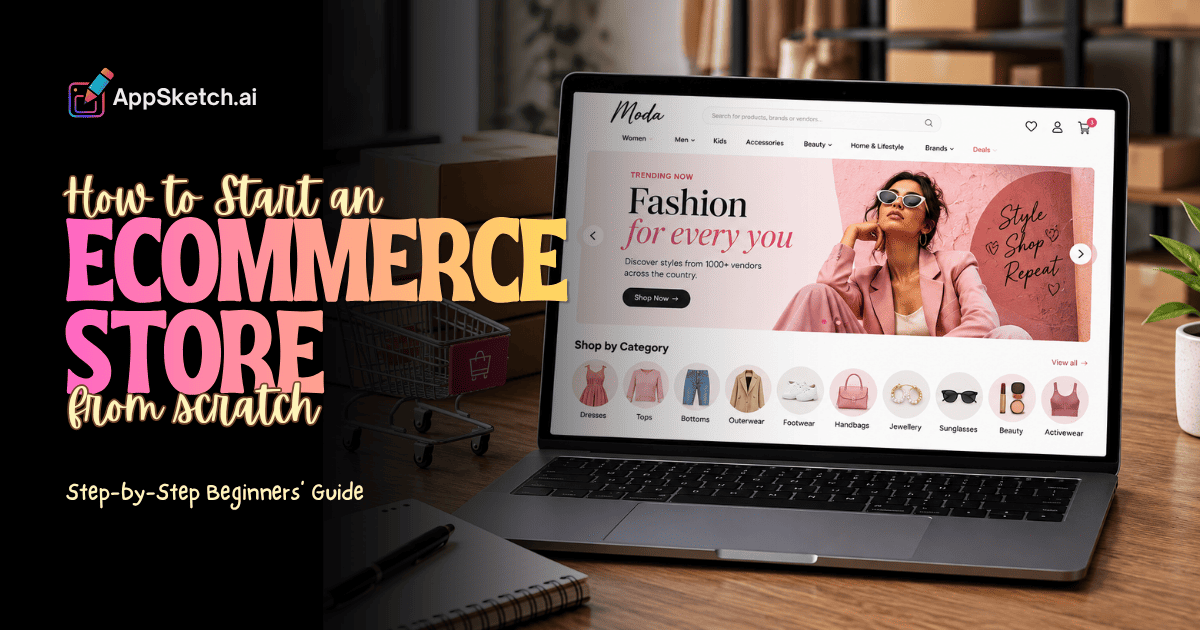
Global ecommerce sales are projected to reach $6.88 trillion in 2026 and that number represents millions of individual entrepreneurs, freelancers, small business owners, and brand founders who decided to start an online store and begin selling online. If you have been thinking about joining them, 2026 is the right time to act.
Whether you want to sell handmade products, launch a fashion brand, build a digital product business, or take your existing business online, this guide covers everything you need to start an ecommerce business from scratch. We will walk you through every step, from picking a product and building your online store, to launching to your first customers and scaling beyond your first sale.
No technical expertise required. Let’s get started.
Why Start an Online Store in 2026?
Before jumping into the how, it helps to understand the why. The opportunity to build a successful online store and start an ecommerce business has never been more accessible and here is the data to back it up.
- The market is growing fast. Ecommerce now accounts for over 21% of all retail sales globally. With more than 2.86 billion digital buyers active worldwide in 2026, the audience for your online store already exists. You just need to reach them.
- The barriers are lower than ever. A decade ago, building an online store meant hiring developers, managing servers, and spending thousands before your first sale. Today, AI-powered ecommerce platforms like Appsketch let you create a fully functional, professionally designed online store, website and app for a fraction of the cost.
- Consumer behaviour has permanently shifted. Online selling is no longer a niche opportunity. It is the default channel for a growing majority of consumers across every age group and category from fashion to groceries to digital services.
- Mobile commerce is massive. Mobile devices now account for 74% of retail site traffic globally. Building a mobile-optimised online store from day one is no longer optional; it is the starting point.
- AI is levelling the playing field. With AI tools handling everything from online store design and product descriptions to ad copy and analytics, solo entrepreneurs can now compete with established brands at a fraction of the effort.
The bottom line: if you have a product idea, a skill to sell, or a niche you are passionate about, 2026 is the best year yet to start an online store and build your ecommerce business.
What is an Online Store?
An online store is a website or digital platform where businesses or individuals sell products or services over the internet. Unlike a physical retail shop, everything from browsing and selecting products to payment and delivery happens digitally. Starting an online store is essentially starting an ecommerce business: you are building a digital storefront that handles online selling around the clock.
In 2026, online stores come in many forms:
- Product-based stores selling physical goods like clothing, electronics, food, or home décor.
- Digital product stores selling downloadable files like templates, e-books, courses, or presets.
- Service-based stores offering bookings, consultations, coaching, or creative services.
- Subscription stores where customers pay monthly for ongoing access to products or content.
The key advantage of running an online store over a traditional shop is reach. You are not limited by geography, opening hours, or foot traffic. With the right product, a well-built online store, and a solid online selling strategy, you can reach customers across the country, or around the world at any time of day.
Types of Ecommerce Business Models
When you start an online store, one of the first decisions is choosing the right ecommerce business model. Each model suits different goals, budgets, and target audiences.
B2C (Business to Consumer) is the most common model. You sell products or services directly to individual customers through your own online store or marketplace. Most of the online stores you shop from daily operate on this model.
B2B (Business to Business) means selling to other companies, often in bulk or for resale. This model typically involves higher order values and longer sales cycles. Platforms like IndiaMART and Alibaba operate in this space.
D2C (Direct to Consumer) means bypassing retailers and wholesalers to sell directly through your own online store. This gives you full control over your brand, pricing, and customer experience and it is the preferred model for most modern online brand founders.
C2C (Consumer to Consumer) enables individuals to sell directly to other individuals. Platforms like OLX, eBay, and Facebook Marketplace are built on this model.
Dropshipping lets you run an online store without holding inventory. When a customer orders, the supplier ships directly to them. This is a low-risk way to start an ecommerce business, though margins are generally lower.
Subscription-based ecommerce gives customers recurring access to products or services. Think monthly boxes, digital memberships, or software plans. This model drives predictable revenue and strong customer retention.
You do not have to choose just one. Many ecommerce businesses start D2C and later add a B2B wholesale channel, or launch with dropshipping and eventually move to holding their own inventory. The key is to align your model with your product type, audience size, and available budget before you launch your online store.
Steps to Start an Online Store
Starting an online store is a process, not a single action. The following six steps take you from idea to a live, revenue-generating online store and ecommerce business.
Step 1: Ideate – Research Your Product, Market & Competitors
Before you build anything, validate your idea. This is the phase most new entrepreneurs rush through and it is where most avoidable mistakes happen.
Product Research
Your product is the foundation of everything. Look for products that solve a genuine problem, serve a growing trend, have healthy profit margins (aim for at least 30–40%), and are practical to source and ship. Use Google Trends to spot rising demand in your category. If you are planning a specific niche store, check out our detailed guides in the niche section below.
Market Research
Understand who your customer is before you build for them. Define their age, location, income range, shopping habits, and pain points. The more precisely you can describe your ideal customer, the more effectively you can build, price, and market to them. Validate demand through simple surveys, Reddit communities, or social media groups before investing in inventory.
Competitor Research
Study your competitors thoroughly. Look at what they sell, how they price it, what their reviews say (especially the negative ones), and how they market. Tools like SEMrush or Ahrefs can show you which keywords are driving their traffic. Your goal is not to copy them but to find the gaps like the underserved customer, the missing product variation, the better experience you can offer.
Step 2: Create – Set Up Your Business Infrastructure
Once your idea is validated, it is time to build the foundation of your business.
Choose Your Business Model and Name
Based on your product and research, decide whether you will dropship, hold your own inventory, or sell digital products. Each has trade-offs:
- Dropshipping offers low risk and zero upfront inventory cost, but margins are lower and you have less control over fulfilment quality.
- Inventory-based selling gives you full control and higher margins, but requires upfront investment in stock and storage.
- Digital products have zero fulfilment cost and unlimited scalability, but require an audience and marketing effort upfront.
Pick a brand name that is memorable, available as a domain, and easy to spell. Check social media handle availability at the same time. Consistency across platforms matters for brand recognition.
Source Products and Build Your Supply Chain
For physical products, find reliable suppliers through Alibaba, IndiaMART, or local manufacturers. Always order samples before committing to bulk orders. Build relationships with multiple suppliers so you are not dependent on a single source. For dropshipping, vet your supplier’s fulfilment speed and return policies carefully. Their performance becomes your reputation.
Choose Your Selling Channels
Where you sell depends on where your customers shop. Options include your own website or app, online marketplaces (Amazon, Flipkart), or social commerce (Instagram Shops, Facebook Marketplace). A multi-channel approach maximises reach, but start with one primary channel like your own website or app to maintain control over branding and customer data from day one.
Step 3: Build – Create Your Online Store
This is where your ecommerce business becomes real. Your online store is your digital storefront and first impressions drive buying decisions.
A great online store needs:
- A clear, fast homepage that tells visitors immediately what you sell and why they should buy from you.
- Well-structured product pages with quality images, detailed descriptions, pricing, and a prominent buy button.
- An easy checkout process. Every unnecessary step loses customers. Guest checkout is a must.
- Trust signals like reviews, return policies, secure payment badges, and contact information.
- Mobile optimisation. Your online store must look and work perfectly on smartphones.
Building from scratch with a developer is costly and time-consuming. Most new online store owners use an ecommerce platform like Appsketch, which builds your website and app, handles design, layout, SEO structure, and mobile optimisation automatically so you can focus on your product and marketing instead of code. A good ecommerce platform removes the technical barrier entirely, letting you launch your online store, website and app in days rather than months.
Step 4: Launch – Go Live and Get Your First Sales
Launching is more than flipping a switch. A well-planned launch builds momentum and gets your first sales faster.
Build Your Brand Identity First
Before you launch publicly, define your visual identity like logo, colour palette, typography, and brand voice. These elements should be consistent across your website, app, social media, packaging, and any ads. A consistent brand builds recognition and trust far faster than a polished product with no personality.
Create Pre-Launch Buzz
Build anticipation before you go live. Share behind-the-scenes content on social media, collect emails from interested visitors with a coming-soon page, partner with micro-influencers in your niche, or run an early-bird discount for your first 100 customers. Your goal is to have an audience waiting on launch day rather than launching into silence.
Launch and Collect Feedback
Start with a focused product line rather than trying to launch everything at once. Get real customers buying, and actively collect their feedback. Early reviews, testimonials, and user-generated content are gold. They improve your SEO, build social proof, and show you exactly what to improve.
Step 5: Operate – Manage Orders, Fulfillment & Support
Once your store is live and orders are coming in, operations become your priority.
Order Management
Use your store’s backend dashboard (Appsketch includes this) to track orders in real time, send automated confirmation emails, and manage inventory levels. Automation is key here. Manual order tracking does not scale.
Fulfillment Options
Choose your fulfilment method based on your order volume, location, and delivery promises:
- Self-fulfilment gives you full control but takes time. Works well for very early-stage stores.
- Third-party logistics (3PL) providers handle warehousing, packing, and shipping on your behalf. Ideal as you scale.
- Dropshipping fulfilment means the supplier ships directly to the customer. Convenient but slower.
Be transparent with customers about delivery timeframes. Expectation management is one of the biggest drivers of positive reviews.
Customer Support
Set up a clear customer support channel; live chat, a helpdesk email, or an AI chatbot. Respond quickly. Easy returns and honest communication turn a problem order into a loyal customer. In competitive online markets, excellent support is a real differentiator that your reviews will reflect.
Step 6: Expand – Scale with Marketing and Analytics
Once your store is stable and your operations are smooth, it is time to grow strategically.
Set Your KPIs
Track the metrics that matter: conversion rate, average order value (AOV), customer acquisition cost (CAC), customer lifetime value (CLV), and return rate. You cannot improve what you do not measure.
Market and Advertise Digitally
Build a mix of organic and paid marketing. Organic content like SEO-optimised blogs, social media, and email builds long-term traffic at low cost. Paid ads (Google Shopping, Meta, Instagram) drive faster results but require a budget and testing. Start organic, then layer paid on top once you know what converts.
Optimise for Search (SEO)
A properly optimised online store generates free, compounding traffic over time. Write product descriptions that include the exact search terms your customers use. Create blog content that answers questions your target audience is searching for. Content like “how to start an online store” or “best online selling platforms” brings in buyers who are already in research mode. Build internal links between your product pages and blog content. SEO is a long game, but it is the most cost-effective customer acquisition channel available to online stores.
Review Analytics and Run Tests
Analyse your store’s performance weekly. Use A/B testing on product pages, pricing, and ad creatives. Small improvements in conversion rate have an outsized effect on revenue. Tools like Google Analytics, Hotjar, and Microsoft Clarity give you the data to make informed decisions rather than guessing.
Sell Internationally
Once your domestic operation is running smoothly, consider expanding to international markets. Multi-currency payment options, translated product pages, and localised marketing campaigns open up a significantly larger addressable audience. With AI translation tools and global payment gateways, international selling is more accessible than ever for small stores.
How to Start an Online Store on Appsketch in 3 Simple Steps
Building a successful online store in 2026 is not just about having a website. It is about building a complete digital storefront, a connected ecosystem of your website, mobile app, and backend operations that all work together seamlessly. Appsketch builds this complete digital storefront for your ecommerce brand from scratch. Custom designed, fully integrated, and built for the specific requirements of your business.
Book a Free Demo and Get Your Ecommerce Digital Storefront Built for You
With Appsketch, you book a free demo and their team builds your entire ecommerce digital storefront from scratch tailored to your brand aesthetic, your ingredient philosophy, and your target customer. No templates, no generic layouts. A fully custom skincare platform built specifically for your brand, across every touchpoint your customer uses.
What Appsketch Builds for Your Online Store
- Custom Ecommerce Website : A fully custom-designed website for your online store built around your brand’s aesthetic, product philosophy, and quality positioning.
- Customer Mobile App (iOS and Android) : A native mobile app that extends your ecommerce digital storefront to your customer’s pocket. The app includes full product browsing with ingredient search and filter, order tracking, push notifications for new launches and restocks, loyalty programme management, and one-tap reorder for replenishment purchases. A dedicated app deepens customer retention and repurchase rates beyond what a website alone can achieve, particularly for an ecommerce business.
- Complete Backend (CMS and CRM) : Manage your entire digital storefront from one dashboard. Add and update product listings with full product details, upload batch certificates and necessary documentation, manage customer data, track orders, and run your ecommerce business operations without touching a single line of code.
- Free Migration : Already selling on Amazon, Shopify, or another platform? Appsketch migrates your entire online store, all product listings, customer data, and content completely free, with zero technical work required from you.
- Payment Gateway Setup : Accept payments from day one across both your website and app : UPI, cards, digital wallets, PayPal, and Buy Now Pay Later are all configured and ready. BNPL is particularly effective for ecommerce businesses where products are tangible.
- Custom Framework and Architecture : Everything Appsketch builds for your online brand is built on a custom, scalable framework. Whether you are launching a single hero product D2C brand or a full multi-SKU line. The architecture scales with your brand as your product range and customer base grow.
How Much Does it Cost to Start an Online Store?
One of the biggest misconceptions about starting an online store is that it requires significant upfront investment. Here is a realistic breakdown of what it actually costs to start an ecommerce business in 2026.
Total estimated startup cost:
| Setup Type | Estimated Cost |
|---|---|
| Lean launch (digital products / dropshipping) | $300 – $800 |
| Standard launch (own inventory, small range) | $2,000 – $5,000 |
| Full-scale launch (large range, custom features) | $10,000+ |
With Appsketch, a complete, professional online store can be live for as little as 300–500 in the first year — compared to thousands with traditional development.
Launching Your Online Skincare Store on Appsketch
| What’s Included | Cost |
|---|---|
| Custom ecommerce website design | Included |
| Integrations (Domain, Hosting, Payment Gateway, Shipping partner, etc.) | Included |
| Marketplace & Vendor Management Systems | Included |
| Migration from any platform | Free |
| Complete backend (CMS and CRM) | Included |
| Order, Inventory, Product, Payment, Rewards & Offer Management | Included |
| Push Notifications | Included |
| Analytics dashboard | Included |
| Appsketch No-code AI Builder | Included |
| Deployment (On Google & Appstore accounts) | Included |
| Appsketch subscription (starting from) | ₹9,999/month* |
Key Features Every Online Store Needs
A great product is not enough on its own. The experience your online store provides determines whether visitors become buyers. Here are the features that separate online stores that convert from those that do not.
Fast, mobile-optimised design. With 74% of retail site traffic coming from mobile, a slow or poorly formatted mobile experience kills conversions before they start. Your ecommerce platform should handle mobile optimisation automatically across both your website and app.
Secure payment gateways. Offer multiple options like cards, UPI, digital wallets, and Buy Now Pay Later. Each additional payment method reduces checkout abandonment in your online store.
Clear product pages. High-quality images, detailed descriptions, honest pricing, available sizes or variants, and visible reviews. Every product page in your online store should answer every question a buyer might have before they need to ask.
Streamlined checkout. Every unnecessary step in checkout costs sales. Enable guest checkout, save cart functionality, and a clear progress indicator.
SEO-optimised structure. Title tags, meta descriptions, clean URLs, and structured product data help search engines understand and rank your online store for relevant online selling queries.
Analytics and reporting. You need real-time visibility into traffic, conversion, order value, and top-performing products to make decisions based on data rather than gut feel.
Customer support access. Live chat, a visible contact email, and clear returns and shipping policies build the trust that turns a first-time visitor into a buyer.
Benefits of Running an Online Store
The advantages of running an online store over a traditional physical business are significant and in 2026, they are more pronounced than ever.
Low startup costs. You do not need a physical location, large staff, or significant upfront capital to start an ecommerce business. A lean online store can be live and profitable within weeks.
Global reach from day one. Your online store is open to anyone, anywhere, at any time. Even a one-person ecommerce business can reach international customers without a logistics infrastructure.
Automation handles the heavy lifting. Inventory tracking, order confirmations, email follow-ups, and marketing campaigns for your online store can all run automatically, giving you time to focus on growth rather than admin.
Data drives better decisions. Every click, scroll, and purchase is trackable. Online stores give you insight into customer behaviour that no physical shop can match and that data makes every online selling decision sharper.
Scalability without proportional cost. Adding a new product line or doubling your traffic does not require doubling your staff or space. Online stores scale in ways that physical retail simply cannot.
Flexibility. Run your online store from anywhere, manage it from your phone, and adjust your product offering based on real-time feedback without the constraints of a physical space or lease.
Start Your Specific Store: Niche Guides
One of the most effective ways to grow your online store is to go deep on a specific niche rather than trying to sell everything. We have created detailed, step-by-step guides for the most popular online store categories covering product sourcing, online selling strategy, website setup, and marketing for each niche. Find yours below and get started.
Fashion & Lifestyle
→ How to Start an Online Fashion Store
→ How to Start an Online Skincare Store
→ How to Start an Online Shoe Store
→ How to Start an Online Jewellery Store
→ How to Start an Online Thrift & Resale Store
Food & Beverage
→ How to Start an Online Bakery
→ How to Start an Online Grocery Store
→ How to Sell Homemade & Specialty Food Online
→ How to Build a Restaurant Website That Takes Online Orders
Health & Wellness
→ How to Start an Online Health Supplement Store
→ How to Start an Online Organic Products Store
Home & Living
→ How to Start an Online Home Decor Store
→ How to Start an Online Plant Store
→ How to Start an Online Furniture Store
Tech & Electronics
→ How to Start an Online Electronics Store
Services & Experiences
→ How to Build a Hotel Website That Takes Direct Bookings
→ How to Build a Website to Sell Your Coaching or Online Course
→ How to Build a Website for a Rental or Service Business
Creative & Digital
→ How to Start an Online Art Store
→ How to Start a Handmade Products Store
→ How to Sell Digital Products Online
Kids, Pets & Lifestyle
→ How to Start an Online Toy Store
→ How to Start an Online Pet Store
→ How to Start an Online Sports & Fitness Store
→ How to Start an Online Flower & Gift Shop
25 Profitable Online Store Ideas for 2026
Not sure what to sell? Here are 25 proven business ideas aligned with 2026 consumer trends across sustainability, personalisation, health, and digital convenience.
Physical Product Ideas
- Organic skincare and beauty products
- Eco-friendly home goods (bamboo products, reusables)
- Health supplements and wellness products
- Smart home gadgets and accessories
- Fitness gear and yoga equipment
- Personalised jewellery and accessories
- Pet supplies and accessories
- Plant-based food products
- Travel accessories and gear
- Custom print-on-demand apparel
Digital Product Ideas
- Online courses and coaching programmes
- E-books and how-to guides
- Graphic design templates
- Photography presets and filters
- Website themes and UI kits
- Productivity tools or SaaS micro-products
- Music beats and audio packs
- Digital planners and journaling templates
- Stock illustrations or photography
- NFTs and digital collectibles
Service & Hybrid Models
- Virtual coaching or consulting services
- Subscription lifestyle boxes (curated, themed)
- Dropshipping niche stores
- AI consulting and prompt engineering services
- Personalised meal planning subscriptions
Before committing to any niche, validate demand using a keyword research tool and study your top three competitors’ product reviews. The most successful store owners go narrow and deep and do not try to sell everything.
5 Things to Keep in Mind Before You Launch
Even a great product with a beautiful online store can struggle if these fundamentals are missed.
1. Choose the right ecommerce platform from the start. Migrating your online store later is painful and costly. Whether you need a website, a mobile app, Appsketch can help you build a complete digital ecosystem for your brand.
2. Invest in your brand early. Your logo, colours, tone, and story create the first impression. In crowded niches, a strong brand is often the only real differentiator between two online stores selling similar products.
3. Prioritise SEO before you launch your online store. Most new ecommerce business owners treat SEO as an afterthought. Getting your product pages and site structure right from day one means you start building organic traffic immediately, not months later.
4. Test before you scale. Launch a focused product range, collect real customer feedback, and refine before expanding. Scaling a broken online store only amplifies the problems.
5. Customer experience is your growth engine. Fast delivery, easy returns, honest communication, and responsive support turn one-time buyers into repeat customers and vocal advocates. Long-term profitability in online selling is built on relationships, not transactions.
Conclusion
Starting an online store in 2026 is one of the most accessible and scalable business decisions you can make. The tools exist to build your ecommerce business professionally, launch fast, and grow strategically without a technical background, a large budget, or a physical space.
You now have the complete roadmap: from choosing your product and ecommerce business model, to building your online store, launching to your first customers, and scaling your online selling with data and marketing. The steps are clear. The opportunity is real.
The only thing left is to start.
Frequently Asked Questions About Starting an Online Store
You can start a lean online store for as little as 300–800 using Appsketch and a dropshipping or digital product model. A store with physical inventory typically costs 2,000–5,000 to launch properly.
No. An ecommerce platform like Appsketch builds your complete online store — website and mobile app — without any coding. You provide the product and brand direction — Appsketch handles the rest.
With Appsketch, you can have a fully designed, functional online store live in under an hour. The time investment is in your product setup, copywriting, and photography — not the technical build.
The right ecommerce platform depends on your needs. For beginners and small businesses who want speed, built-in marketing tools, and low cost, Appsketch is the most efficient starting point. It includes AI store design, SEO tools, CRM, CMS, and payment integration in a single subscription.
Start with your own network, then build organic traffic through social media and SEO. Run a launch promotion for early buyers. Use email capture on your online store from day one. Paid advertising can accelerate online selling results once you know what messaging and products convert.
Yes. Appsketch supports both physical and digital product listings within the same online store — across your website and app.

3 comments