
The global online grocery market is projected to surpass $1.5 trillion by 2026 and no market on earth demonstrates this opportunity more vividly than India. Quick commerce GMV in India reached roughly ₹11,000 crore in a single month in early 2026, up 100% year on year, on approximately 7.8 million orders per day. Blinkit, which began as a struggling next-day grocery delivery service called Grofers became the first major Indian quick commerce player to achieve adjusted EBITDA profitability in Q3 FY26 and overtook food delivery to become Eternal Ltd’s largest business. The online grocery store category is no longer experimental. It is the new infrastructure of urban Indian retail.
Starting an online grocery store in 2026 is both a massive opportunity and a serious operational undertaking. The online grocery store category rewards founders who understand the operational realities of grocery delivery before they invest a single rupee. Groceries are perishable, price-sensitive, and delivery-dependent in ways that no other ecommerce category is. The customer placing an order at 8 PM expects fresh vegetables at their door by 9 PM, not a tracking link and a 3-day wait. Building an online grocery business that works requires thinking through the complete delivery flow, the technology stack, the cold chain, the last-mile logistics, and the AI systems that keep inventory from expiring on shelves and orders from arriving late.
This guide covers every dimension of starting an online grocery store in 2026 and every online grocery store founder who reads it will be better prepared than 90% of their competitors. From the mainstream fundamentals that every guide covers to the non-mainstream operational realities that most guides skip: dark store infrastructure, AI demand forecasting, multivendor versus single-vendor architecture, delivery partner management, and how India’s most successful grocery delivery platform, Blinkit built a $7 billion business from a model that failed everywhere else in the world.
The Online Grocery Market Opportunity in 2026
The numbers behind the online grocery store market in 2026 are extraordinary and uniquely compelling for Indian entrepreneurs.
The global grocery ecommerce market is projected to surpass $1.5 trillion by 2026, driven by consumer demand for convenience and time-saving solutions. More than 60% of shoppers already buy groceries online every week. Online sales of the total US grocery ecommerce market are projected to be 20% by 2026, several years ahead of pre-pandemic forecasts.
In India specifically, the quick commerce market grew 100% year on year in early 2026. Quick commerce GMV reached roughly ₹11,000 crore in a single month in early 2026, on around 7.8 million orders a day. Blinkit alone serves millions across 153+ cities, processes over 2 million daily orders, and holds approximately 46–50% market share in Indian quick commerce.
Four forces make 2026 the defining year to launch an online grocery store and make the online grocery store category one of the most commercially compelling in Indian ecommerce:
Convenience has become a non-negotiable expectation. The Indian urban consumer in 2026 does not plan grocery shopping a week in advance. They order what they need when they need it. The shift from weekly grocery runs to on-demand grocery delivery is permanent and the market for an online grocery store that serves this expectation reliably is enormous.
The technology stack has matured and become accessible. The infrastructure that Blinkit and BigBasket spent hundreds of millions of dollars building like real-time inventory management, demand forecasting, last-mile delivery optimisation is now available to independent grocery businesses through platforms and APIs at a fraction of that cost.
Quick commerce has proven the demand for speed. The quick commerce delivery standard set by Blinkit and Zepto has created a consumer expectation that even mid-speed grocery delivery businesses (30–90 minute delivery) can now satisfy. Because the bar has been set so high, anything under 2 hours feels like a good service to consumers who previously waited days.
Hyperlocal and niche grocery businesses are capturing gaps. Large platforms like Blinkit and BigBasket serve mainstream FMCG at scale. Organic grocery, farm-fresh produce, regional specialities, gourmet imports, and community-specific dietary products, all of these represent underserved niches where an independent online grocery store can build deep loyalty that a mass-market platform cannot replicate.
What Makes an Online Grocery Store Different From Every Other Ecommerce Business
Starting an online grocery store is fundamentally more operationally complex than any other ecommerce business so every online grocery store founder needs to understand why before they build than starting an online clothing store, a jewellery store, or even a medicine store. Understanding what is different before you build is the single most important thing you can do to avoid the mistakes that shut down most new online grocery businesses within their first 18 months.
Perishables Cannot Wait
A dress that is not sold this week can be sold next week. Vegetables that are not sold today are waste by tomorrow. Every online grocery store is operating a race against biological time. Managing inventory that expires in hours (fresh produce), days (dairy, bread), weeks (packaged goods), or months (dry staples). This fundamental characteristic of the grocery category shapes every operational decision: how much inventory to carry, how to forecast demand, how fast to deliver, and how to handle unsold stock.
Last-Mile Delivery Is the Product
Customers do not experience an online grocery store through its website. They experience it through whether their groceries arrived on time, in good condition, at the right temperature, with nothing missing from the order. Last-mile delivery, the final kilometre between your fulfilment point and the customer’s door is not just a logistics function in an online grocery business. It is the core product. A beautiful grocery ecommerce website with broken last-mile logistics is a failed online grocery store.
Cold Chain Is Non-Negotiable for Fresh Products
Dairy, meat, fish, and certain produce categories require cold chain management, an unbroken temperature-controlled sequence from sourcing to delivery. Breaking the cold chain means delivering spoiled or unsafe food. In a grocery delivery business, this is both a customer experience failure and a food safety regulatory violation. Building cold chain into your online grocery store operations from day one, even at a small scale, is essential for any online grocery store that includes fresh and chilled products.
Inventory Complexity Is Exponential
A typical online grocery store manages thousands of SKUs across multiple categories like fresh produce, dairy, staples, snacks, beverages, household products, personal care. Each SKU has its own expiry profile, storage requirement, supplier, reorder point, and demand seasonality. Managing this complexity without AI-powered inventory systems means constant stockouts, constant waste, or both. Grocers using AI-powered optimisation already report up to 50% fewer overstocks and 30% faster inventory turnover.
Price Sensitivity Is Extreme
Grocery buyers are more price-sensitive than buyers in virtually any other ecommerce category. A ₹5 difference in the price of a 500ml milk packet is noticed and acted upon. This means your online grocery store must balance thin margins, competitive pricing, and operational costs, particularly last-mile delivery costs which account for approximately 41% of logistics costs on average with a sustainable business model. The economics of a grocery delivery business require careful modelling before you start, not after.
Step 1: Choose Your Grocery Store Niche
Generic online grocery stores, those trying to sell everything to everyone like a digital supermarket face the hardest competitive path. They compete directly with Blinkit, BigBasket, Zepto, and Swiggy Instamart. The most viable starting position for a new online grocery store in 2026 is a specific niche that mass-market platforms cannot serve. Every online grocery store that competes with Blinkit on their own terms loses. Every online grocery store that finds its own niche wins. is a specific niche that the mass-market platforms do not serve adequately.
Online Grocery Store Niches That Perform Well in 2026
- Organic and natural groceries. A dedicated online grocery store for certified organic produce, natural foods, and chemical-free household products. The organic grocery market in India is growing at 15%+ annually. Buyers in this niche are willing to pay a meaningful premium and are more loyal than standard grocery buyers.
- Farm-to-door fresh produce. Direct sourcing from local farms, offering produce that is significantly fresher than anything available through a distribution-chain grocery platform. This model resonates strongly with urban consumers who care about food provenance and freshness.
- Regional and vernacular groceries. South Indian staples, Bengali specialities, Rajasthani pantry items, Punjabi dairy, every regional cuisine has specific ingredients that are poorly served by mainstream grocery platforms in non-native cities. A regional grocery store for a specific community in a new city is an exceptionally high-loyalty business.
- Gourmet and imported groceries. Specialty imports, artisanal products, international food brands, and premium FMCG not available in standard supermarkets. High average order value, lower delivery frequency, but strong brand affinity.
- Dietary-specific grocery stores. Vegan groceries, keto-friendly pantries, diabetic-friendly food baskets, halal-certified grocery. Each dietary community is underserved by mainstream grocery platforms and represents a high-repeat, high-loyalty customer base for a specialised online grocery store.
- Community-based hyperlocal grocery. Serving a specific residential community, neighbourhood, or apartment complex with same-hour delivery. The smallest viable version of the Blinkit model but with community trust and zero competition from large platforms who cannot economically serve a single apartment complex.
- Subscription meal kit and ingredient boxes. Weekly ingredient boxes for specific cuisines or meal plans. Fixed, predictable inventory, high retention, strong unit economics once the subscriber base is established.
Step 2: Choose Your Business Model : Single Vendor vs Multivendor
This is one of the most consequential decisions you will make when starting an online grocery store. The architecture of your online grocery store like who sources the inventory, who holds the stock, who delivers, determines everything from your technology requirements to your capital needs. The architecture of your grocery delivery business, who sources the inventory, who holds the stock, who delivers, determines your technology requirements, your capital needs, your scalability, and your operational complexity from day one.
Single Vendor Grocery Model
In a single vendor online grocery store, you own or control all the inventory. You source directly from suppliers, hold stock in your own warehouse or dark store, and fulfil all orders yourself. This is the model used by Blinkit’s dark store network and BigBasket’s express model.
How it works: Customer places order on your app or website → order is routed to your nearest fulfilment location → your picker picks and packs the order → your delivery partner delivers to the customer.
Advantages:
- Full control over product quality, freshness, and pricing
- Consistent customer experience across every order
- Higher margins than a commission-based marketplace model
- Ability to implement dynamic pricing and AI-driven inventory management
Best for: Grocery businesses with capital to invest in inventory and fulfilment infrastructure, or those starting with a focused niche in a defined geography.
Trade-off: Higher upfront capital requirement. Inventory risk sits entirely with you. Unsold perishables are your direct loss.
Multivendor Grocery Marketplace
In a multivendor online grocery store, you build a platform that connects multiple local vendors, grocery stores, kirana shops, farms, dairy suppliers with customers. You provide the technology (the app and website), the discovery layer, and optionally the delivery infrastructure. Vendors list their own products and manage their own inventory in your multivendor online grocery store.
How it works: Customer browses multiple vendor stores on your platform → places order from one or multiple vendors → vendors receive order notification and prepare items → your delivery partner (or the vendor’s own delivery) fulfils the last mile → customer receives order.
Advantages:
- Zero or minimal inventory investment where vendors hold the stock
- Scalable product range without proportional capital investment
- Vendors bring their existing supplier relationships and customer trust
- Revenue through commission on every sale, listing fees, and delivery fees
Best for: Platform builders who want to aggregate a local grocery ecosystem rather than build a single inventory-based store.
Trade-off: Quality control is distributed. A bad vendor experience reflects on your platform. Order fulfilment consistency is harder to guarantee when multiple vendors are involved. Technology complexity is higher. You need vendor dashboards, order routing logic, and multi-vendor payment splitting.
Hybrid Model: Own Inventory Plus Vendor Integration
The most robust model for scaling an online grocery store combines own inventory for core high-velocity products (staples, dairy, fresh produce) with vendor integration for the long tail (specialty items, regional products, organic options). This is how BigBasket operates at scale, with a curated own inventory supplemented by third-party brand integrations.
Key Questions to Choose a Grocery Delivery Business Model
- Do you have capital to invest in inventory upfront? → Single vendor or hybrid
- Do you want to aggregate existing local grocery businesses? → Multivendor
- Are you starting with a focused niche? → Single vendor with a small, controlled inventory
- Are you building a platform business? → Multivendor from day one
Step 3: Understand the Complete Grocery Delivery Flow
This is the operational diagram that most beginner guides on how to start an online grocery store present as a diagram and never actually explain. Understanding every step of the complete grocery delivery flow for your online grocery store, and where it can break down is what separates grocery businesses that operate smoothly from those that collapse under order volume.
The Complete Grocery Delivery Flow
- Stage 1: Customer Discovery and Ordering : The customer opens your grocery app or website, enters their delivery address, and sees the products available for delivery to their location. Location detection is the trigger. Your system identifies which fulfilment point (your dark store, partner store, or vendor) can serve that customer’s address within your delivery time promise. The customer browses, adds items to cart, applies any available offers or subscription benefits, selects their delivery slot (immediate, scheduled, or recurring), and completes payment.
- Stage 2: Order Routing and Allocation : The moment payment is confirmed, your order management system routes the order to the correct fulfilment point based on proximity, stock availability, and capacity. In a multivendor model, this routing logic also splits orders across multiple vendors if the customer has ordered from more than one shop. In a single vendor model, the order goes to your nearest dark store or warehouse.
- Stage 3: Picking and Packing : A picker at the fulfilment point receives the order on their device (typically a handheld scanner or a tablet running your warehouse management app). They pick each item from the shelves, verify it against the order, and pack it correctly, maintaining cold chain for chilled items, separating produce from packaged goods, and including any substitutions for out-of-stock items with customer approval. This stage is where most grocery fulfilment errors occur. Wrong products, incorrect weights for weighed items, broken cold chain. AI-powered picking systems can accelerate fulfilment by up to 50%.
- Stage 4: Dispatch and Handoff to Delivery Partner : The packed order is assigned to an available delivery partner either automatically by your system based on proximity and availability, or manually by a dispatcher. The delivery partner receives the order details, the customer’s address, and any delivery instructions on their delivery partner app. For cold chain orders, the delivery partner must use an insulated delivery bag.
- Stage 5: Last-Mile Delivery : The delivery partner travels from the fulfilment point to the customer’s address. Your system tracks their location in real time and updates the customer with an ETA. The delivery partner calls or messages the customer if access is restricted. On delivery, the customer confirms receipt either via OTP verification (standard in India for high-value orders) or via a delivery confirmation tap on the app.
- Stage 6: Post-Delivery Operations : After delivery, your system triggers: a customer review request (ideally specific, “how was the freshness of your produce today?”), inventory deduction in your management system, delivery partner payment processing, and order status update for the vendor (in multivendor models). Any customer complaints for wrong items, damaged produce, missing items are handled through your customer support flow, which must be capable of resolving them with a refund or re-delivery within hours, not days.
Where Grocery Delivery Businesses Break Down
The most common failure points in a grocery delivery flow are:
- Out-of-stock items with no substitution protocol – customer expects what they ordered, gets nothing
- Cold chain breaks between picking and delivery – dairy or produce arrives warm or spoiled
- Weight discrepancies for weighed goods – customer ordered 500g onions, received 380g
- Last-mile delays when delivery partner count is insufficient for order volume
- No real-time inventory sync between online orders and physical stock – orders accepted for items already sold out in store
Each of these failure points has a specific operational and technology solution, covered in Steps 8 and 10 below.
Also Read :
→ How to Start an Online Store
→ How to Start an Online Skincare Store
→ How to Start an Online Fashion Store
→ How to Start an Online Shoe Store
→ How to Start an Online Jewellery Store
→ How to Start an Online Thrift & Resale Store
Step 4: Build Your Delivery Partner Network
Your delivery partner network is the operational backbone of your grocery delivery business and your online grocery store. Without it, you have a website and no product. Without it, you have a website and no product. With a poorly managed one, you have orders and no fulfilment reliability. Most guides on how to start an online grocery store treat delivery as a logistics footnote. It is actually your primary operational challenge and your most visible quality signal.
The Three Delivery Partner Models
1. Own Delivery Fleet (Captive Model)
You hire and manage delivery partners directly on salary or a per-delivery payment model. Full control over delivery quality, branding (delivery partners in branded uniform), and service standards.
Best for: Grocery businesses in a defined geographic zone with predictable daily order volumes.
Trade-off: Fixed labour cost regardless of order volume. Scaling up or down is slow. HR and compliance overhead.
2. Gig Economy Integration (Third-Party Partners)
You integrate with gig delivery platforms like Shiprocket, Porter, or independent delivery networks. On-demand partner availability without fixed labour costs.
Best for: Grocery businesses in early stages with unpredictable order volumes, or those scaling into new geographies quickly.
Trade-off: Less control over delivery quality and partner behaviour. Higher per-delivery cost at scale compared to a captive fleet.
3. Hybrid Fleet (Captive + Gig Overflow)
You maintain a core captive fleet for your baseline daily orders and use gig partners for overflow during peak periods (evenings, weekends, festive seasons). This is the model used by most mature grocery delivery businesses.
Delivery Partner App Requirements Your delivery partners need a dedicated app, not just a WhatsApp message with the address. The delivery partner app must include:
- Real-time order notifications with item list and customer address
- GPS navigation optimised for last-mile routes in your delivery zone
- OTP confirmation on delivery
- Cold chain item flagging (items that must stay in insulated bags)
- Earnings tracking and payment history
- In-app communication with the dispatch team
This delivery partner app is a separate technology component from your customer-facing grocery app and it is one of the components most frequently under-built by new grocery delivery businesses.
Delivery Zones and SLA Management
Define your delivery zones explicitly before you launch. A delivery zone is a geographic area within which you can reliably fulfil orders within your stated delivery time promise. Start tight, a single neighbourhood or a 3-5 kilometre radius around your first dark store or warehouse. Expand only when your delivery operations within the initial zone are consistently meeting your SLA.
Do not promise 30-minute delivery if your order-to-dispatch process takes 20 minutes and your average delivery distance is 4 kilometres. Promise a time you can reliably deliver, and then consistently beat it. Trust is built through delivery consistency, not delivery ambition.
Step 5: The Dark Store Model : What Blinkit Proved
One of the most important and least mainstream topics in any guide on how to start an online grocery store is the dark store model. Understanding it is essential for understanding how the most successful online grocery stores in India are built and how your online grocery store can apply its principles even at a fraction of Blinkit’s scale.
What is a Dark Store?
A dark store is a small warehouse or fulfilment centre, typically 2,000–5,000 square feet, located within a 1–2 kilometre radius of a dense residential area. It looks like a small store on the inside with shelves of products, a cold room, a packaging area. But it has no walk-in customers. It exists entirely to fulfil online orders. The term “dark” refers to the fact that it operates without the lights-on, customer-facing experience of a retail store.
Blinkit operates as a technology-first logistics layer that connects users to over 2,000 hyperlocal dark stores, delivering 30,000+ SKUs in under 10 minutes. Blinkit scaled from approximately 383 dark stores in mid-2023 to 2,243 by Q4 FY26 while turning adjusted EBITDA profitable.
Why Dark Stores Enable Fast Grocery Delivery
The 10-minute delivery promise is not about fast bikes. It is about proximity. When you order on Blinkit, the app automatically connects your order to the nearest dark store with available stock. This hyperlocal approach is the operational foundation of the 10-minute delivery promise. The speed does not come from fast driving. It comes from having inventory physically close to the customer before the order is even placed.
A dark store within 1.5 kilometres of a customer means a delivery partner on a bicycle or two-wheeler can cover the distance in 5–8 minutes, leaving time for picking and packing to happen in parallel as the partner travels to collect the order.
Lessons From Blinkit for Independent Grocery Businesses
You do not need 2,000 dark stores to apply Blinkit’s principles. Even a single dark store, a small rented space in a high-density neighbourhood, stocked with the 300–500 highest-velocity products in your niche, is the foundation of a fast, reliable online grocery store that can compete on speed within its delivery zone.
The quick commerce model’s most transferable lessons for any online grocery store:
- Location is everything. A dark store 500 metres from your customers beats a larger warehouse 5 kilometres away in every dimension — delivery speed, delivery cost, and freshness of perishables.
- Focus your SKU range. Each dark store stocks 6,000 to 10,000 SKUs. A small independent dark store should stock 300–500 of the highest-frequency products in your niche, not everything.
- AI-predicted inventory. AI algorithms predict demand and automate stock levels so that the most-ordered items are always available without over-stocking perishables. Even simple demand forecasting based on order history prevents the stockouts and over-ordering that kill grocery margins.
Step 6: Source Your Grocery Inventory
Grocery sourcing for your online grocery store is different from sourcing for any other ecommerce business. You are buying products that expire, which means sourcing frequency, supplier reliability, and minimum order quantities are all existential operational decisions, not just cost calculations.
Sourcing Channels for an Online Grocery Store
FMCG Distributors and Wholesale Markets
For packaged goods like branded staples, beverages, snacks, household products, source from authorised FMCG distributors. Major FMCG brands (HUL, Nestlé, ITC, Britannia) operate through tiered distributor networks. Becoming an authorised retailer for major FMCG brands requires meeting minimum purchase commitments but guarantees product authenticity, consistent pricing, and direct return support for damaged goods.
In India, APMC wholesale markets (Azadpur in Delhi, APMC Navi Mumbai, KR Market in Bangalore) are the primary sourcing hubs for fresh produce at wholesale prices. Daily procurement from these markets is the model used by most fresh grocery delivery businesses.
Direct Farm Sourcing
For an online grocery store positioning on freshness or organic produce, direct farm partnerships and buying directly from farmers or farmer cooperatives, eliminate the middle layers of the distribution chain and dramatically improve freshness and margins. This requires building relationships with farmers, managing variable supply (weather, seasonality), and handling sorting and grading yourself.
Local Dairy and Artisan Suppliers
Regional dairy brands, local bakeries, artisan cheese makers, and small-batch food producers are ideal suppliers for a premium or niche online grocery store. They typically cannot access large retail channels and are motivated to partner with an online grocery business that can give them consistent order volumes.
Cash and Carry Wholesale (Metro, Walmart Best Price)
For general packaged goods at competitive prices without the complexity of individual brand distributor agreements. Best for early-stage grocery businesses building their initial inventory before establishing direct distributor relationships.
Freshness and Supplier Reliability Standards
For perishable products, establish minimum freshness standards before accepting any delivery from a supplier:
- Fresh produce: minimum 3–5 days remaining shelf life at point of receipt
- Dairy: minimum 10 days remaining before expiry
- Packaged goods: minimum 6 months remaining before expiry
Build supplier SLA agreements that specify these standards and include return terms for goods that do not meet them. Receiving near-expiry stock and dispatching it to customers is both a legal risk and a brand-destroying customer experience.
Step 7: Legal Licences and Compliance
Starting an online grocery store in India involves specific licensing requirements that vary by product category. Every online grocery store operating without the correct licences risks enforcement action. that vary by product category. Missing the right licence is an operational risk. It can result in enforcement action, fines, or stock seizure.
FSSAI Licence : The Most Critical Licence for Any Grocery Business
Every business that is engaged in manufacturing, processing, storage, distribution, transportation, or sale of food products requires registration or licence under FSSAI. This covers every online grocery store without exception. FSSAI has three tiers:
- FSSAI Basic Registration: For businesses with annual turnover below ₹12 lakh. Suitable for very small-scale grocery operations.
- FSSAI State Licence: For businesses with annual turnover between ₹12 lakh and ₹20 crore, or those with production facilities within one state.
- FSSAI Central Licence: For businesses with annual turnover above ₹20 crore, those operating across multiple states, or those importing food products.
Most online grocery stores will require at minimum a State Licence. Apply through the FSSAI online portal (foscos.fssai.gov.in) before selling a single food product.
Additional Licences and Registrations
- GST Registration: Mandatory for any online grocery store making interstate sales or with turnover above the applicable threshold. Most online grocery businesses will need GST registration.
- Business Registration: Register as a sole proprietorship, partnership, LLP, or private limited company depending on your scale and risk appetite. For a grocery delivery business with delivery partner relationships and vendor contracts, a private limited company or LLP provides stronger liability protection.
- Shops and Establishment Act Registration: Required for your warehouse, dark store, or fulfilment point under the applicable state’s Shops and Establishments Act.
- APMC Licence (for fresh produce trading): If you are buying and selling fresh produce through APMC regulated markets, you may require an APMC trading licence depending on your state’s regulations. Check with your local APMC market authority.
- Cold Storage Licence: If your dark store or warehouse includes cold storage facilities above a certain capacity, a cold storage licence under the Food Safety and Standards Act may be required.
Step 8: Implement AI in Your Grocery Business
AI implementation in an online grocery store is not a future aspiration. It is a present operational necessity for any online grocery store that wants to compete profitably. With the AI-in-retail market projected to grow from USD 14.24 billion (2025) to USD 96.13 billion by 2030, grocers using AI-powered optimization already report up to 50% fewer overstocks and 30% faster inventory turnover. Grocers that do not implement AI capabilities in the next 12–18 months risk falling permanently behind those that do.
Here are the specific AI applications every online grocery store should understand and implement based on their stage of growth.
AI Demand Forecasting
This is the highest-ROI AI application for any online grocery business. AI could unlock $136 billion in value across the grocery sector by 2030, with supply chain and merchandising representing the largest opportunities. AI-powered demand forecasting solutions are typically faster and more efficient, while also significantly enhancing forecast accuracy. One study found that AI reduced forecasting errors by up to 50%.
Demand forecasting AI for your online grocery store analyses your historical order data, applies seasonality patterns (higher vegetable demand on Monday mornings, higher dairy on weekends), accounts for external factors (weather, local events, festive calendar), and predicts exactly how much of each product you will sell in the next 24–72 hours. This means:
- You order exactly the right quantity of perishables. No excess, no shortage
- You avoid the twin enemies of grocery profitability: stockouts (lost sales) and waste (expired inventory)
- Your dark store stays lean and fast to pick from
For a new online grocery store, even a basic demand forecasting model built on your first 30 days of order history is more accurate than intuition. As your order volume grows, so does the accuracy of the model.
AI-Powered Inventory Management
Real-time inventory sync between your online grocery store and your physical stock is essential. When an item sells out in your dark store, it must be immediately marked as unavailable on your customer app, not after the next picker discovers it is missing. AI-powered inventory management systems track stock levels continuously, trigger automatic reorder alerts when products fall below their reorder point, and surface anomalies (product that should have sold but has not. Potential spoilage signal) proactively.
AI Product Substitution Engine
When a customer orders an item that is out of stock, you have two options: cancel that item (frustrating experience) or offer an appropriate substitute (salvaged order). When requested items are unavailable, AI-powered substitution engines analyze product attributes, purchase history, and customer preferences to suggest appropriate alternatives. A customer who ordered Brand A whole milk and receives a substitute of Brand B whole milk at the same price, with a notification explaining why has a far better experience than a customer whose item is simply cancelled.
AI Route Optimisation for Last-Mile Delivery
Last-mile delivery can account for a significant share of logistics costs. Capgemini estimates approximately 41% on average, making AI-powered route optimisation a critical profitability lever. AI route optimisation assigns delivery orders to partners based on their current location, current load, and the optimal sequence of deliveries to minimise travel time and fuel cost. At scale, when your delivery partners are handling 15–20 orders per shift, AI routing can meaningfully reduce your per-order delivery cost.
AI Personalisation and Smart Baskets
Companies implementing AI-driven personalisation have experienced a 10–15% boost in sales, with retail seeing even greater improvements. For a grocery delivery business, personalisation means showing each customer their most likely next purchase based on their order history, suggesting complementary items (if they ordered eggs, suggest bread), and building a personalised “repeat my usual order” basket that makes weekly grocery ordering a one-tap action.
This is a powerful retention and average order value driver, and for grocery specifically, where repurchase cycles are weekly, even a small increase in average basket size compounds dramatically over time.
AI Dynamic Pricing
AI dynamic pricing adjusts the prices of perishable products based on their remaining shelf life and current demand. A batch of bananas with 2 days remaining before optimal consumption is automatically discounted to drive sale, rather than being wasted. This reduces your perishable write-off losses while offering customers genuinely good value on items that are at peak quality but approaching the end of their shelf window.
Step 9: Price Your Grocery Products
Grocery pricing for an online grocery store is the most margin-sensitive exercise in ecommerce. Customers notice ₹2 differences in staple prices. Delivery costs must be absorbed or charged in a way that does not deter ordering. And perishable write-offs must be factored into every category’s pricing model.
Grocery Margin Benchmarks
Grocery retail operates on the thinnest margins in ecommerce:
- Packaged FMCG goods: 5–15% gross margin (very thin, volume-driven)
- Fresh produce: 20–40% gross margin (higher margin, higher waste risk)
- Dairy: 10–20% gross margin
- Organic and specialty products: 30–50% gross margin (the highest-margin grocery category)
- Private label products: 40–60% gross margin (your own brand within your grocery store)
This is why most online grocery businesses combine thin-margin, high-frequency staples (which drive ordering habit) with higher-margin specialty and private label products (which drive profitability).
Delivery Fee Strategy
Delivery fees are one of the most behaviorally sensitive decisions in a grocery delivery business. Free delivery drives order frequency but destroys margin. Flat delivery fees are simple but discourage smaller orders. Minimum order thresholds for free delivery push up average order value but deter customers who only need one or two items.
The most successful approach for an online grocery store: tiered delivery fees (free above a minimum order value, ₹20–₹40 below it), with a subscription option that provides unlimited free deliveries for a monthly or annual fee. Blinkit’s subscription growth has been one of its most profitable revenue layers. Customers who pay for a subscription order more frequently and show significantly higher retention.
Private Label as a Profitability Engine
Developing your own private label products for staples, dry goods, cleaning products, or specialty items under your grocery brand, is the single highest-margin lever available to an online grocery store. Private label gross margins of 40–60% are 4–8x higher than branded FMCG margins. Large grocery platforms like BigBasket (BB Royal, BB Home) generate significant margin improvement through their private label ranges. Even a small online grocery store can develop 5–10 private label SKUs in its highest-velocity staple categories.
Step 10: Build Your Grocery Store Brand
What Blinkit Got Right About Brand
Originally launched as Grofers (an online grocery delivery business), Grofers (now Blinkit) was founded in 2013 by Albinder Dhindsa and Saurabh Kumar in Gurgaon. Over time, it shifted from regular delivery to full quick commerce, adding everything from fresh produce to snacks and personal care. The rebrand from Grofers to Blinkit was not just a name change, it was a positioning statement. “Blinkit” : blink + quick, communicated the brand’s core promise in its name. The lesson: your grocery store’s brand should communicate its core promise immediately and memorably.
Brand Elements for an Online Grocery Store
Your delivery promise is your brand statement. “Fresh in 30 minutes.” “Farm to your door by 7 AM.” “The neighbourhood grocery store that never closes.” Every element of your online grocery store brand like the name, tagline, visual identity, grocery ecommerce website, your grocery mobile application, packaging, packaging, driver uniform should reinforce this core promise.
Freshness is always the emotional core. Unlike almost any other ecommerce category, grocery is physically intimate where customers consume what you deliver. Trust in the freshness and quality of your product is more emotional than rational. Your brand’s job is to make that trust automatic through consistent delivery quality, genuine freshness guarantees, and transparent sourcing stories.
Community identity builds loyalty. The most defensible position for an independent online grocery store against a large platform competitor is community belonging. An online grocery store that knows its neighbourhood, stocks the ingredients the local community actually cooks with, and delivers with partners who recognise their customers is building something Blinkit’s algorithm cannot replicate.
Step 11: Build Your Online Grocery Store Digital Ecosystem on Appsketch
Running a successful online grocery store in 2026 is not about having a website. Every successful online grocery store in 2026 is built on a complete digital ecosystem. It is about building a complete digital ecosystem, a connected network of customer-facing and operational tools that all talk to each other in real time. This is what separates an online grocery store that operates efficiently at scale from one that works at 50 orders but collapses at 500.
Appsketch builds this complete digital ecosystem for your online grocery store from scratch and every online grocery store built on Appsketch gets a platform designed specifically for the operational complexity of grocery delivery, custom designed, fully integrated, and built for the specific operational requirements of a grocery delivery platform.
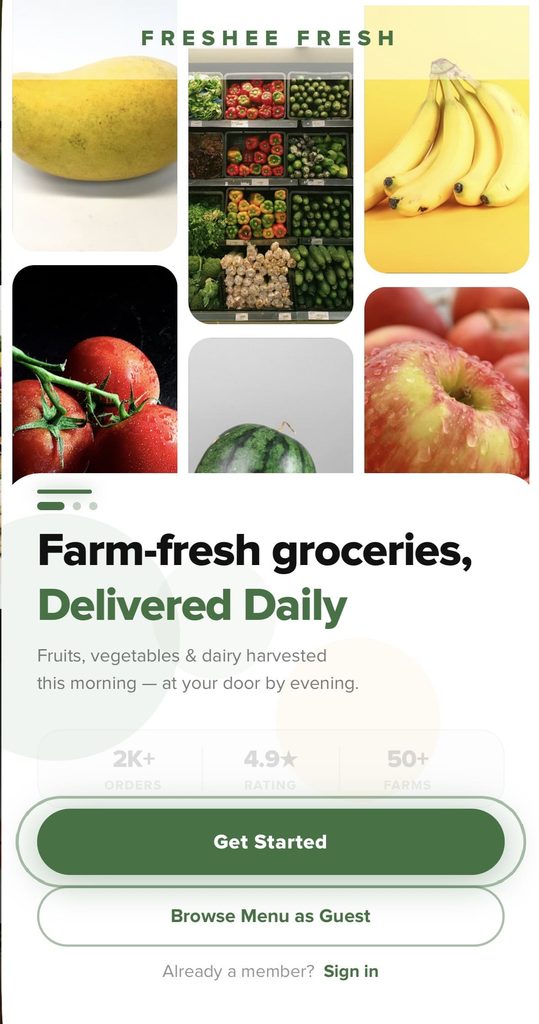
What Appsketch Builds for Your Online Grocery Store
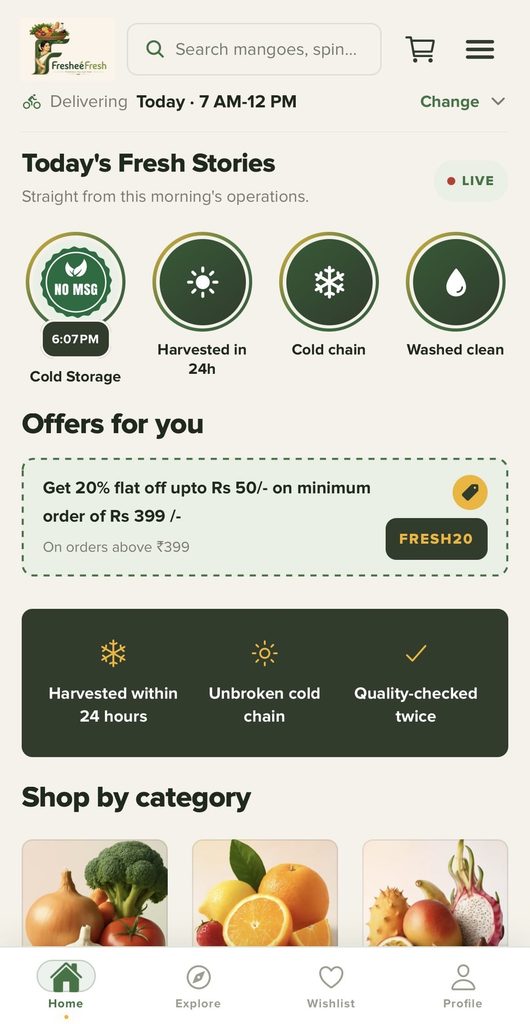
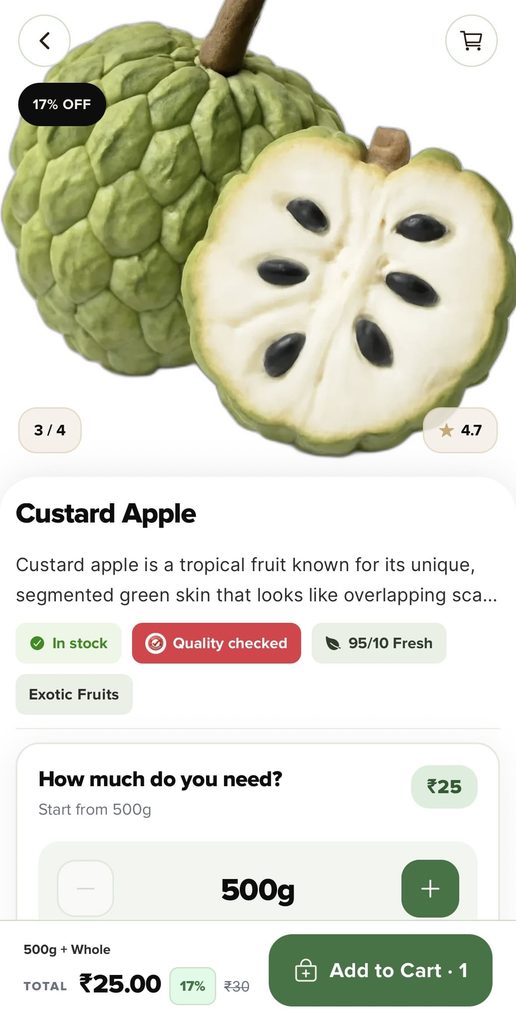
- Custom Website for Your Online Grocery Store A fully custom-designed grocery ecommerce website for desktop and mobile, built around your brand, your product categories, your delivery zones, and your customer experience. Location-aware browsing that shows customers only the products available for delivery to their address. Complete product catalogue with categories, search, and filter by dietary requirement, brand, or availability. Integrated checkout with all payment methods — UPI, cards, wallets, net banking, and cash on delivery. Scheduled delivery slot selection and real-time order tracking.
- Customer Mobile App (iOS and Android) A native mobile app for your grocery customers — because 80% of grocery orders in India are placed on mobile. The customer app includes: real-time inventory browsing with location detection, smart basket and repeat order functionality, live order tracking from the moment of placement to doorstep delivery, push notifications for order updates and new offers, loyalty programme and subscription management, and one-tap reorder for regular purchases.
- Delivery Partner App A dedicated mobile app for your delivery partners — the operational heartbeat of your grocery delivery business. The delivery partner app includes: real-time order assignment notifications with item list and customer address, GPS navigation optimised for last-mile delivery routes in your delivery zone, OTP delivery confirmation, earnings tracker and payment history, in-app communication with your dispatch team, and cold chain item flagging so partners know which items must be kept in insulated bags throughout delivery.
- Complete Backend — Admin Panel and Operations Dashboard A powerful admin panel that gives you full visibility and control over your entire grocery operation from one screen. Manage your complete product catalogue and pricing in real time. Monitor live inventory levels across all your fulfilment points. View all active orders, their status, and their assigned delivery partner simultaneously. Manage your delivery partner fleet — assignments, availability, earnings, and performance. Run promotions, discount codes, and subscription offers. Access complete analytics on your most-ordered products, peak ordering times, delivery performance, and customer lifetime value.
- Vendor Dashboard (for Multivendor Models) If you are building a multivendor online grocery store or marketplace, Appsketch builds a dedicated vendor dashboard for each of your partner vendors. Vendors can manage their own product listings, update pricing, mark items as out of stock, receive and confirm incoming orders, and track their earnings and payouts — all independently, without needing to contact you for every change.
- Real-Time Inventory Management System A backend inventory management system that syncs your physical stock with your online grocery store in real time. Every order placed automatically deducts from available inventory. When stock falls below your reorder threshold, the system alerts your procurement team. Products that reach zero stock are automatically hidden from the customer app. FEFO (First Expired, First Out) tracking ensures that your oldest stock is always dispatched first.
- AI Integration Layer Appsketch builds your grocery platform with an AI integration layer that connects to demand forecasting, route optimisation, and personalisation engines — so that as your order volume grows, you can activate AI capabilities within your existing platform without rebuilding from scratch.
- Custom Framework and Architecture Everything Appsketch builds for your online grocery store is built on a custom, scalable framework designed for your specific business model — whether single vendor, multivendor, or hybrid. The architecture is built to handle thousands of simultaneous orders, real-time inventory sync across multiple locations, and the technical complexity of a live grocery delivery operation. No off-the-shelf templates. No generic layouts. A technology platform built specifically for your grocery delivery business.
Step 12: Launch Your Online Grocery Store
Start With One Zone, One Category, Done Perfectly
The most common and most expensive launch mistake for any new online grocery store is going too wide too fast. Starting in 5 zones simultaneously, with 5,000 products, and a 30-minute delivery promise before your operations can support any of it. Every successful large grocery platform started with a single zone and a focused product range.
Start your online grocery store with, and only with:
- One defined delivery zone (a single neighbourhood or a 2–3 kilometre radius)
- One focused product category (fresh produce, or organic staples, or your niche)
- A delivery promise you can consistently fulfil (even if it is 60 minutes rather than 30)
- A team size that matches your expected order volume, not your optimistic projection
Expand your zone, expand your product range, and tighten your delivery promise as your operations prove they can support the expansion.
Pre-Launch: Build Your First 100 Customers
Before your online grocery store goes live publicly, recruit your first 100 customers through direct community outreach. Apartment complex WhatsApp groups, local resident welfare associations (RWAs), office buildings in your zone, and neighbourhood Facebook groups are your most effective pre-launch channels. Offer these early users an exclusive founding member benefit : a launch discount, free delivery for the first month, or a free produce box with their first order. These first 100 customers will give you the order volume to test your operations, the feedback to improve your product, and the word-of-mouth to grow organically.
Test Your Full Flow Before Launch
Before your first public order goes live, run 20–30 test orders through your complete flow from order placement on the customer app to delivery confirmation and review request. Specifically test:
- Cold chain performance: Are chilled items still cold on arrival?
- Order accuracy: Is every item in the order correct, including weights for produce?
- Delivery time: Are you consistently meeting your stated delivery time?
- Substitution flow: When an item is out of stock, does the substitution process work correctly?
- Payment processing: Do all payment methods work correctly, including cash on delivery?
Every failure discovered in a test order is a failure prevented for a real customer.
Step 13: Market Your Online Grocery Store
Non-Mainstream Marketing Channels That Work for Grocery
Most guides on how to start an online grocery store focus on standard digital marketing. Here are the channels that work specifically for an online grocery store: Here are the channels that work specifically and powerfully for a grocery delivery business:
- RWA and Apartment Complex Partnerships : Residential welfare associations and apartment complex management committees are the most direct channel to dense, geographically concentrated customer clusters. A hyperlocal partnership with an RWA where your online grocery store is promoted as the recommended hyperlocal delivery service for residents, with access to community noticeboards, WhatsApp groups, and building newsletters, can add hundreds of regular customers at near-zero acquisition cost.
- Morning Market and Produce Influencers : “What I bought at the market today” and “morning grocery haul” content performs exceptionally well on Instagram and YouTube in India. Partner with food and lifestyle creators who document their cooking and grocery routines. A recipe video that features your produce or specialty ingredients drives both product discovery and grocery basket inspiration.
- WhatsApp Business for Relationship-Based Grocery Delivery : WhatsApp is where Indian grocery relationships live. Build a WhatsApp Business channel for your online grocery store, broadcast daily availability of fresh produce, share recipe ideas using your current inventory, notify subscribers of limited-stock specials, and allow customers to reorder their regular basket with a single message. WhatsApp-based grocery ordering has exceptionally high retention because it meets customers in the communication channel they already use daily.
- Subscription and Recurring Order Programmes : Weekly vegetable boxes, monthly dal-chawal staple kits, daily milk delivery subscriptions, recurring order programmes are the most powerful retention tool in the grocery delivery business. A subscribed customer orders 4–5x more frequently than a non-subscribed customer and shows dramatically lower churn. Design 2–3 subscription options at launch and actively promote them to your first-order customers.
SEO for Your Online Grocery Store
An online grocery store has significant SEO content opportunities around food and cooking. Write content that answers the questions your target customer is searching for:
- “Best organic vegetable delivery in [city]”
- “How to store fresh coriander to keep it green longer”
- “Farm-fresh vegetables vs supermarket vegetables — what’s the difference?”
- “Weekly grocery list for a family of four”
- “What to cook with ridge gourd” (seasonal produce education)
These articles attract organic traffic from food-interested buyers in your geography and drive them into your grocery store’s product catalogue. Local SEO, particularly Google Business Profile optimisation for your dark store or warehouse location is also critical for visibility in location-based searches for grocery delivery.
How Much Does it Cost to Start an Online Grocery Store?
Starting an online grocery store has a significantly higher capital floor than most other ecommerce businesses than most other ecommerce businesses, primarily because of inventory cost, cold chain infrastructure, and delivery operations.
General Startup Costs
| Setup Type | Estimated Cost |
|---|---|
| Lean launch (curated niche, small zone, basic ops) | ₹5,00,000 – ₹15,00,000 |
| Mid-level (dark store, 500 SKUs, own delivery fleet) | ₹15,00,000 – ₹50,00,000 |
| Full grocery platform (multivendor, multiple zones, AI integration) | ₹50,00,000 – ₹2,00,00,000+ |
Cost breakdown specific to an online grocery store:
- Initial inventory (first stock): ₹1,00,000 – ₹10,00,000 depending on range and category
- Dark store or warehouse rent: ₹15,000 – ₹80,000/month depending on city and size
- Cold storage equipment: ₹30,000 – ₹3,00,000 depending on capacity
- Delivery fleet (bikes/scooters or partner integration): ₹50,000 – ₹5,00,000
- FSSAI licence: ₹2,000 – ₹7,500 depending on tier
- Operations staff (pickers, dispatchers): ₹20,000 – ₹40,000 per person per month
- Marketing (WhatsApp, local ads, RWA partnerships): ₹20,000 – ₹1,00,000/month initially
Appsketch Complete Digital Ecosystem for Your Online Grocery Store:
| What Appsketch Builds | Details |
|---|---|
| Custom grocery ecommerce website | Location-aware, fully branded, mobile-first |
| Customer mobile app (iOS + Android) | Native apps with real-time tracking |
| Delivery partner app | GPS navigation, OTP confirmation, earnings tracker |
| Admin panel and operations dashboard | Full visibility and control of your grocery operation |
| Vendor dashboard (multivendor) | Independent vendor management for marketplace models |
| Real-time inventory management system | FEFO tracking, auto-deduction, reorder alerts |
| AI integration layer | Demand forecasting, personalisation, route optimisation |
| Custom framework and architecture | Built for your specific model — scalable from day one |
| Appsketch subscription (starting from) | ₹10,000/month |
Mistakes That Destroy New Online Grocery Stores
These are drawn from the most consistent failure patterns in online grocery stores in India and globally in India and globally specific to the grocery delivery business model, not generic ecommerce advice.
- Launching too wide before operations are ready. Starting in 5 delivery zones with 5,000 products before your picking, packing, and delivery operations can consistently handle 50 orders per day. Every failed delivery in your first month is a customer permanently lost.
- No cold chain for perishable products. Launching with dairy, meat, or fresh produce and no cold chain infrastructure. Customer receives spoiled food. Health risk and brand disaster simultaneously.
- Promising delivery times you cannot meet. Advertising 30-minute delivery when your picking takes 20 minutes and your average delivery distance is 5 kilometres. Customer expectation management is the single biggest driver of customer satisfaction in grocery delivery.
- No real-time inventory sync. Accepting orders for products that are already out of stock because your online store and physical inventory are not synced. The customer waits for an item that will never come.
- Ignoring near-expiry stock management. Not implementing FEFO from day one in your online grocery store leads to dispatching near-expiry products, which triggers returns, negative reviews, and FSSAI compliance risk.
- Building technology before validating the business. Spending ₹30 lakh on a custom app and AI system before validating that customers in your zone will actually order from your grocery store. Validate operations with basic tools first, then invest in technology as order volume justifies it.
- No contingency for delivery partner shortages. Having only 3 delivery partners on a day when 60 orders come in during the evening peak. Build overflow capacity into your delivery partner network from day one.
- Underpricing delivery to attract customers. Offering free delivery on all orders regardless of order value is unsustainable when delivery costs ₹30–₹60 per order. Design a delivery fee structure that is economically sustainable from launch.
Conclusion
Starting an online grocery store in 2026 is one of the most complex, most operationally demanding, and most commercially significant ecommerce opportunities available. The global online grocery market is on track to surpass $1.5 trillion. India’s quick commerce sector is growing at 100% year on year, and the quick commerce model is now the benchmark for all online grocery delivery in Indian cities. And the lesson from Blinkit, which turned a failed next-day grocery delivery service into India’s fastest-growing commerce platform is that the right operational model, in the right geography, with the right technology, can build something genuinely significant.
The founders who build sustainable, profitable online grocery stores are the ones who start focused. Every online grocery store that has succeeded in India started with a clear niche, a defined zone, and a delivery promise it could keep. One zone. One niche. A delivery promise they can keep. A dark store that puts inventory physically close to their customers. A technology platform that syncs inventory, manages delivery partners, and personalises the ordering experience. And AI capabilities that turn data into decisions, forecasting demand before it happens, routing deliveries efficiently, and preventing the perishable waste that kills grocery margins.
Appsketch builds the complete digital ecosystem your online grocery store needs from customer app to delivery partner app, admin panel to AI layer so your online grocery store launches with enterprise-grade infrastructure from day one. Custom designed. Fully integrated. Built specifically for the operational complexity of a grocery delivery business.
Frequently Asked Questions About Starting an Online Grocery Business
Yes, but the path to profitability requires disciplined margin management, operational efficiency, and volume. Blinkit became the first major Indian quick commerce player to achieve adjusted EBITDA profitability in Q3 FY26 after years of investment. For an independent online grocery store operating in a defined niche and geography, profitability is achievable at significantly lower scale, typically when the combination of subscription revenue, private label margins, and delivery fee income covers your operational costs. Organic and specialty grocery stores typically reach profitability faster than mass-market ones because of higher average margins.
A dark store is a small warehouse (2,000–5,000 sq ft) located within 1–2 kilometres of a dense residential area, used exclusively for fulfilling online orders. You need one if you want to offer fast delivery (under 60 minutes) in a specific urban zone. For a niche online grocery store targeting a single neighbourhood, even a 500 sq ft ground-floor space organised as a mini dark store is sufficient. For a broader delivery operation, multiple dark stores, one per zone, are the model Blinkit has proven at scale.
Implement FEFO (First Expired, First Out) from day one, the stock expiring soonest is always dispatched first. Set automated expiry alerts at 72 hours, 48 hours, and 24 hours before expiry for your highest-risk perishables. Use demand forecasting, even a simple model based on order history is more accurate than intuition, to order only what your online grocery store can sell before it expires. As your order volume grows, AI demand forecasting tools significantly reduce waste. As your order volume grows, AI demand forecasting tools significantly reduce waste.
Single vendor if you want to control quality and have capital for inventory. Multivendor if you want to aggregate existing local stores and scale without inventory investment. Most successful grocery delivery businesses start single vendor in a defined niche and geography, then add vendor integration as they scale their platform. If you are unsure, start single vendor. It is simpler to operate and gives you complete control over the customer experience.
Do not compete on speed and scale. That is a capital war you cannot win. Compete on niche, community, and quality. Blinkit stocks 30,000 mainstream SKUs. Your online grocery store should stock 500 products that your specific community cannot get easily on Blinkit like organic produce, regional specialities, farm-fresh items, specialty imports, or dietary-specific products. The customers who need these products will choose your grocery store every time, even if you deliver in 45 minutes instead of 10.
At minimum: a customer-facing grocery website or app, a delivery partner app, a backend order management system, and a real-time inventory management system. All of these are built as part of Appsketch’s complete grocery delivery platform, custom designed for your specific business model, from single vendor to multivendor, with an AI integration layer for demand forecasting and personalisation as your order volume grows.
At minimum: FSSAI licence (State or Central depending on turnover and geography), GST registration, and business registration. If you are trading in fresh produce through APMC markets, check local APMC licence requirements. If you have cold storage facilities, a cold storage licence under the Food Safety and Standards Act may be required. Always consult a regulatory consultant before your first sale.
Build a dedicated delivery partner app, not a WhatsApp-based system from day one. The app should handle real-time order assignment, GPS navigation, OTP delivery confirmation, and earnings tracking. Maintain a hybrid fleet: a core captive group of partners for daily baseline orders, supplemented by gig economy partners during peak periods. Set clear per-delivery payment rates, performance standards, and a transparent dispute resolution process from day one.


3 comments