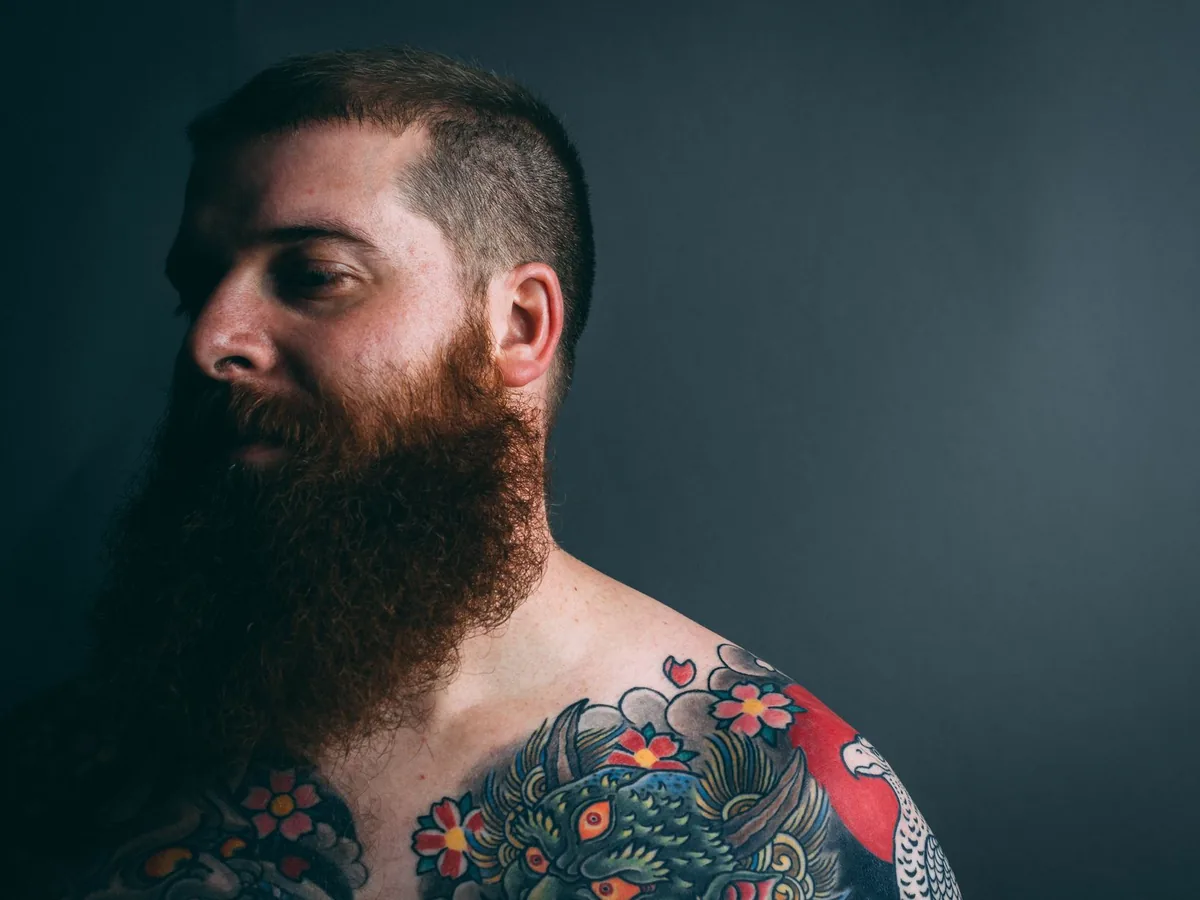
Japanese tattooing is the reason large-scale tattoos look the way they do everywhere in the world. The idea that a sleeve or a back should be one composition, with a subject, a background and a deliberate edge, comes from irezumi. It is worth knowing a little about before you wear it.
From woodblock to skin
The style took shape in Edo, now Tokyo, in the late eighteenth and early nineteenth centuries. Woodblock prints of tattooed folk heroes were hugely popular, and people began asking for the same imagery on their own bodies. Many early tattooers were woodblock carvers, and they carried over the bold outlines, flat colour and flowing backgrounds of the prints.
Firemen, labourers and couriers were among the most heavily tattooed. For men who worked stripped to the waist, a full back piece was a kind of clothing.
Banned, and kept alive
In the 1870s the Japanese government outlawed tattooing as it tried to present a modern face to the West. The ban lasted until 1948. The craft survived underground, passed from master to apprentice, and during those decades it became associated with organised crime, an association that still shapes attitudes in Japan today.
Foreign sailors, and reportedly a few European royals, sought out Japanese tattooers anyway. The style travelled.
Reading the motifs
Every major subject carries a meaning. The dragon stands for wisdom and protective strength, not destruction. The koi swims upstream against the current and represents perseverance. The tiger is courage and a guard against bad luck. The hannya mask shows a woman consumed by jealousy and is worn as a ward against the same. Peonies stand for wealth and daring, cherry blossom for how short life is.
Tradition also pairs subjects with seasons. Koi belong with maple leaves or water, not with cherry blossom in a snowstorm. A good irezumi artist will keep those pairings consistent.
The background is the tattoo
What makes a piece read as Japanese is the gakubori: the wind bars, waves, clouds and rocks that surround the subject. They are what make a sleeve flow around the arm and tie separate elements into one piece. Subjects without background are just pictures.
The edges matter too. A sleeve can end in a straight line or a soft, cloud-like border, and a chest panel traditionally leaves a clear strip down the centre of the body.
Wearing it today
Imran and Sameer both plan Japanese work at full scale, drawing straight onto the body so the composition follows your build. It is slow. A full sleeve is typically five to eight sessions and a back piece can take a year or more. If you are travelling to Japan, be aware that some baths, gyms and pools still refuse entry to visibly tattooed guests.
None of that should put you off. It is one of the great tattoo traditions, and done with respect for its rules it will outlast every trend.