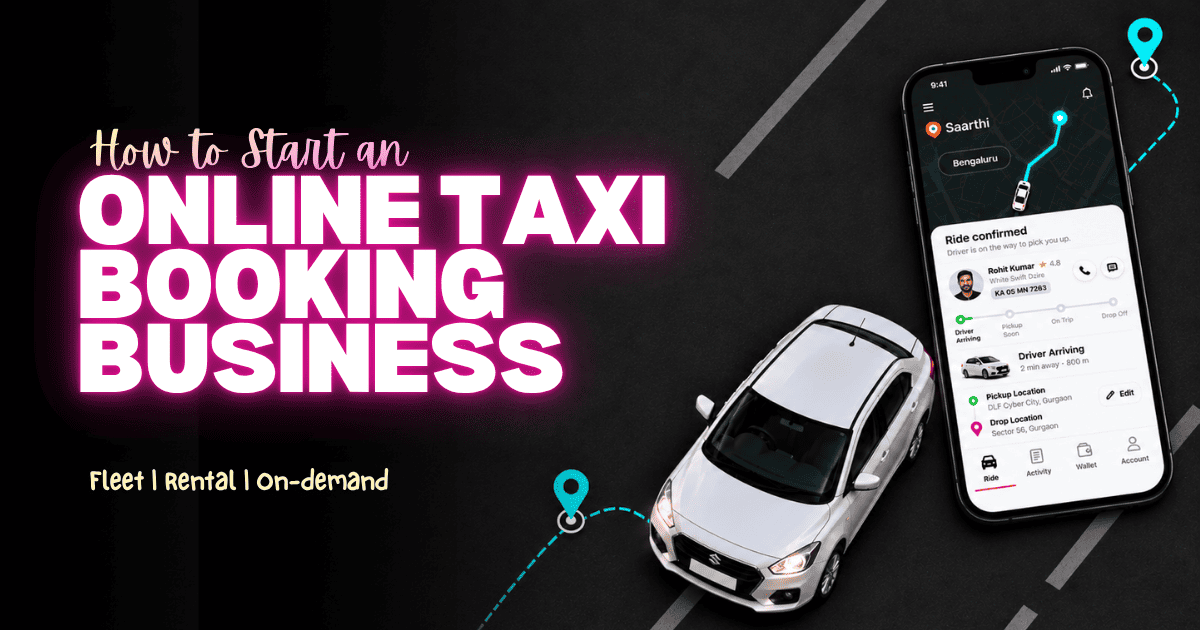


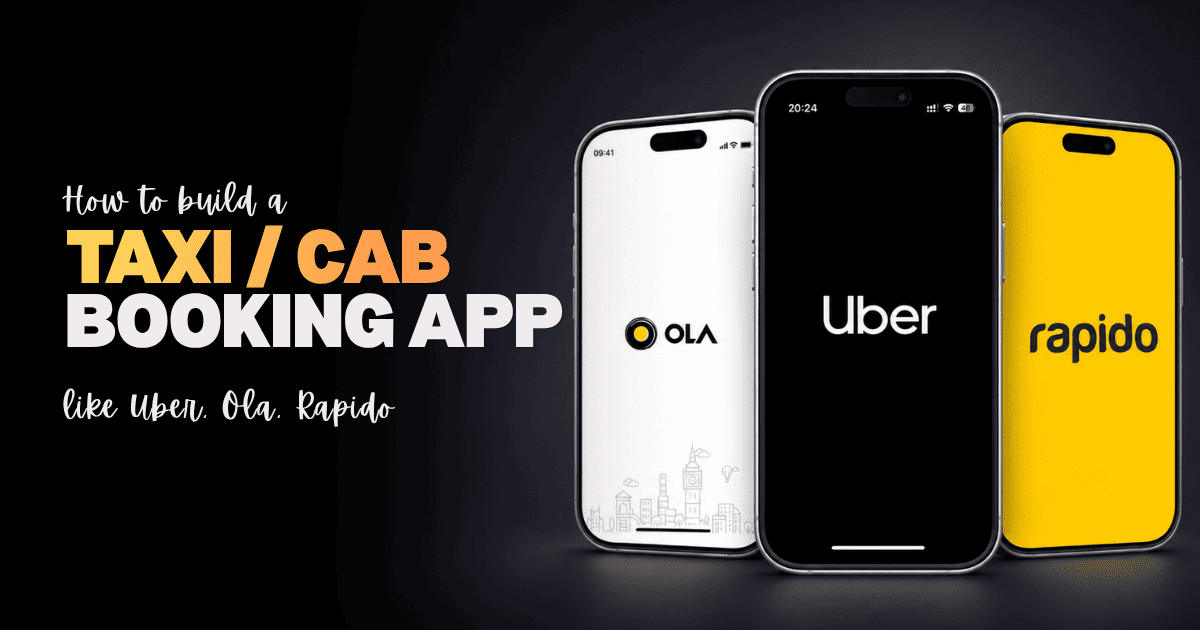
To build a taxi booking app like Uber, Ola or Rapido, you need a rider app, a driver app and an admin panel on one backend. Model each ride as a state machine, then add ride matching with a geo index, real-time GPS tracking, a fare engine with surge pricing, payments with commission and payouts, and OTP and push notifications. Test the full ride flow, then release to Google Play and the App Store.
- Uber, Ola and Rapido run on platforms, not fleets: as an aggregator, the app is your main investment.
- A taxi booking app has three client apps (rider, driver, admin) on one backend.
- Model every ride as a state machine: requested, assigned, arriving, in progress, completed, cancelled.
- Store fare rules in the database so prices change without a new app release.
- A from-scratch build often takes several months; with Appsketch a standard setup takes 10 to 15 days.
Uber completed 4.06 billion trips in a single quarter. Rapido now facilitates over 5 million rides a day. Neither business runs on a fleet it owns. Both run on one thing: a platform that matches riders and drivers in seconds.
That platform is what you build when you build a taxi booking app like Uber, Ola or Rapido. This guide on how to build a taxi booking app covers architecture, features, tech stack, taxi booking app development cost and launch, and how Appsketch, a taxi app development company, builds it for you.
Uber, Ola and Rapido by the Numbers
| Platform | Users and scale | Revenue | How the platform earns |
|---|---|---|---|
| Uber | 215 million monthly active platform consumers and 4.06 billion trips in Q3 2026 | $14.8 billion revenue on $59.8 billion gross bookings in Q3 2026 | Fees on trips by independent drivers |
| Rapido | 5 million+ rides a day across 400+ cities | FY25 operating revenue of ₹934 crore (up 44%), net loss of ₹258 crore | Driver subscriptions (₹275 crore in FY25), delivery and commissions |
| Ola | Lost ride-hailing share to Rapido and Uber | FY25 revenue of ₹1,171 crore (down 42%), net loss of ₹662 crore | Commission and convenience fees |
User-wise: Sensor Tower estimates, reported in October 2026, put Rapido at 94 million monthly app users in India against 40 million for Uber.
Revenue-wise: Uber's gross bookings grew 20% in Q3 2026. Rapido grew operating revenue 44% in FY25. Ola's fell 42%.
Why a Smooth Platform Is the Real Product
Riders never see the company. They see the taxi booking app. Smoothness is what keeps them:
- Booking in a few taps: pick-up, drop, ride type
- Upfront fare: the price is shown before they confirm
- Live car on the map: an accurate ETA and a moving marker
- Safe start: an OTP to begin the trip
- Cashless payment: done when the ride ends
Drivers feel it too: fast requests, clear earnings and quick payouts.
At Uber's scale, 4 billion trips a quarter in its ride-hailing app is handled by software, not by a bigger back office. Two lessons from the other two:
- Rapido: it won drivers with a daily-fee subscription instead of a heavy commission. Your driver pricing model is a product decision.
- Ola: Inc42 reports that its product and engineering teams were moved toward Ola Electric while Rapido and Uber grew. Its revenue fell 42% in FY25. A neglected platform loses riders and drivers.
Your Biggest Cost Is the Platform, Not a Fleet
Uber describes its drivers as independent providers who use its platform. Rapido's captains work the same way: only ₹21 crore of its ₹934 crore FY25 operating revenue came from vehicles it runs directly.
So when you build a taxi booking app as an aggregator, you do not buy cars, hire drivers or pay for fuel and repairs.
| Cost item | Platform-only (aggregator) | Own fleet |
|---|---|---|
| Vehicles | Drivers bring their own | You buy or lease every car |
| Driver pay, fuel, maintenance | Paid by the driver | Paid by you |
| Parking and depots | None | Your cost |
| Vehicle insurance | Driver's policy, subject to local rules | Your cost per car |
| The platform: rider app, driver app, admin panel, backend | Your main investment | Needed too |
For an aggregator, the platform is the one big line item. The rest is licences, driver onboarding and marketing.
That is why your build route sets your taxi app development cost and your taxi booking app development cost:
- From scratch with an agency: high taxi app development cost, often several months
- Clone script (Uber clone app): low cost, but hard to change
- Template platform (white label taxi app) with custom development: live in days, fully editable. Appsketch starts from ₹1,250 / $13.50 per month. See the pricing below.
Now, what does a cab booking app actually contain? Here is how to build a taxi booking app like Uber, Ola or Rapido, layer by layer.
What You Are Building: Taxi Booking App Architecture
A taxi booking app like Uber has three client apps on top of one backend. The same taxi booking app architecture works for a taxi booking app like Ola or an app like Rapido.
| Layer | What it does |
|---|---|
| Rider app (Android, iOS) | Booking, fare view, live tracking, payment |
| Driver app (Android, iOS) | Go online, receive requests, navigate, earn |
| Admin panel and dispatch (web) | Live bookings, driver approvals, fares, payouts |
| API gateway | One secure entry point for all three apps |
| Core services | Auth, rides, matching, pricing, payments, notifications |
| Real-time layer | Live driver location and ride status updates |
| Data layer | Main database, cache, file storage |
| Third-party services | Maps, payment gateway, SMS, push notifications |
Monolith or microservices? When you build a taxi booking app, start with a modular monolith. Split out matching and tracking only when load demands it.
How a Ride Works Under the Hood
Every taxi app like Uber, Ola or Rapido runs this lifecycle. It is the base of any cab booking app:
- Request: the rider app sends pick-up, drop, ride type and a locked fare.
- Matching: the backend finds nearby online drivers and sends the request to the best match.
- Acceptance: the driver accepts within a timeout, or the request moves to the next driver.
- Pick-up: the driver app navigates to the rider, and the rider app shows the car live.
- Start trip: the driver enters the rider's OTP.
- In progress: both apps stream location. The admin panel shows the trip live.
- Completion: the fare is finalized, payment is charged and the commission is split.
- Rating: both sides rate, and the driver's earnings update.
Model this as a ride state machine: requested, assigned, arriving, in progress, completed, cancelled. Every state change is logged and pushed to all apps. This is the most important design rule for ride-hailing app development and for any ride-hailing app you build.
Core Module 1: Ride Matching and Dispatch
Matching decides how fast a rider gets a car in your taxi booking app. A basic matching flow:
- Geospatial index: store driver locations with a geo index (PostGIS, Redis geo, geohash or H3 cells) for fast nearby search.
- Search radius: start small, then widen if no driver accepts.
- Ranking: sort by distance or ETA, then by rating, acceptance rate and vehicle type.
- Timeouts: give each driver 10 to 20 seconds, then re-dispatch.
- Locking: mark a driver as reserved while a request is pending, to avoid double booking.
- Fallback: manual assign from the admin panel (taxi dispatch software).
Advanced options: batch matching, AI-based demand prediction and driver heatmaps.
Bike taxi note (an app like Rapido): trips are short and frequent, so matching radius, timeouts and pricing must be tuned for short hops.
Core Module 2: Real-Time Location Tracking
Live tracking is the feature riders trust most.
- Driver app: send GPS every 3 to 5 seconds while on a trip, less often while idle.
- Transport: WebSockets or a managed real-time service for push. Use HTTP for non-live calls.
- Background location: request background permissions on Android and iOS, and handle battery limits.
- Map smoothing: snap points to roads and animate the car marker between updates.
- ETA: use a routing API for pick-up and drop ETA.
- Offline handling: buffer points and resync when the network returns.
- Maps APIs: maps SDK, directions, distance matrix, geocoding and places autocomplete (Google Maps or Mapbox).
Core Module 3: Fare Engine and Dynamic Pricing
A fare engine is a rules service, kept separate from the app code.
Fare = Base fare + (Per-km rate × Distance) + (Per-minute rate × Time) + Tolls + Taxes
Support:
- Ride-type pricing: auto, mini, sedan, SUV, bike
- Upfront fare: calculate at booking, lock it, and show the breakdown
- Surge pricing: a multiplier by zone, time or demand ratio
- Waiting, night and cancellation charges
- Promo and coupon rules
- Fare bidding (inDrive-style): rider offers a price, drivers counter
- Multi-currency and tax rules for each city
Store every fare rule in the database, so the admin can change prices without a new app release.
Core Module 4: Payments, Commission and Payouts
- Gateways: integrate a gateway such as Stripe, PayPal or Razorpay. Never store raw card data. Use tokenization and stay PCI DSS compliant.
- Payment modes: cards, wallets, UPI where relevant, and cash.
- Wallet: an internal ledger for rider credits and driver earnings.
- Commission split: calculate on trip completion and record it as ledger entries.
- Subscription billing (a taxi app like Rapido): if drivers pay a flat daily or monthly fee instead of a commission, you need a billing engine for plans, renewals and expiry.
- Payouts: scheduled driver payouts with a clear statement.
- Refunds and disputes: reversible ledger entries and admin tools.
Use an append-only ledger. It makes audits and dispute handling far easier.
Core Module 5: Notifications, OTP and Communication
- Push notifications: Firebase Cloud Messaging and Apple Push for ride requests and status changes
- SMS and OTP: a provider such as Twilio for login and start-trip OTP
- In-app chat or masked calling: keep phone numbers private
- Email receipts and invoices
Taxi App Features by App
These taxi app features cover a taxi booking app like Uber, Ola or Rapido.
Rider App
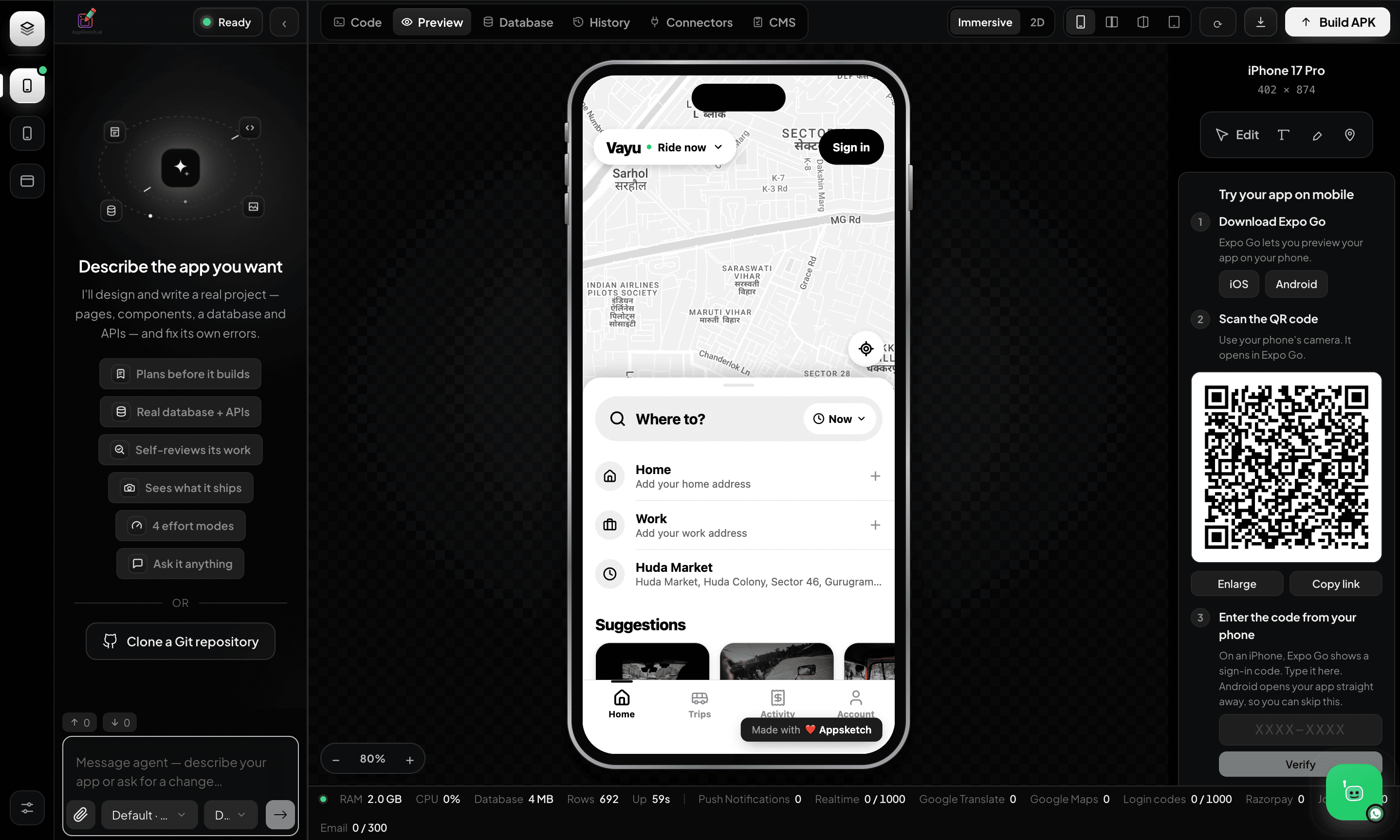
- Sign-up with phone OTP
- Pick-up, drop and ride type on one screen
- Upfront fare, ride now or schedule
- Live driver tracking and start-trip OTP
- Payments, coupons, receipts, ratings
- SOS, share-trip link, in-app chat
Driver App
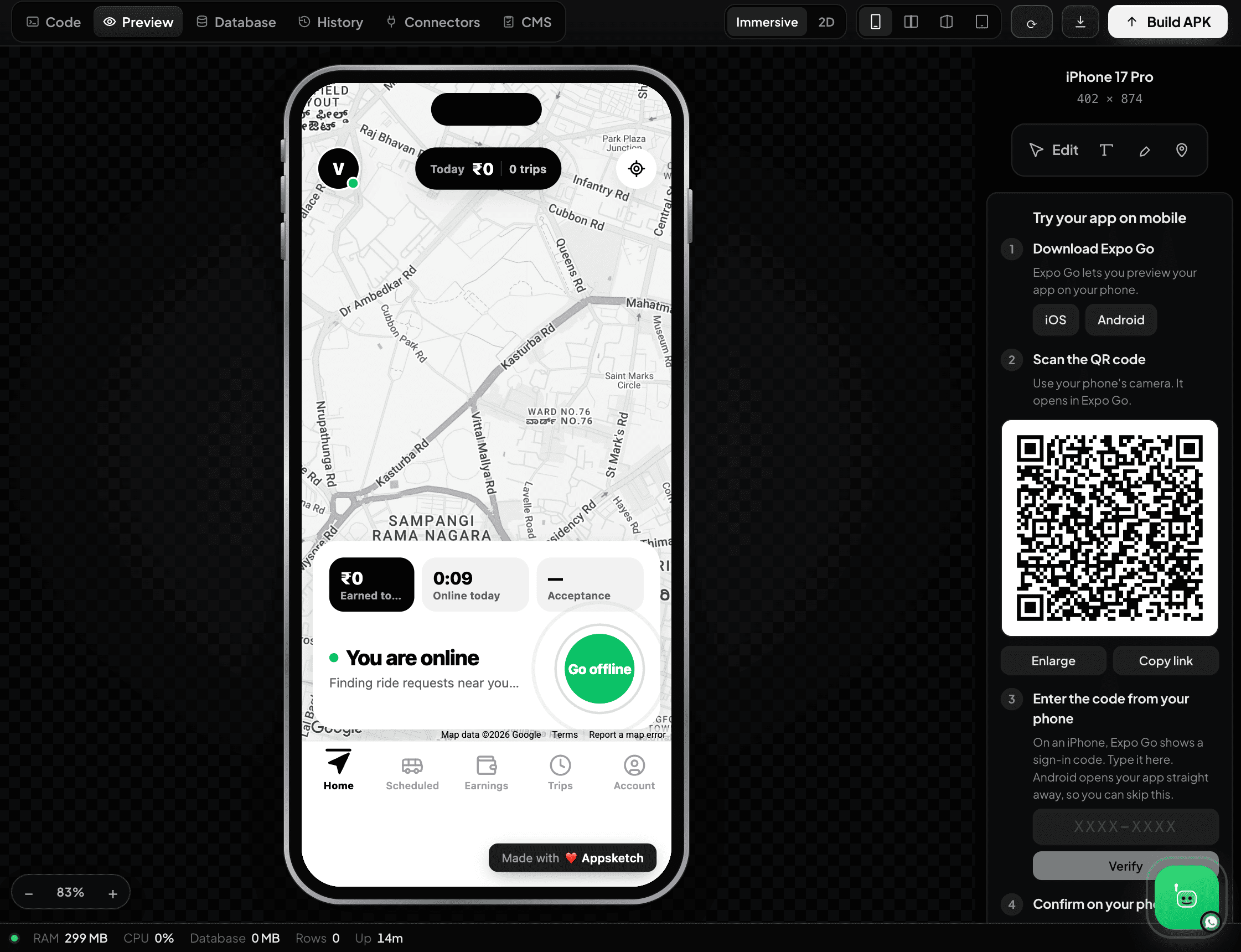
- Sign-up with licence and vehicle document upload
- Online and offline toggle
- Request card with trip and fare, accept or decline
- Turn-by-turn navigation
- Earnings, trip history, payouts
Admin Panel and Dispatch Software
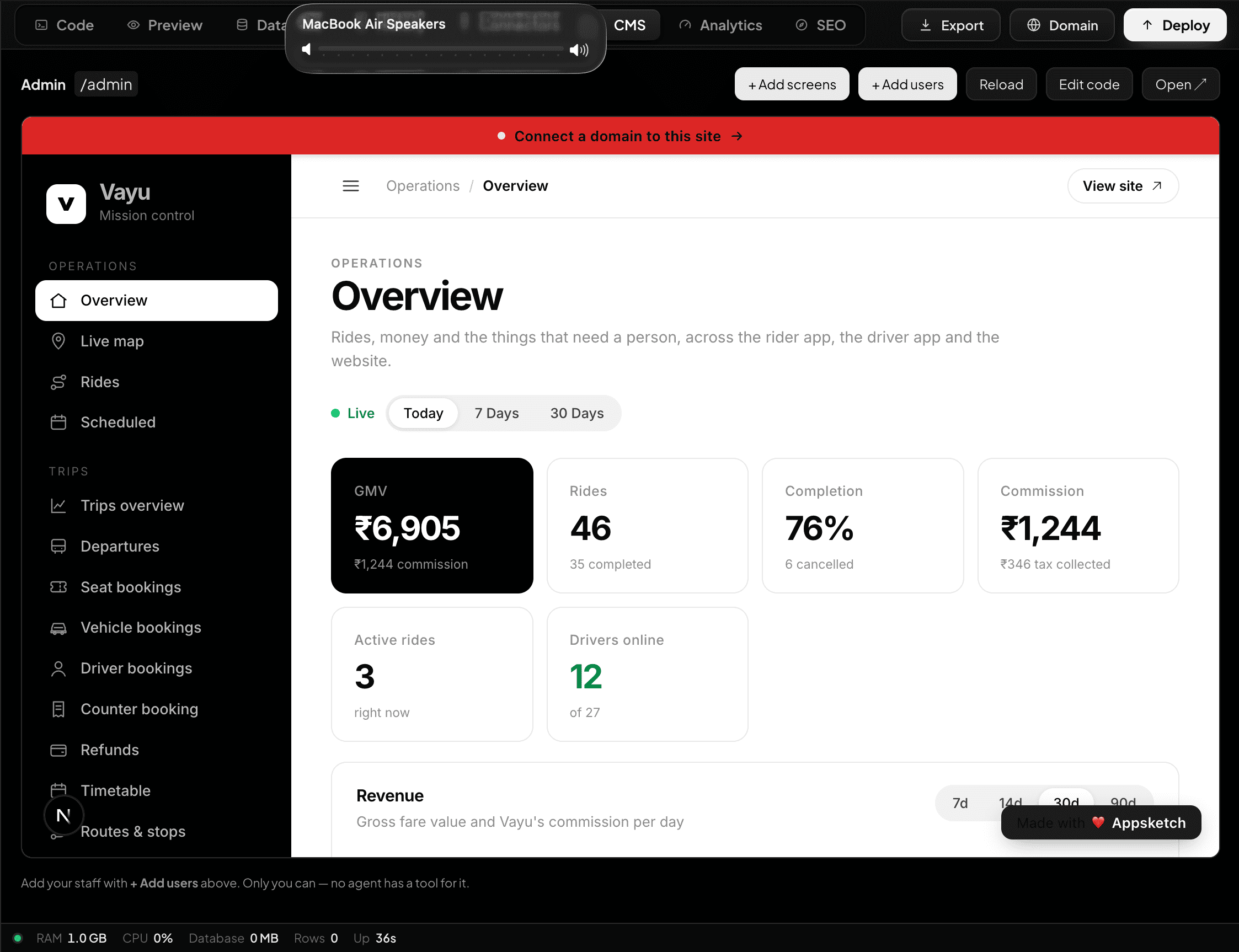
- Live bookings board by ride state
- Driver KYC and approvals
- Fare, surge and promo settings
- Commissions, payouts and reports
- Fleet and vehicle management, corporate accounts
- Role-based access for staff
Want a head start? Launch faster with a ready-made rider app, driver app and admin panel.
Explore prebuilt taxi app templates →Database Design: Core Entities
| Entity | Key fields |
|---|---|
| User (rider) | id, phone, name, wallet balance, rating |
| Driver | id, phone, status, documents, rating, current location |
| Vehicle | id, driver, type, plate, documents |
| Ride | id, rider, driver, pick-up, drop, state, fare, timestamps |
| Fare rule | ride type, base, per-km, per-minute, surge zone |
| Payment | id, ride, method, amount, status, gateway reference |
| Ledger entry | id, account, debit or credit, ride, timestamp |
| Promo | code, rules, validity |
| Rating | ride, from, to, score |
Use a relational database such as PostgreSQL for rides and payments. Add Redis for live driver locations, caching and queues.
Best Tech Stack for a Taxi Booking App
This tech stack for a taxi booking app suits a taxi booking app like Uber, Ola or Rapido.
| Layer | Common options | Used for |
|---|---|---|
| Mobile apps | React Native, Flutter, Swift, Kotlin | Rider and driver apps on Android and iOS |
| Website and admin | Next.js, React | Booking website, dispatch panel |
| Backend | Python and Django, Node.js | Ride logic, APIs, payouts |
| Database | PostgreSQL with PostGIS, MongoDB | Rides, users, geo queries |
| Cache and queues | Redis, RabbitMQ, Kafka | Live locations, jobs, events |
| Real-time | WebSockets, Firebase | Live tracking, status pushes |
| Maps | Google Maps, Mapbox | Routing, ETA, geocoding |
| Payments | Stripe, PayPal, Razorpay | Online payments |
| Hosting | AWS, Google Cloud, Azure | Scale and uptime |
| DevOps | Docker, Kubernetes, CI/CD | Deploy and scale |
React Native vs native: for a cab booking app, React Native shares one codebase across Android and iOS and speeds up delivery. Go native only if you need heavy background-location tuning or device-specific features.
Security, Privacy and Scaling
- Auth: OTP login, JWT access tokens, short expiry, refresh tokens
- Data: HTTPS everywhere, encrypted data at rest, masked phone numbers
- Driver trust: document verification, background checks, vehicle checks
- Rider safety: SOS, trip sharing, OTP to start the trip
- API protection: rate limiting, input validation, role-based access
- Privacy: consent, data retention rules and GDPR-style controls
- Scaling: load balancer, horizontal scaling, cache hot data, queue heavy jobs, split services when needed
- Monitoring: logs, crash reports, uptime alerts, ride-level tracing
Testing a Taxi Booking App
- Functional: full ride flow from booking to payout
- GPS simulation: fake drivers and routes to test matching and tracking
- Load tests: thousands of drivers sending locations at once
- Network tests: 3G, drops and reconnects
- Device tests: low-end Android phones, older iOS versions
- Payment tests: failed charges, refunds, double taps
- Security tests: penetration testing and API abuse checks
- Edge cases: driver cancels, rider no-show, app killed mid-trip
Taxi App Development Steps
Here is how to build a taxi booking app in 11 steps:
- Requirements: define ride types, roles and the MVP scope
- Architecture: pick the stack, services and third-party APIs
- UI/UX design: wireframes and prototypes for rider, driver and admin
- Backend development: APIs, ride state machine, matching, fare engine
- App development: rider app and driver app
- Admin panel development: dispatch board and settings
- Integrations: maps, payments, SMS, push
- Testing: QA, load and security tests
- Deployment: cloud setup, CI/CD, monitoring
- Store release: Google Play and App Store submission
- Maintenance: OS updates, bug fixes, new features
Taxi App Development Timeline and Cost Drivers
| Phase | Typical time (from scratch) |
|---|---|
| Requirements and design | 3 to 6 weeks |
| Backend and apps | 8 to 14 weeks |
| Testing | 2 to 4 weeks |
| Release | A few days to 2 weeks |
Cost drivers for taxi booking app development cost and taxi app development cost:
- Number of apps and platforms
- Real-time and matching complexity
- Custom features such as bidding or subscription billing
- Third-party usage: maps, SMS and payment fees
- Security and compliance work
- Cloud hosting at scale
- Team size and rates
A from-scratch cab booking app often takes several months. A Uber clone app or clone script is faster but harder to change. Starting from a working white label taxi app template removes most of that work.
How Appsketch Builds Your Taxi Booking App Like Uber, Ola and Rapido
Appsketch is a taxi app development company trusted by 10,000+ businesses. We build your taxi booking app: a rider app, a driver app and a taxi dispatch software panel for Android, iOS and the web. Every cab booking app is built around your brand, your fares and your rules.
What Is Already Built
- Rider app, driver app and admin panel on one platform
- Upfront fares, live driver tracking, start-trip OTP, SOS, share trip and in-app chat
- Driver document upload with admin approval
- Commission calculation and payouts
- Fare, surge and promo settings
- Ride types for auto, mini, sedan and SUV, plus hourly rentals and outstation trips
- Fleet and vehicle management, corporate accounts, booking website
Appsketch Tech Stack
- Mobile apps (iOS and Android): React Native
- Website: Next.js
- Backend: Python and Django
- Maps: Google Maps integration
- Hosting: AWS
- Payments: all payment methods supported
Start From a Live Demo
Appsketch has 6 live taxi app demos you can open on your phone:
| Demo | Business type |
|---|---|
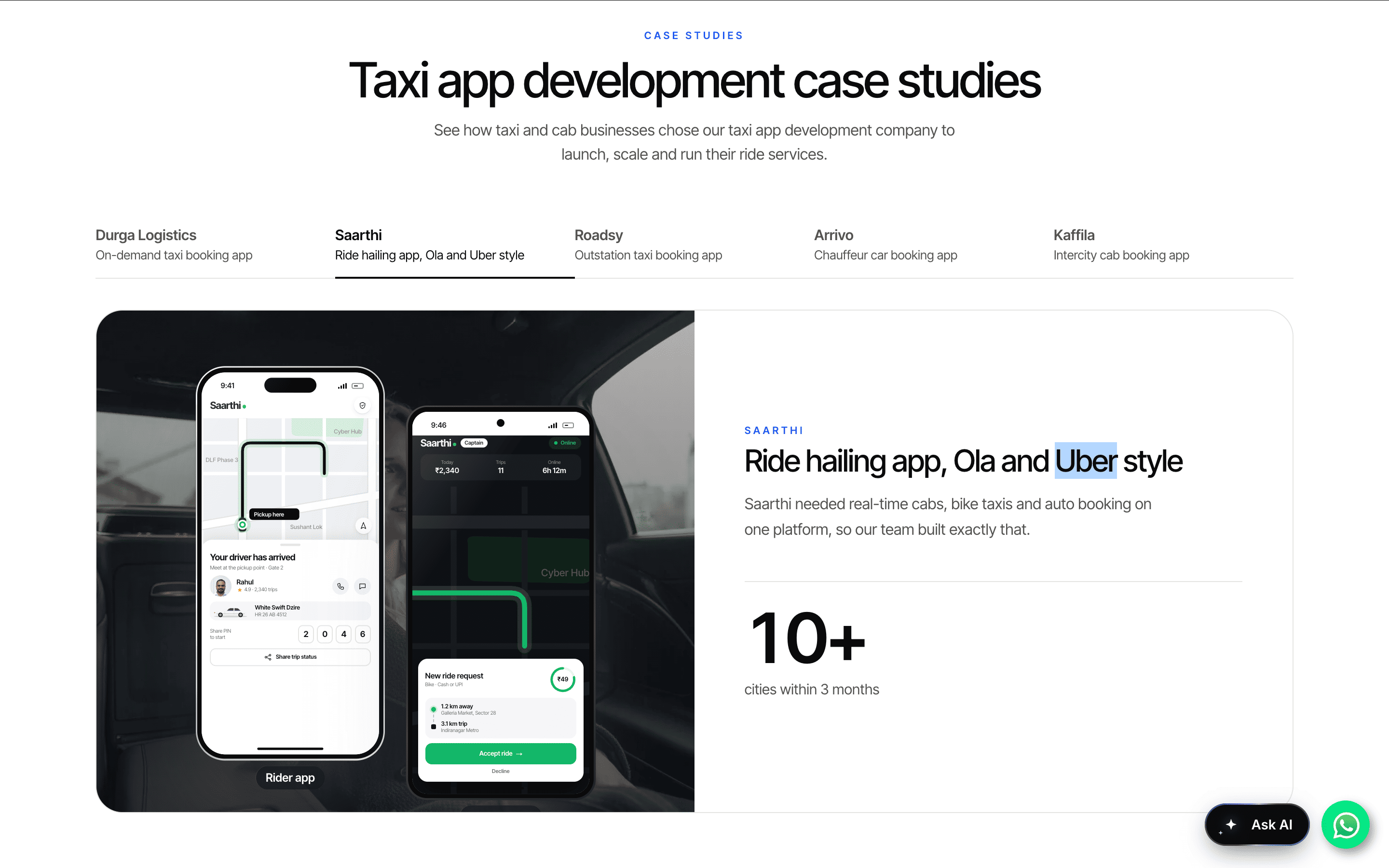
| Saarthi | Cab and rentals platform |
| Yello Cabs | Taxi booking platform |
| Vayu Rides | Ride-hailing platform (closest to Uber and Ola) |
| Roadsy | Self-drive car rental platform |
| Arrivo | Airport transfer platform |
| Kafila | Bus and shuttle ticketing platform |
Taxi Booking App Like Uber, Ola or Rapido: What We Build
- Like Uber or Ola (a taxi booking app like Ola or an app like Uber): start from the ride-hailing app template and add your brand, fares and commission rules. It works as a white label taxi app under your name.
- Like Rapido (an app like Rapido): describe bike taxis and your driver pricing in plain words and build it with AI. Fare bidding can be added the same way. A subscription-style driver plan is a custom feature.
- Custom logic: our developers add custom matching rules, integrations and workflows, the way a taxi app development company would for an Uber clone app.
3 Ways to Build With Appsketch
- Start from a template: pick a live taxi booking app, add your name, colours and fares, and go live.
- Build with AI: describe your service in plain words. AI updates screens, ride types and rules. No coding.
- Let our developers build it: our team sets up your apps, business rules and store listings. Everything stays editable.
How Appsketch Builds It: Step by Step
- Demo and discovery: you try the demos and share your ride types and city.
- Template setup: we apply your brand, ride types, fares and commission rules.
- Custom features: we add what you need, such as bike taxis, fare bidding or corporate accounts.
- Integrations: Google Maps for live tracking, plus payment methods for your market.
- Testing: we run the full ride flow across the rider app, driver app and admin panel.
- Store launch: we help you submit to Google Play and the App Store.
- Post-launch: change fares, screens and workflows yourself with AI, or bring our developers back.
Timeline, Pricing and Code Ownership
- Timeline: standard setup in 10 to 15 days, custom launch in 15 to 30 days, complex systems in 30 to 60 days
- Create it yourself with Appsketch AI: from ₹1,250 / $13.50 per month, billed yearly, admin panel included
- Appsketch team builds it: one-time ₹35K ($378) to ₹1.6L ($1.7K), based on the apps you pick
- Own your code: the source code of the rider app, driver app, website and admin panel is free. Run it on your own server (AWS, Google Cloud, DigitalOcean or your own), and your monthly plan stops when you move.
- Server setup: set it up yourself, or Appsketch sets it up for a one-time ₹1.5L ($1.6K)
- Store fees: Google Play $25 once, Apple $99 a year, paid to the stores
Custom features are quoted separately, and prices change, so check the live calculator on the taxi app page.
Appsketch vs Clone Scripts vs Custom Agencies
| Comparison | Clone script | Custom agency | Appsketch |
|---|---|---|---|
| Time to first working app | Days, but limited | Months | Day one from a template |
| Changes after launch | Hard | Costly | Edit yourself with AI, or use our developers |
| Code ownership | Often unclear | Usually yes | Source code is free, move to your own server any time |
| Stack | Varies | Your choice | React Native, Next.js, Python and Django, AWS |
Ready to build your taxi booking app? Try the live taxi app demos and get your cost estimate.
Build the Platform, Not the Fleet
Uber, Rapido and Ola show the same thing: riders and drivers choose the smoothest platform. A clean ride state machine, fast matching, reliable tracking and a fare and payment engine you can change without a release are what you need.
Appsketch gives you the rider app, driver app and taxi dispatch software on a proven stack, so your cab booking app is live in days, not months, with no fleet to buy. If you want to build a taxi booking app with a taxi app development company that ships fast, talk to our team and get your price and launch date for your city.
How to build a taxi booking app
- RequirementsDefine ride types, roles and the MVP scope.
- ArchitecturePick the stack, services and third-party APIs.
- UI/UX designCreate wireframes and prototypes for the rider, driver and admin apps.
- Backend developmentBuild the APIs, ride state machine, matching and fare engine.
- App developmentBuild the rider app and driver app.
- Admin panel developmentBuild the dispatch board and settings.
- IntegrationsAdd maps, payments, SMS and push notifications.
- TestingRun QA, load and security tests.
- DeploymentSet up the cloud, CI/CD and monitoring.
- Store releaseSubmit to Google Play and the App Store.
- MaintenanceShip OS updates, bug fixes and new features.
Frequently asked questions
Do I need to own cars to start a taxi booking business?
No. Uber and Rapido run on drivers' own vehicles. An aggregator needs the platform, licences and drivers, so the platform is your main cost.
How do I build a taxi booking app like Uber?
To build a taxi booking app like Uber, plan the architecture, build the rider app, driver app, admin panel and backend, add matching, tracking, fares and payments, test the full ride flow and release to the app stores.
What is the tech stack for a taxi booking app?
A mobile framework like React Native, a backend like Python and Django, PostgreSQL and Redis, WebSockets for live updates, Google Maps, a payment gateway and cloud hosting like AWS.
How does a taxi booking app match riders and drivers?
A taxi booking app stores live driver locations in a geo index, finds nearby online drivers, ranks them by distance, ETA and acceptance rate, and sends the request with a timeout.
How does live tracking work in a cab booking app?
The driver app sends GPS points every few seconds to the backend over WebSockets. The backend pushes them to the rider app, which animates the car on the map.
How do you calculate fares in a taxi booking app?
A fare engine in a taxi booking app adds base fare, distance, time, tolls and taxes, then applies surge and promos. The upfront fare is locked at booking.
How much does taxi booking app development cost?
The taxi app development cost depends on the platforms, features, real-time complexity and team. Template-based builds cost far less than from-scratch builds. With Appsketch, plans start from ₹1,250 / $13.50 per month, billed yearly.
How long does it take to build a taxi booking app?
From scratch it often takes several months. With Appsketch, a branded app can be live on day one from a template, a standard setup takes 10 to 15 days and a custom launch 15 to 30 days.
Can I build an app like Ola or Rapido?
Yes. To build an app like Ola or Rapido, start from a ride-hailing template, then add auto, bike taxi, fare bidding or subscription billing features.
Can I get the source code of my taxi booking app?
With Appsketch, yes. The source code of the rider app, driver app, website and admin panel is free, and you can run it on your own server.